Winter in Review

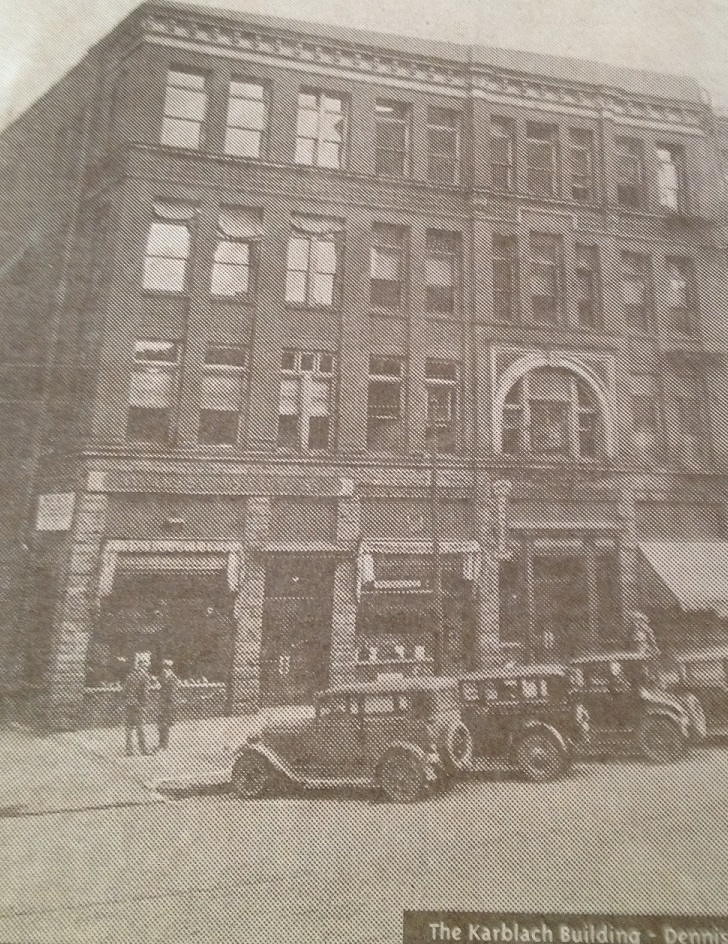
Karbach block
The Karbach Block in downtown Omaha, where Tom Dennison’s office was located after the Budweiser Saloon closed down.

I suppose it is spring now, technically. Although Nebraska has been in its meteorological spring for a few weeks already and that hasn’t seemed to make much of a difference in the weather. Things have been pretty slow on this space for some time, and while the weather has nothing to do with that, we’ll have to do better. The main reason for this lag is that in January/February/March we sold our old house, bought a new one and moved. Pretty heady stuff for a couple with two little kids who usually have their heads buried in computers something like twelve hours a day anyway. It wasn’t so bad though. We moved from the Benson neighborhood of midtown Omaha all the way over to the Dundee neighborhood of midtown Omaha. A little over three miles. It’s been nice. The schools are better, no small concern with Maddie off to kindergarten in the fall, the sidewalks more plentiful. We traded in the Pizza Shoppe and Baxters for La Casa and Pitch, Jake’s for the Dell, Krug Park for Pageturners, dog fights for dog walkers, Benson Days for Dundee Days. It’s a whole new world. Also, the new house is quite a bit bigger, so my office is no longer a toyroom/office. That’s pretty big news in itself. Also, there’s a cemetery a block down from us, with an obstructed view of headstones from my desk, and Maddie is convinced that Jesus is buried there. We may be in for a dicey Easter this year.

Meanwhile things have been plugging along on the agent front. Nothing to really report yet, but there’s been pretty steady interest, a couple exclusives to bigger agencies, a few nibbles here and there. I always take things pretty slow, so it shouldn’t be a surprise that this process will have to run its full course.

While that’s been going on I’ve been rewriting the novel from the point of views of some side characters, mostly out of curiosity and to keep occupied. I suppose, if no one is interested in the book as written, the process could take long enough for me to rewrite the whole novel in a way that’s more than an academic exercise. Not a bad contingency plan, I guess.

In other news:

-As announced yesterday, an excerpt from The Uninitiated (“River Ward, 1917”) was selected for publication by Boulevard. Also, I failed to mention that Boulevard nominated my story “On a Train from the Place Called Valentine” for  a Pushcart Prize. The story was first printed in their Spring 2012 issue. This is a great honor and one I’m pleased to have received. Boulevard rules, by the way. Subscribe to them.

-The big news of the season was that my novel The Uninitiated won Tarcher/Penguin’s Top Artist Writing Contest. Read breakdowns here and here.

-My story “The Mercy Killing of Harry Kleinhardt” was published by Midwestern Gothic in their Winter issue. (Kindle editions of the issue are currently on sale for $1, and print for $6.) I was also interviewed by MG as part of their Contributor Spotlight series. Check out the interview here.

-This weekend we’ll celebrate Clara’s first birthday. She’s been such a healthy and happy baby that it’s almost hard to remember spending her first week in the NICU, huddled around watching her O2 levels on the monitor, and how joyful it was when she came home. Happy birthday, baby!

Dispatch from The Uninitiated

Miihlstein started right away when they arrived in Omaha. In fact, there was work waiting for him in the attic, what the dead man had been toiling over when he died. Miihlstein looked taller than he really was. He was lanky, with long arms, and this made him appear tall. He preferred striped neckties held flat by a now rusty tin pin he’d made himself. He was a happy man, if distant. He was in his workshop most of the day, singing to himself or playing the violin he was working on. He had a thin mustache that was often stained by coffee and what he’d had for lunch. He hummed as he measured string and reinforced the wooden necks of the violas he was charged with reviving. He squeezed the wood with his hands to put it under stress, to find the reason it didn’t sound right anymore. Karel watched his father’s performance daily, called over, at times, if his father remembered him, to see it in detail. A red felt carpet rolled out over the worktable. Even if it was a small job, a restringing, Karel’s father pulled out all the tools in his kit. Slowly he examined them, lost in the smell of that toolkit when it was opened. Little cans of lacquer and thinner placed on the felt. Tools pulled from their nooks and leather slots. Waffled metal files, awls and emery cloth, spools of white string, spare pegs, clamps, chisels, a skinny little metal hammer. Soon wood shavings popped from the block plane as he revealed new fingerboard, then sanded it round. Notches were filed and awled for the strings. It was painted an ebullient, shiny black, endless and distinguished. Herr Miihlstein’s wire-framed glasses rode down his nose on a bead of sweat. He bit his upper lip, sucking the prickles of his mustache into his mouth to concentrate.

To Karel, it shouldn’t take so long to restring an instrument. But his father could remain occupied with a single instrument for a day or more, stretching and tuning, and playing, humming along as he plucked and bowed. Until: “Perfection!”

Karel and Anna waited for this moment: they could help with a delivery and get out of the attic. Otherwise they occupied themselves with some docile and melancholy game as Miihlstein worked. Their games often involved the war. One of Karel’s favorites was to play army surgeon with Anna’s ragdoll. She allowed this. There was great commotion in Karel’s mind as the doll was rushed from an open battlefield, the middle of a circular woven rug strewn with sock garters and newspaper crumpled into balls, and under the great bed where all four Miihlstein kids slept. Once under the bed the real fun began, their legs stuck out opposite sides. Anna was adept at enumerating injuries. She described to Karel what resulted in the field, a simple shrapnel wound in the arm that luckily avoided bone. But then. Then the ambulance was hit by mortar fire. It overturned on the road, the poor souls inside tossed over each other, compounding their maladies. Broken bones now too, fractures, splinters of glass in the wounds. A gash on the head. The driver died instantly, tragically, for he was greatly loved by his family. By the time a second ambulance had come, the poor soul that ragdoll had become was in real trouble. Anna had a nicely dark mind for these details she savored. Karel pinned the doll to the floorboards with his hands as she explained what needed to be done, an amputation. The doll’s dress was lifted to reveal the yellow cloth of its skin.

As Anna finished her treasury, Karel began. Quickly he worked, sawing with the edge of his index finger, and tucking, as if Anna wouldn’t notice, the doll’s arm into the dress. The doll’s dress was back in place, the sleeve folded up. If the poor soul was saved, he’d be pulled out from the operating theater under the bed and slid under the blankets atop the bed. “You’re in luck,” the poor soul would be told. Nothing but orange juice and nurses for a year. If the poor soul couldn’t be saved, Karel and Anna might enclose the ragdoll in a white paperboard box, take it out back of the Eigler house and bury it in the dirt. Then, into the kitchen to find some lunch.

Just Finished

East of Eden by John Steinbeck. A little disappointed (and intrigued) that James Dean’s “Say hello to your mother!” line is only in the Elia Kazan film version. A classic for good reason, nonetheless. The long tracts on the creation of the Salinas Valley and its early settlers are pretty fascinating to a guy like me, along with the more familiar sections filled with high drama and teenage angst.

The Face of a Naked Lady by Michael Rips. Part family history, part treasury of modern Omaha folk lore, Rips presents a pretty compelling story about growing up in Omaha amid racial strife, organized crime, and suburban flight while his mysterious father rose to prominence and then lost his mind. Also, it’s also an interesting treatise on the philosophical and psychological development of the American suburb as emotional landscape for those who couldn’t cope with the city. Very interesting.

Now Reading

The Slippage by Ben Greenman. I haven’t been doing many book reviews lately, but I made sure to secure an advanced copy of Greenman’s latest, which comes out late April.

Up Next

The Art of Fielding by Chad Harbach.

“River Ward, 1917” Headed to Boulevard

I’m excited to share that, this week, my fiction was again chosen to appear in a future edition of Boulevard! Amazingly, this will be my fourth story in Boulevard, which has really become a great home to my work these past few years. (The breakdown of each story is below if you’re interested.)

Here’s the opening of “River Ward, 1917”, which may be familiar to some of you:

It used to be a common thing for a young man to light off secretly in the night, searching for a life different from the one he toiled through at home. Jacob Bressler became an exile in this way. He left under starlight and led his horse over the brawny shoals of what would be his brother’s farm from then on. He didn’t bother with a saddle but merely slid a bridle over the nag’s muzzle and walked into the buggy paths of the river valley. In the dark he found the graveled highway that led to Omaha. There was no need to rush. His brother wouldn’t follow him.

What’s most pleasing about this pub is that “River Ward, 1917” is excerpted from my novel, The Uninitiated, and marks the first time any of this writing will see print. It’s a landmark, of sorts, for me. Four years have past since I began work on the novel. From it’s early shape as The Open City to the early days of The Hyphenates of Jackson County to its current form as The Uninitiated, it has taken a lot of work to get here.

So it’s exciting to get some of the book out there. To have the piece run in Boulevard means even more. Boulevard was my first major publication, running “Welcome Home” in the spring 2008, really launching an encouraging string of success with the short form that saw the story reprinted in Best New American Voices and recognized in a Pushcart Prize anthology. I can only hope that “River Ward, 1917” appearing in Boulevard in the fall of 2013 holds similar portent for my long form work. Regardless, cheers! This one feels good.

Special thanks goes out to Amber Mulholland, Travis Theiszen, Country Club Bill, Mary Helen Stefaniak and any others who helped this particular section through its early phases. And to the Lee Martin workshop at last June’s Nebraska Summer Writers Conference, who gave significant feedback and support in its latest phase. And to Richard Burgin and the editors at Boulevard too, of course. Thanks!

TW stories in Boulevard: “Welcome Home” in Spring 2008, “The Approximate End of the World” in Spring 2010, “On a Train from the Place Called Valentine” in Spring 2012, “River Ward, 1917” is forthcoming.

“Mercy Killing” to Appear in Midwestern Gothic!

I’m pleased to announce that my short story “The Mercy Killing of Harry Kleinhardt” was accepted for publication in the great, and newish, literary journal Midwestern Gothic! The story will appear in their next issue, which I believe will be Issue 8, Winter 2013. More specifics will be forthcoming, no doubt.

Here’s an excerpt from “The Mercy Killing of Harry Kleinhardt”:

Aaron never actually knew his mother, not in any real way. When he was a boy he fantasized about her coming back to rescue him from Nebraska, to take him with her to LA, New York, Chicago, wherever she’d landed. Aaron knew so little about her that these dreams seemed like they could be real. His dad never told him what really happened to her. Harry would say, “She’s alive,” if Aaron pestered him enough. “That’s all you need to know. That woman you like to call your mom is still breathing somewhere.”

Aaron didn’t learn much about the world outside Jackson until later, but even as a boy it seemed pretty obvious that things were better elsewhere—and that this was the reason his mother left. There was an old joke about how Jackson was the only town in this free Union state to be named after a Confederate general, and that about summed up how out of step Jackson was with the rest of the planet, Aaron thought.

More than likely his mother met some men in Sioux City and took off from there. Maybe another woman hooked her into a hot lead for some quick money, some liquor or drugs, or a chance to work a back room at a horse track. Over the years, Aaron convinced himself of a thousand scenarios other than those that were likely. He dreamed, at different times, that she was a nomadic bounty-hunter in Texas, a piano teacher in Vienna, a pilot for the US Navy, an Amazon explorer, an African missionary. There was a long string of them. That she was the wife of an extraordinarily rich man was a recurring theme. They were ridiculous dreams. Aaron didn’t have much to work with in creating them.

There is plenty of overlap in this story with my other work. That’s always fun. For starters, the story is set in Jackson, Nebraska; the same Jackson County as is featured in my novel, The Uninitiated. (Read here for an explanation of how my Jackson, Neb. is different from the real Jackson, Neb; and how Sherwood Anderson’s Winesburg, OH differed from the real Winesburg, OH in similar ways.)

Most of the crossover, however, stems from the fact that “The Mercy Killing of Harry Kleinhardt” is part of my Bad Faith series of stories, all of which have been published now. The Aaron Kleinhardt of “Mercy Killing” is the same from “Kleinhardt’s Women” (Fogged Clarity, Dec 2010) and “On a Train from the Place Called Valentine” (Boulevard, Spring 2012), which shares characters with “The First Night of My Down-and-Out Sex Life” (Confrontation, Fall 2011) and “The Man Who Never Was” (Weekday, Summer 2010).

This is the first time I’ve written a series of connected stories so long–maybe testing my stamina before writing a novel?–and it’s exciting to see all of the stories find a home. But with so much murder, sex, drugs, alcoholism, adultery, betrayal, and deception in the cycle, it’s little wonder they’ve found an audience. Midwestern Gothic is a fitting end to this stage of the stories’ publishing life, and an apt home for “Mercy Killing.” I’m glad to have the story picked up, of course, and particularly glad that it was Midwestern Gothic who laid claim to it. Cheers!

Summer in Review (2012)

It’s been quite a while since I last offered up a review of my activities. All the way back in April! A few things have gone down since then, such as…

-I finished a draft of my novel, The Uninitiated, that I’m very happy with and sent it off to agents for consideration. (Read here about the finishing.) So far I’ve heard back from two of my top five choices that were queried, with one passing and another asking for full manuscripts on both my novel and short story collection! Who knows if anything will come of this–as the one who requested the fulls did so despite not technically considering new clients at the moment–is that a good or bad thing?–but I’ll take good news when I can get it. We’ll be heading off to New York for a few days in October, and it would be nice if I had a couple meetings/interviews to add to the itinerary by then. We’ll see.

-Not a lot of travel over the summer months. A trip to Niobrara for a few days, a weekend in Kansas City for my mom’s graduation from seminary school and Clara’s first Royals game, a week of commuting to Lincoln for the Nebraska Summer Writers Conference. The fall should offer a bit more excitement. NYC, El Salvador. (!!!)

-I was tipped off recently that my story “Welcome Home” from Best New American Voices 2009 and Boulevard was taught at Southern Connecticut State University this fall. I know of three other colleges where the story has been taught–Penn, Drexel, and City College of San Francisco as part of a program for returning veterans–in addition to a high school in Illinois. This is so cool, and delights me to no end.

-My novel was also named a finalist for Tarcher/Penguin’s Tarcher Top Artist writing competition. I haven’t seen or heard anything about a winner being named, so I guess it still is a finalist.

-I left Prairie Schooner after four years plus of service. See post-mortems here and here.

-My book review of Shira Nayman’s A Mind of Winter can be found here, and of Roberto Bolaño’s The Third Reich here, or Richard Burgin’s Shadow Traffic and Ron Rash’s The Cove here. My review of Yannick Murphy’s The Call is in the current issue of Pleiades.

Sporting: As the final couple weeks of regular season major league baseball wind down, the KC Royals look to have a solid hold on third place in the AL Central division. They’re still pretty mediocre (owing to long stretches of horrible play in April and July) but at least haven’t been nearly as disappointing as the Indians and Twins have been for their fans. Or for Tigers’ fans, for that matter. That’s something, I guess. Life in the AL Central isn’t so much about winning games, it’s about being less miserable than your rivals.

Notre Dame is off to a rousing 3-0 start, their best on the gridiron since Ty Willingham’s 8-0 start in 2002. With a home game against Michigan tomorrow night, and with Stanford, @Oklahoma, and @USC still on the schedule, this team could still easily go into the tank. That being said, I’ll still predict an Irish victory over the Wolverines this weekend. I’d feel a little better if ND had a few mini-Ditkas on the team, but I’ll stick with my gut here. Notre Dame 87, Michigan 2.

Dispatch from The Uninitiated

“Fred was the one who found him face down in the creek, over on the other side of their claim. He drank horse cleaner. That’s how he did it. It must have hurt horribly. His eyes lost their pigment. Hair fell from his head. Fred came and got Jacob. He showed their father unmoving in the creek. They wrapped his body in a blanket and brought it to the barn. They didn’t dare bring it in the house. Neither said this, but they both understood. The body stayed in the barn until the Pfarrer came out with the J.P. to get it.”

Just Finished

The Wilding by Benjamin Percy. A readable and well-done book. Nice suspense. I really didn’t like the epilogue, although I pretty much never like epilogues. A good book, though, certainly.

Let the Great World Spin by Colum McCann. This book had been hyped so much before I read it that it couldn’t quite live up to everything I’d heard about it. It was good, but I think This Side of Brightness was better.

A Mind of Winter by Shira Nayman. A post-war mystery set mostly in Shanghai, Long Island, and London in the 1950s, A Mind of Winter offers plenty in the way of sex and drugs, mistaken identity, and ill-fated love affairs. These are characters who believe, explicitly or not, that the rules of society do not apply to them.

Train Dreams by Denis Johnson. A compelling novella about the life of a rambler and the struggle to tame Idaho in the early parts of the last century.

Now Reading

Tree of Smoke by Denis Johnson. Loving this so far. It’s been a long while since I had time to tackle a broad, long novel like this.

Up Next

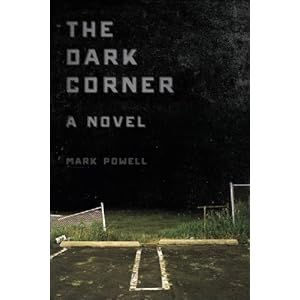
The Dark Corner by Mark Powell. Not yet released, but I’m looking forward to it.

March in Review (2012)

Maddie holding Clara.

This is going to be short and late. He’s a recap of what went down here on The Uninitiated in March. It was eventful. Still recovering.

-“On a Train from the Place Called Valentine” was published in Boulevard! Read the recap here.

-“Shame Cycle” was short-listed for the PRISM Fiction Contest. Final word should be coming down any time now. Eagerly awaiting the results.

-My review of David Philip Mullins’ Greetings from Below was published in the new Prairie Schooner.

-I interviewed Sigrid Nunez for the Prairie Schooner blog.

-We had a baby! More photos of Clara Lynne Wheeler and family can be found here.

Personal Rejection Notes, Requests for More, and Other Nice Versions of No Thanks

Five Points for “Forget Me”; Massachusetts Review for “Attend the Way”; One Story for “Impertinent, Triumphant”; and, of course, “Shame Cycle” is a finalist for the PRISM Fiction Contest.

Just Finished

The Sojourn by Andrew Krivek. Pretty good. Character deaths seemed to occur at very convenient times, plot-wise. A small thing that is quite common, but it wore on me in this novel. Maybe because death was so frequent.

Signed, Mata Hari by Yannick Murphy.

Now Reading

The Missing of the Somme by Geoff DyerA fascinating examination of the mechanisms of remembrance in relation to war.

Up Next

Flatscreen by Adam Wilson.

Boulevard No. 81

Boulevard 81, the new home of "On a Train from the Place Called Valentine."

My contributor copy of the Spring 2012 issue of Boulevard arrived in the mail today!

Not only does the issue contain my short story “On a Train from the Place Called Valentine,” but there’s also fiction by Stephen Dixon, non-fiction by John Barth  and Josip Novakovich, and poetry by Albert Goldbarth, Andrew Hudgins, and Floyd Skloot, among many others. (Did I mention John Barth?!) It’s a pretty stellar lineup. One I feel incredibly blessed to be a part of.

Boulevard puts out such a consistently great product. It’s hard to believe this is my third story published by them. “Welcome Home” appeared in the Spring 2008 issue–before it was anthologized in Best New American Voices 2009 and received special mention in the back of Pushcart Prize XXXIV. “The Approximate End of the World” was in the Spring 2010 edition, and will be noted as a “Distinguished” story in a forthcoming edition of New Stories from the Midwest.

Here’s an excerpt of “On a Train from the Place Called Valentine”:

It isn’t until later, when the freezing wind cuts through her, that Amy Gutschow actually considers what she’s doing. This is late December after all and she’s riding north on the bed of a railcar after sunset. She nestles into her downy black coat, shoves her hands deep into its pockets, and waits for the train to pass through a town where she can jump into a grassy ditch and roll away from the rails. She’ll have to call her father, wherever she lands, and beg him to pick her up, the way she did in college. A tall man with a dopey mustache, her father would wear gray sweatshirts and blue jeans, if he came for her on a weekend, or a tweed jacket and corduroy pants if he had to take time off from work. He never asked why she needed him, but just came for her, humming almost happily as they returned home. “My baby girl,” he’d say, as if it were part of an old song. “What has happened to you now?”

Cheers!

February in Review (2012)

I’ve decided to fly in the face of Leap Day and post my review of the past month a day early. (Try to have a safe holiday out there today, folks. We don’t need a replay of four years ago, with all the accidents and alcohol poisonings. Use the extra day wisely!)

February was a month of good news. There was my appointment as Web Editor at Prairie Schooner. I’m still not sure my family believes that I actually get paid to work for a literary journal now. Actually, I’m not entirely convinced myself yet, direct deposit aside. The job has been a lot of fun, although a bit frustrating at times. It’s been a long time since I started a new job. There’s a lot to learn. Hopefully I’m picking it up right.  …  Next came word that two of my published short stories will be mentioned among the “Thirty Other Distinguished Stories” in the New Stories from the Midwest anthology series. “The Approximate End of the World” (Boulevard, Spring 2010) will be noted in the back of the 2011 edition. “The Current State of the Universe” (The Cincinnati Review, Summer 2011) will be noted in the back of the 2012 edition. This is a new series, but one that looks very promising. I’m excited to break through in some small way with them. Hopefully it’s only the start of bigger things.  …  That same weekend I learned that my review of Yannick Murphy’s novel The Call was accepted for publication in the Pleiades Book Review. This is my second review Pleiades has taken, and it will run in their Summer 2012 issue.

March brings a lot of promise. There’s AWP in Chicago. Spring is here, apparently. (Our daffodils have breached!) ZZ Packer is the writer in residence at UNL and will make a couple public appearances in Lincoln. Also, lil’ Clara Lynne is due to join us.

Dispatch from The Uninitiated

“Sometimes I scuffled with Neal Davies and his brothers. I ran track with the two younger Davies boys. They weren’t so brazen about what they said, not like Neal had been outside the store. Mostly it was Neal who mumbled something, standing off to the side to watch us run. Neal Davies was short and podgy. He had blonde hair that laid very flat and smooth on his round skull. His brothers looked at me and laughed when Neal made remarks. I’d tackle one of them into the grass, the Davies brother who was slowest getting out of the way. A punch or two would be thrown, but that was all. Other kids would break it up. Whatever happened was chalked up to bad blood. Since I didn’t know what they said, there was nothing more I could say about it. There was lots of bad blood in Jackson County in those years, the war years. It was wrong of Davies to tease me about the ways my folks died, I’m certain. I’m not certain if I would have teased him about such a thing if the roles had been reversed. I might have. I had to give him that in my calculations. He still had his parents, if nothing else. I did not. Sometimes we believe these things are so for a reason.”

Personal Rejection Notes, Requests for More, and Other Nice Versions of No Thanks

Alaska Quarterly Review for “Forget Me”; Indiana Review for “Attend the Way”; and “Lycaon” by Midwestern Gothic.

Just Finished

The Painted Bird by Jerzy Kosinski. A remarkable book about a Gypsy boy’s travels and travails in Eastern Europe during the Holocaust, based upon Kosinski’s own life story. A remarkably brutal book.

The Third Reich by Roberto Bolaño. About the ways people confront (or confronted, it was written and it is set in 1980s Spain) the lingering presence or (non)presence of Nazism in European culture. It’s not quite in the stratosphere like 2666 and The Savage Detectives, but is still very good.

Jonah Man by Christopher Narozny. A very solid first novel about murder, drugs, and the intrigue of 1920s vaudeville performers. It comes out in May. I will be reviewing it.

In Our Time by Ernest Hemingway. A rereading of this classic after hearing George Saunders and Robert Stone talk about it at the Key West Literary Seminar.

The Snows of Kilimanjaro and Other Stories by Ernest Hemingway.

Now Reading

The Sojourn by Andrew Krivak.

Up Next

Stay Awake by Dan Chaon.

Good News Department: BotM & PBR

A couple bits of good news today.

Someone has clued me into the fact that two of my stories have been, or will be, noted as part of the “Thirty Other Distinguished Stories” in the New Stories from the Midwest (aka Best of the Midwest) anthology series!

The Approximate End of the World,” which was originally published by Boulevard, will be recognized in the back of the 2011 edition, due out later this year.

The Current State of the Universe,” which was published last summer by The Cincinnati Review, will be recognized in the back of the 2012 edition.

This is an exciting new series. I’m ecstatic to have my work recognized by them!

In other news, I also learned today that my review of Yannick Murphy’s novel The Call has been accepted for publication in Pleiades Book Review! The review will be in the summer issue of Pleiades, I believe, if you’re interested in checking it out. This will be my eleventh published review, and one I’m particularly excited about. I haven’t been too shy about my love of The Call, as it’s a book a feel pretty strongly about. You should definitely buy it, read it, then lend it to a friend.

The Year in Photos: 2011

January brought plenty of rewrites on the novel; "The Housekeeper" was published on now-defunct Flatmancrooked; my collection How to Die Young in Nebraska, was once again a semi-finalist for the Iowa Short Fiction Award.
February meant attending the AWP conference in Washington DC, and visiting the National Christmas Tree just weeks before it was blown over; my review of Marcy Dermansky's novel Bad Marie was published on The Millions; and we celebrated Valentine's Day with a heart-shaped black forest cake from Zum Biergarten.
In March, "How to Die Young in a Nebraska WInter" was published in The Kenyon Review; I also gave an interview for Kenyon Review Online; did a longer piece on the role of trickster characters in fiction; and "The First Night of My Down-and-Out Sex Life" was accepted for publication in Confrontation.
April was something of a slow month, but it did include a postmortem on Flatmancrooked, and a longer piece on Ellen Horan's historical novel 31 Bond Street and the culture of big advances for unpublished authors.
Nicole and I celebrated our fifth anniversary in May with a trip to San Francisco; "The Current State of the Universe" was published in The Cincinnati Review; my review of David Philip Mullins' Greetings from Below was accepted for publication in Prairie Schooner; I wrote a longish post on the case of Willie McGee and lynchings.
In June, Mixer published "The Housekeeper" on Amazon; my review of Nadifa Mohamed's Black Mamba Boy was published in Prairie Schooner; and my review of Richard Burgin's novel Rivers Last Longer ran in the Pleiades Book Review.
July suddenly took us to Tel Aviv; "On a Train from the Place Called Valentine" was accepted for publication in Boulevard; my review of Suzanne Rivecca's Death is Not an Option ran on The Millions; and we went to the Syracuse dachshund races.
August brought me to the completion of a rough draft of my novel. I also wrote a longer blog piece on what it's like to write about lynchings and other bad things.
September saw "These Things That Save Us" accepted for publication in Conversations Across Borders; I was awarded a partial scholarship to attend the 2012 Key West Literary Seminar and Workshops; and I unveiled my own ranking of MFA programs to little fanfare.
In October, "These Things That Save Us" was published in Conversations Across Borders; my review of Rahul Mehta's Quarantine ran on The Iowa Review Online; and I did a longish piece on the real Winesburg, Ohio and how Sherwood Anderson's experience connected to my own writing of a suddenly not ficitional Jackson, Nebraska.
I turned thirty in November, and took stock of what that meant; we announced that we are having our second girl; and "The First Night of My Down-and-Out Sex Life" was published in Confrontation.
And, finally, graciously, December. With the help of some local archivists, I was able to track down the location (and a photo) of Tom Dennison's famous house. I also started in my new position of Blog and Social Networking Editor for Prairie Schooner.