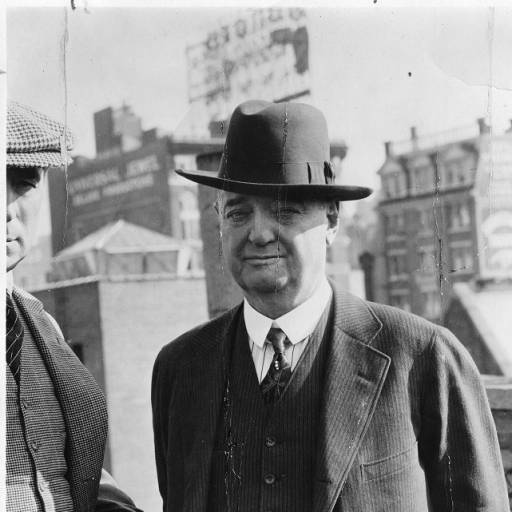
Nicole and I were in Portland last week–so I missed this–but a friend of the blog let me know about a couple recent Tom Dennison news items. First, a new permanent exhibit opened last week at the Roman L. Hruska Federal Courthouse in downtown Omaha that relates the intrigue surrounding the 1932 trial of Tom Dennison, and fifty-eight other members of his syndicate, for alleged Prohibition violations. The exhibit touts this landmark trial as it “brought national attention to the methods used by criminal syndicates of that era to promote bootlegging, gambling, prostitution, money-laundering, extortion, election fraud, jury-rigging, bribery, and political corruption.”
Although Tom Dennison was indicted and tried over the course of two months, the trial ended in a hung jury, and Dennison would never be convicted. Still, this pretty much spelled the end of the Dennison machine. Tom suffered a stroke in early in 1932, and the damage from this was said to show visibly throughout the trial. Later in the year he came down with pneumonia, would be divorced from his teenage bride, and within two years of the trial’s end would be dead. Despite a few attempts to find an heir-apparent Dennison was never able to establish a line of succession and the machine fell apart once he wasn’t there to keep it running.
Pretty interesting stuff. KETV seems to have the story of record here about the exhibit.
Also of note is that Orville D. Menard has a new book coming out in early November from Bison Books. Menard’s Political Bossism in Mid-America, essentially a biography of Tom Dennison that was first published in 1989, is the go-to authority on all matters Dennison. His new book, River City Empire, appears to be a reissue of his previous work, particularly since the page counts only differ by ten, and a foreword has been added. In any event, Menard has mentioned in talks before that he’s still been working on the material since his first came out, so I’m interested to check out the new book. More than anything it’s great to see renewed interest in this fascinating figure of Omaha history–one who just happens to be a main character in my novel!
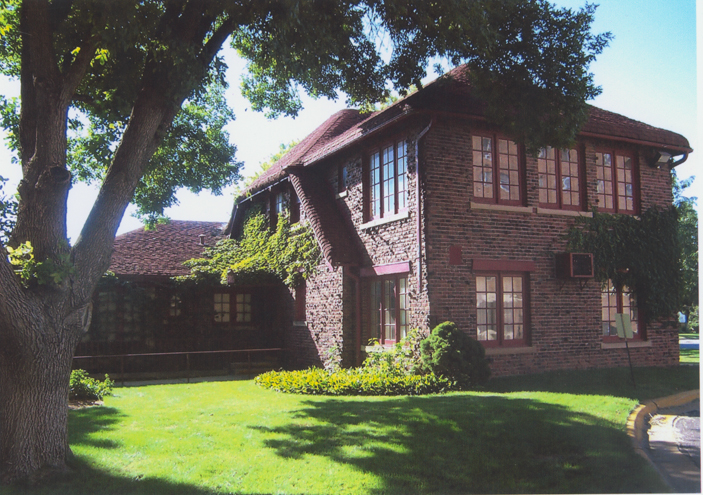
This the building that housed Anna Wilson’s notorious Omaha brothel. Pictured here in the 1920s. After Wilson’s death, the building was converted into a hospital, per her wishes. (Courtesy of Wilson & Washburn, a new bar downtown that’s named after Anna and Josie Washburn, a prostitute turned reformer who makes a cameo in my novel.)
Summer is here in just about every way imaginable, so it’s time to recap what’s gone down the past few months.
First, some news about Tom Dennison’s house at 7510 Military Ave was passed on to me by a reliable source who wishes to remain anonymous. (Previous posts about the Dennison house can be found here and here.) There was some confusion about which side of Military the house was actually located, and my source let me know that the address of the house would have changed at some point after Dennison died. So while it was originally 7510 Military, it would have been on the 7300 block of Graceland Drive for most of the time it was standing, putting it south of Military, on the property of Skyline Retirement Community rather than on Marian’s side like I thought. That the address changed clears everything up.
Some more info from the source:
From the 1960s until it was torn down in 2006, the house was used as a guest house by Skyline Manor, and later as administrative offices. There was an effort to remodel the home before the decision to raze it was finalized, but the cost of a new roof, structural repairs, asbestos removal, etc, etc, was deemed too great. Skyline also offered the house free to anyone who wanted to relocate it to a new property, but, again, the cost of moving the house vastly exceeded its monetary value. The spot where the house stood is now a parking lot.
Other news from what was a pretty busy season:
-I was awarded a fellowship and residency by Akademie Schloss Solitude in Stuttgart, Germany. (Get the whole story here and here.) Summer of 2014 can’t come soon enough. We’ve been busy planning out the trip and addressing all sorts of logistical issues. I thought Maddie would be a little more nervous, but she’s still very excited about the whole thing, just so long as she gets to watch movies on the airplane and have torte for dessert every meal. Not such unreasonable demands.
-“The Hyphenates of Jackson County,” an excerpt from my novel-in-progress, was short-listed as a finalist for the Summer Literary Seminars Unified Literary Contest. It did not win.
-Not a lot of travel lately, although we did spend a few days in Los Angeles in April, which was really nice. On the docket for this summer: the Ozarks, Kansas City, and a family trip to Chicago to give the girls a little more flight experience before crossing over to Germany next summer. Tentative plans call for a little jaunt to New York this fall to retrace and expand last year’s bratwurst tour of Manhattan.
Madchen.
Dispatch from The Uninitiated
Tom hadn’t exactly been feeling fit, but he didn’t feel any worse than he had the month before, and maybe he was a little better than the month before that. His daughter had him doing all sorts of things to feel better. Morning ablutions. Evening exercises. A Bulgarian hulk came to stretch his legs with a rubber strap and burn his back with rocks. He had a steambath installed in the back lawn. Tom submitted because she begged him to. Ada had him consuming all sorts of herbs and minerals too, he didn’t even ask what the names of her magic were. Selzter water mixed with salts from the Dead Sea, she claimed anyway. Now why he wanted to drink Dead Sea saltwater he didn’t know. Wasn’t dead the very thing he was trying to avoid? All it did was keep him in the bathroom all morning, and he suspected more than once that maybe this was Ada’s way of getting him to spend less time at work. It surely kept him occupied.
Just Finished
Woes of the True Policeman by Roberto Bolaño. Supposedly this is Bolaño’s final unfinished novel, what he was working on when he died, I guess, and it’s writing that ranks up with his best. A lot of it reads like stuff that was cut out of 2666, which is fine by me. The focus on Óscar and Rosa Amalfitano yields quite a few wonderful stories.
In a German Pension by Katherine Mansfield. A series of sketches about the guests of a German health resort. Mansfield is vastly underappreciated, and this is yet more great work from her. (The Kindle version of this is now free, fyi.)
Laughter in the Dark by Vladimir Nabokov. I’d never heard of this novel before, but picked it up on a recommendation while at Book Soup in Los Angeles, and I’m glad I did. A comedy of manners that romps through Berlin and Italy.
Death in Venice by Thomas Mann. I’ve been meaning to read this for years and finally got to it now that I’m trying to get a feel for the German canon before I’m over there next summer. A masterpiece. Maddie kept asking me to read it aloud for her–a little uncomfortable given the subject matter–because it’s so beautiful. I’m pretty sure she didn’t understand many of the words…hoping anyway.
Freedomby Jonathan Franzen. After all the controversy and hoopla surrounding this book when it came out a few years ago, I decided to give myself some space before reading it. I’m big fan of Franzen, but not so much this book.
The Slippage by Ben Greenman. A solid offering, but not quite on the level of his short fiction.
Now Reading
The Piano Teacher by Elfriede Jelinek. Really digging this. I’d been meaning to read this for a while too–being how I’m a fan of the Michael Haneke film based on the novel–and am glad I got to it.
A while back I posted about finally tracking down Tom Dennison’s house in Northwest Omaha at 7510 Military Ave. (Read about it here.) Through the comments section of this post, Dennison’s great-grandson, John Ragan, reached out to me and offered to send a few family photos my way. It was a gracious offer on John’s part, and I appreciate his sending them. He also said it would be okay if I shared them on this blog. So here they are!
Here are the gates to Tom Dennison’s house, probably from the Military side, I’d guess. Most accounts I’ve read report that these gates were always manned by a bodyguard or two, and that floodlights lit the perimeter at night.
The house on Military in the 1930s. It really is a beautiful home. The garden gnome is a nice touch too. Despite tight security around the property, Tom was regarded as a good neighbor. Even though his home was outside city limits, Omaha ran city water and sewage out to his property, and Tom made sure his neighbors shared this special benefit.
The house as it looked in 2006, when it was demolished.
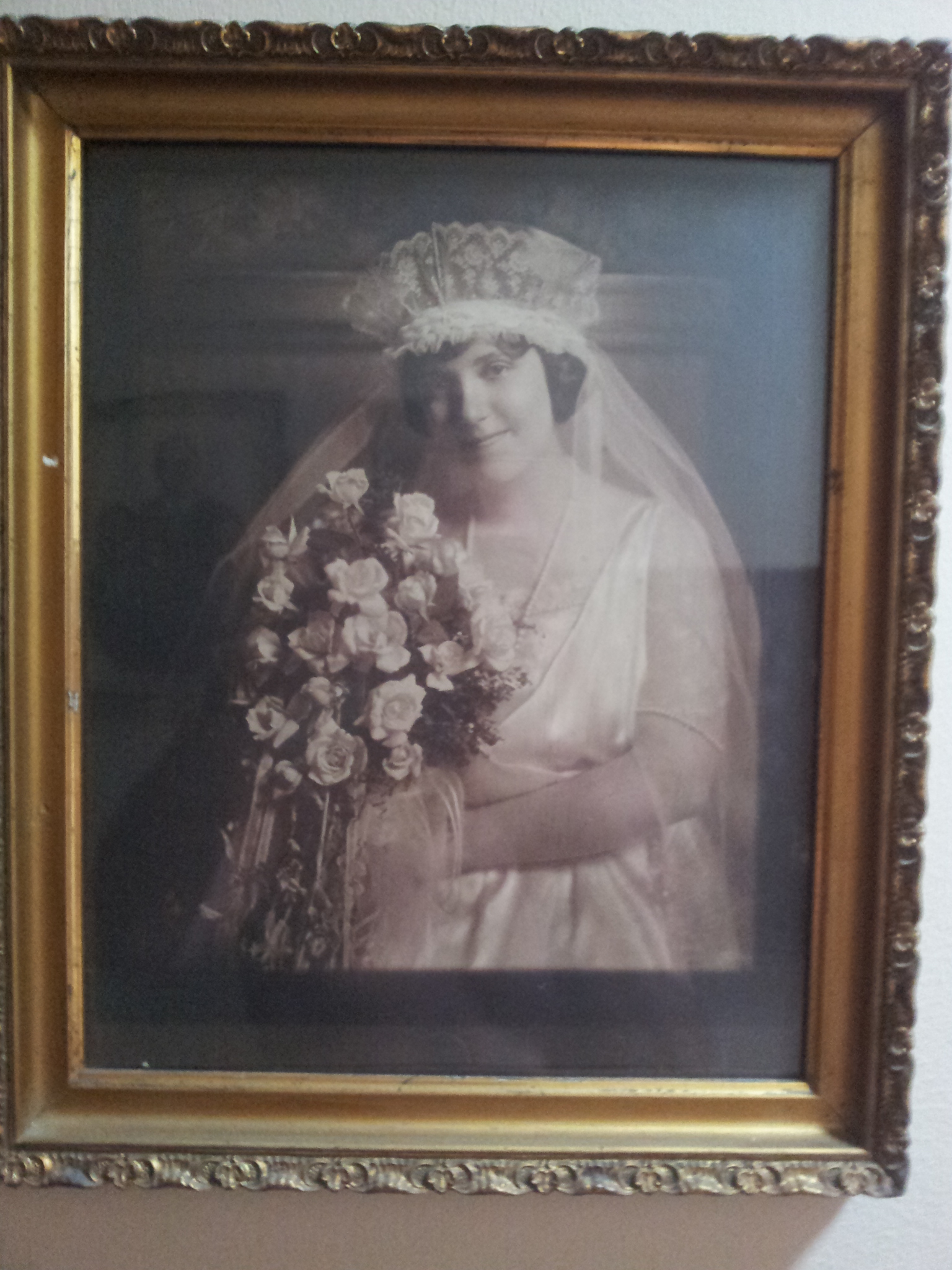
A portrait of Tom’s daughter, Francis Dennison Ragan, on her wedding day.
January brought plenty of rewrites on the novel; "The Housekeeper" was published on now-defunct Flatmancrooked; my collection How to Die Young in Nebraska, was once again a semi-finalist for the Iowa Short Fiction Award.February meant attending the AWP conference in Washington DC, and visiting the National Christmas Tree just weeks before it was blown over; my review of Marcy Dermansky's novel Bad Marie was published on The Millions; and we celebrated Valentine's Day with a heart-shaped black forest cake from Zum Biergarten.In March, "How to Die Young in a Nebraska WInter" was published in The Kenyon Review; I also gave an interview for Kenyon Review Online; did a longer piece on the role of trickster characters in fiction; and "The First Night of My Down-and-Out Sex Life" was accepted for publication in Confrontation.April was something of a slow month, but it did include a postmortem on Flatmancrooked, and a longer piece on Ellen Horan's historical novel 31 Bond Street and the culture of big advances for unpublished authors.Nicole and I celebrated our fifth anniversary in May with a trip to San Francisco; "The Current State of the Universe" was published in The Cincinnati Review; my review of David Philip Mullins' Greetings from Below was accepted for publication in Prairie Schooner; I wrote a longish post on the case of Willie McGee and lynchings.In June, Mixer published "The Housekeeper" on Amazon; my review of Nadifa Mohamed's Black Mamba Boy was published in Prairie Schooner; and my review of Richard Burgin's novel Rivers Last Longer ran in the Pleiades Book Review.July suddenly took us to Tel Aviv; "On a Train from the Place Called Valentine" was accepted for publication in Boulevard; my review of Suzanne Rivecca's Death is Not an Option ran on The Millions; and we went to the Syracuse dachshund races.August brought me to the completion of a rough draft of my novel. I also wrote a longer blog piece on what it's like to write about lynchings and other bad things.September saw "These Things That Save Us" accepted for publication in Conversations Across Borders; I was awarded a partial scholarship to attend the 2012 Key West Literary Seminar and Workshops; and I unveiled my own ranking of MFA programs to little fanfare.In October, "These Things That Save Us" was published in Conversations Across Borders; my review of Rahul Mehta's Quarantine ran on The Iowa Review Online; and I did a longish piece on the real Winesburg, Ohio and how Sherwood Anderson's experience connected to my own writing of a suddenly not ficitional Jackson, Nebraska.I turned thirty in November, and took stock of what that meant; we announced that we are having our second girl; and "The First Night of My Down-and-Out Sex Life" was published in Confrontation.And, finally, graciously, December. With the help of some local archivists, I was able to track down the location (and a photo) of Tom Dennison's famous house. I also started in my new position of Blog and Social Networking Editor for Prairie Schooner.
Merry Christmas, from the street urchins of the Omaha tenements.
My year in review post will be coming shortly, so I’ll try to keep this brief. The month was more or less uneventful, so brevity shouldn’t come too painfully.
-I finished the second revision of my novel late in December. The book should be in something close to its final shape now, as this cycle included half a dozen rewrites of chapters and sections (plus a couple new chapters) that I hope don’t need to be completely rewritten again. I guess I’ll see if this holds up under the next reading-revision cycle. Assuming I can fit in five work days a week, it takes about a month to revise the whole novel. They key will be getting that time down a little bit. If there’s less and less that needs changed, I should be on the right track.
Paul Zimerman’s “Full Remittance,” a kind of anti-Rakolnikovian story, is excellent, as well as a shortish story by Theodore Wheeler with the titillating title of “The First Night of My Down-and-Out Sex Life,” which ends up being more somber than you’d expect.
-With the help of some friendly archivists, I was able to track down a bunch of information about the different places Tom Dennison used to live in Omaha. I wrote a bit about it here. In the coming months I’ll have more on the real historical places that are featured in my novel.
“Tom Dennison grinned at me again, like I was being stupid. And I was being a little simple about the election. What I’d described is how it always works in this business, yeah? It’s always a matter of offering more than the other guys and making sure you manage things well enough to get your folks to a poll on time. It was still new to me, and it’s all novel to a guy who doesn’t know what he’s doing.”
Personal Rejection Notes, Requests for More, and Other Nice Versions of No Thanks
Iowa Review for “Forget Me” and Crazyhorse for “Attend the Way.”
Just Finished
A Flag for Sunrise by Robert Stone. I love reading books like this—ones that must have been incredibly timely and topical at the time of their publication, and are still great reads even if they aren’t so relevant now. This is a very engrossing novel that shows through a split narrative how an attempted revolution in a banana republic comes together. (There are some sexual escapades with a hot nun too, fyi.) Also, I’ll be part of a workshop led by Robert Stone at the upcoming Key West Literary Seminar. So excited for this.
Omaha: A Guide to the City and Environs compiled by the Federal Writers’ Project. This is so great: the WPA funded study of Omaha from the Depression. Not only does it feature the most complete and concise history of the area I’ve found, there are fantastic gems throughout, like how much beans and coffee cost at a cafe at the time, and how much streetcar fare to the airport was, or where to find the best Chow Mein. There are also a half-dozen walking tours guides of the city, which is really very helpful in understanding how the city was laid out during this period. I was very geeked to find this.
It took a while, but I was finally able to track down the exact address (and approximate location) of Tom Dennison’s estate house! More accurately, Gary Rosenberg, Douglas County Historical Society archivist, was able to track it down. Thanks, Gary and the DCHS!
Tom Dennison was first listed as living in the house in 1931, just three years before he died. He didn’t live there long, and his involvement in Omaha politics and crime was all but through by then. This was his retirement home. He raised wire-haired terriers on the back acres. He lived there with his daughter, Frances, and her husband, Vernon Ragan. This was during Prohibition. The house was surrounded by cyclone fencing, there were security guards, Dennison kept a sub-machine gun under a blanket on the seat next to him in his car. (It’s fascinating how Prohibition transformed the political machines of the early 20th Century (which mostly focused on gambling, prostitution, and government-centered rackets) into deadly criminal syndicates. In earlier decades, Dennison lived in the city (at 1507 Yates, among other places). He stood on the sidewalk and fed pigeons in the morning. They did a lot of bad things in those days too, but the machine never engaged in gangland killings until Prohibition. The Omaha Race Riot of 1919 is potentially a different matter altogether.)
Dennison remarried late in life, but his young wife, Nevajo Truman, never lived in the same house as Tom. She lived at 2201 Country Club Avenue with her mother. Tom would come by and visit most every day, but that’s as far as that went. Such a strange and sad sounding relationship.
Tom Dennison with his second wife, Navajo Truman.
Last year I hypothesized that Dennison’s house was put to new use as part of Marian High School–specifically the convent–but was disabused of that notion by Sister Joy (another devoted archivist, this time with the Servite Sisters). I wasn’t too far off, however. As told by my sister-in-law and Marian alumna, Sara Magnuson West, the house was still on the Marian campus until recently, although she didn’t remember if it served a purpose there. She remembers that it was back by the motherhouse, where the nuns live. Maybe it was torn down when the soccer field and athletic complex was built? Gary Rosenberg tells me that the building was demolished in 2006, approximately.
I’d greatly appreciate it if you could share any information, stories, memories, or rumors you might have of the building. Do you know what it was used for, if anything, by Marian? Do you know anything about the history of the house? Do you have friends or family who went to Marian, or taught there? Maybe they know something? In the picture above, the house appears to have been kept in good shape, there were security lights installed, the windows were maintained. I’d imagine this effort wasn’t for nothing.
If you know something about this house, please pass it along.
Here’s a bit from Sherwood Anderson about his masterpiece, Winesburg, Ohio (from the Viking Critical edition):
Winesburg of course was no particular town. It was a mythical town. It was people. I had got the characters of the book everywhere about me, in towns I had lived, in the army, in factories and offices. When I gave the book its title I had no idea there really was an Ohio town by that name. I even consulted a list of towns but it must have been a list giving only towns that were situated on railroads.
I was so excited to come across this when rereading his collection last month. Most of my work is set in real cities and towns–in places like Omaha, Lincoln, Aurora, Valentine, McCook, Hastings, Bancroft, Atlanta–but I sometimes use a fictional town in my work–a place I called Jackson, Nebraska. (Or Jackson Township, or Jackson County.) I mostly use Jackson when I want to write about a nasty small town, so that my work doesn’t slander a real place. Notably, my novel is titled The Hyphenates of Jackson County, referring to this rural county where my fictional small town is located.
When I started using Jackson as a setting as an undergrad, with my story “The Scythian Defense,” (gsu review, Fall/Winter 2006) I checked an atlas to make sure that a Jackson, Nebraska didn’t already exist–just like Anderson did in checking to see if there already was a Winesburg, Ohio. The map and index I checked didn’t list a Jackson, Nebraska, so I thought I was in the clear. (Thanks a lot free State Farm atlas!) Much like Anderson, I was wrong. Maybe the atlas I had only listed towns that had a State Farm affiliate agent? Just kidding. Jackson is just too small and isolated to be on all maps, with a population just over 200. There are lots of places like that–and the people from these places often hold up their unmapped status as a point of pride. (There’s a town in western Nebraska that has a population of 2. It’s a must see, their house/city hall/library/school.)
I found out that Jackson, Nebraska was a real place when I started researching the life of notorious Omaha political and crime boss Tom Dennison during the early stages of writing Hyphenates. Dennison grew up in an Irish settlement in northeast Nebraska by the name of St. John’s. The settlement never really took hold and died off once its priest left–the Catholic parish still exists, St. Pat’s–but a town remained even after the settlement broke. A town named, of course, Jackson.
This was kind of weird to discover. I’d already planned, before finding this in the research, to set some scenes in a fictional town based in part on the place where Tom Dennison grew up, and I was committed to calling the place Jackson County, due to connections in my body of work that I wanted to play off of. Little did I know that the town was already called Jackson.
This kind of freaked me out, but I wasn’t too concerned about it. For one thing, the real Jackson wasn’t on the map, so it was an honest coincidence. Also, I like the connection there between Tom Dennison and my fictional lead character, Jacob Bressler, and my previous work set in fictional Jackson. I’d meant to draw that line anyway, so if it’s a little more real, so much the better, right? There should always be a distinction between fictional places and real places in fiction, of course, even if a lot of the work of the writer is to help the reader forget that what they’re reading isn’t real. Even my Omaha isn’t the real Omaha, of course.
The Blankenfeld homestead, settled in 1885.
I ended up going through Jackson twice in 2010. Jackson is only 80 miles away from Niobrara, Nebraska, where some of my family comes from and still lives. I first ended up in Jackson when headed up to Niobrara for a funeral. (The second time was for a family reunion.) It wasn’t something I planned. My brother Matt and I were just going along the highway when we happened into Jackson. “Oh, shit,” I said, seeing a historical marker about the place. We stopped for some doughnuts and Mello Yellow. It was kind of surreal to be there. My fictional Jackson County is partially based on the area around Niobrara–and my forebearers who settled there, the Blankenfelds. I was thinking a lot about the landscape as we made the drive, and about those small towns, thinking through my novel at the same time. And then we ended up in Jackson. We just happened to stop in.
Turns out I’m in good company with Sherwood Anderson. The connection between one of my favorite writers excites me, and makes a special series of connections even better. Small world.
 Nicole and I were in Portland last week–so I missed this–but a friend of the blog let me know about a couple recent Tom Dennison news items. First, a new permanent exhibit opened last week at the Roman L. Hruska Federal Courthouse in downtown Omaha that relates the intrigue surrounding the 1932 trial of Tom Dennison, and fifty-eight other members of his syndicate, for alleged Prohibition violations. The exhibit touts this landmark trial as it “brought national attention to the methods used by criminal syndicates of that era to promote bootlegging, gambling, prostitution, money-laundering, extortion, election fraud, jury-rigging, bribery, and political corruption.”

 Freedom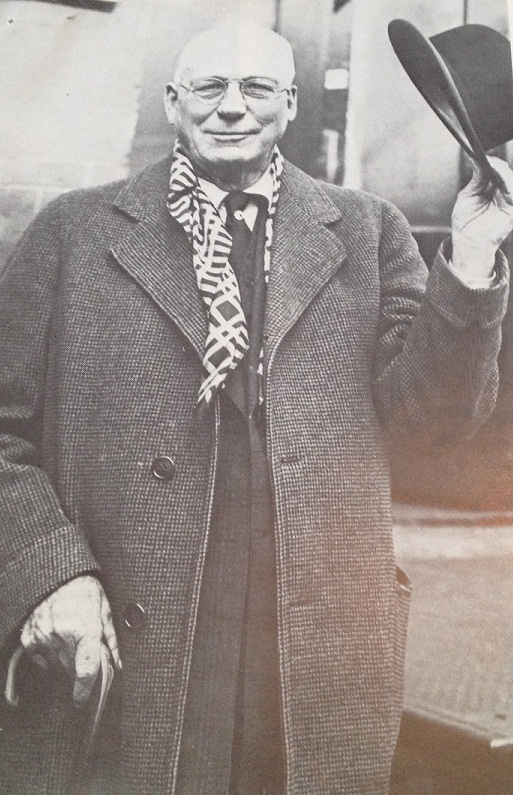









 Nebraska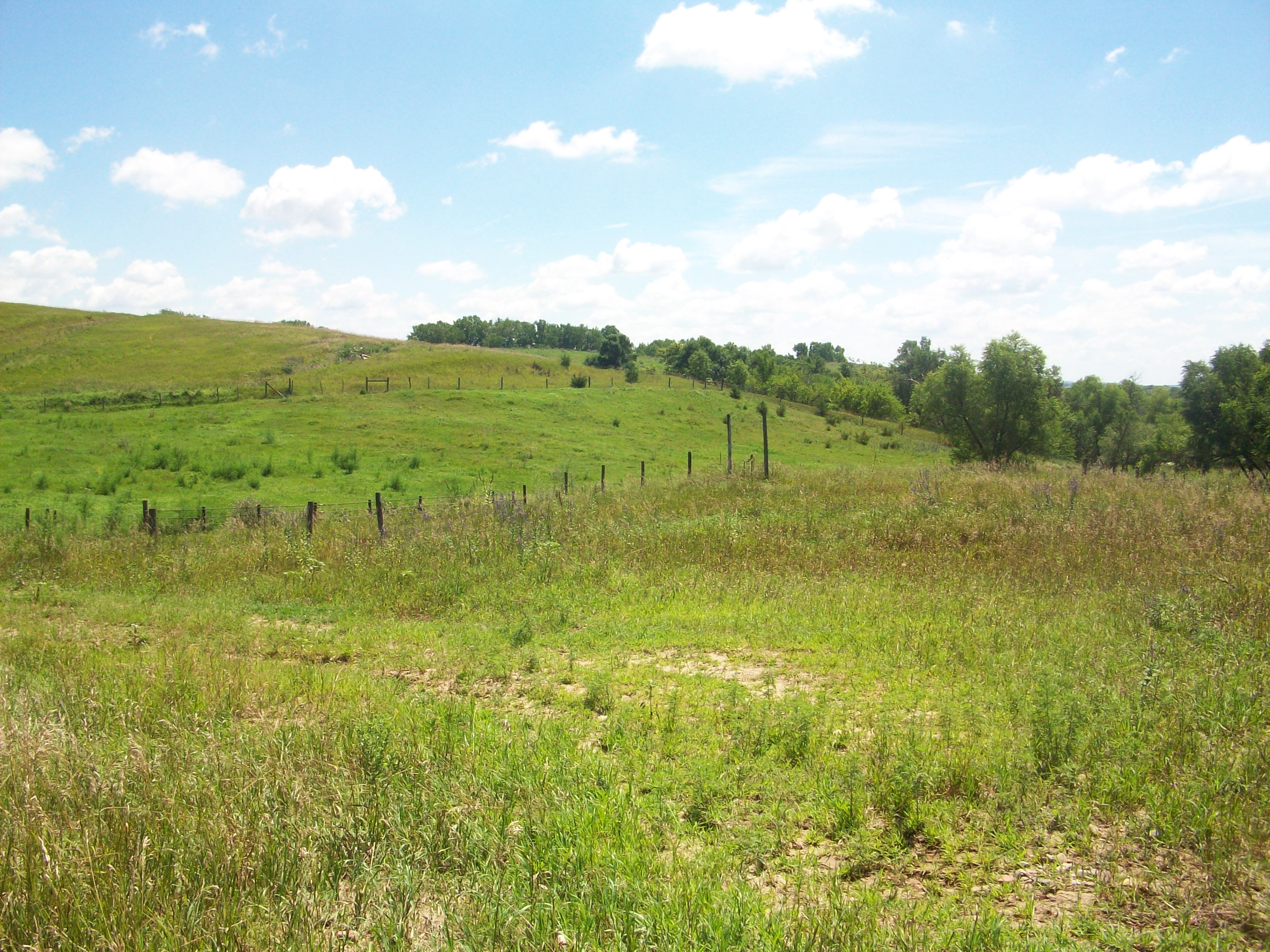
 Theodore Wheeler