Weeks of Jan 7 – Jan 27, 2011: When to Rewrite

For the past few months I’ve been working on a rewrite of my novel. A lot of the process has been interesting and fun. It’s kind of nice to open up long-settled writing and start playing with things like point-of-view, voice, and structure again. Of course, there are some not-so-fun aspects too. Probably the worst, at least emotionally, is figuring out if you’re at the point when a rewrite is necessary, or not. I doubt anyone really wants to take on such a large project that’s essentially redoing work you thought was done, work you may be pretty proud of. There’s so much emotional turmoil that comes with starting over. You start thinking of wasted months, years, the thousands of words that have already been thrown out. And that’s before you start reconsidering POV and structure, the rhythm and tone. It’s questioning your very way of being. It’s a painful threshold to cross. As I’ve been working through this, I wondered how others might confront this problem. Please comment if you have some tips or ideas, or what might be some helpful reading. I’d love to hear them.

In the meantime, here’s how I’ve handled it.

Generally my revision process is tied closely to my submission cycle, especially with short stories. The main thinking here is that, after a dozen rejections, you should have an idea of how a story is being received. Even if editors aren’t sending back hand-written notes or requests to see more work, such silence can still mean something. After a while, the feedback and notes, or lack thereof, point to a course of action. From there, you can ascertain whether the piece needs some tweaking or an overhaul. (Or maybe a trash can.) With short stories, getting positive notes helps point me to what stories are hot or close. I keep close track of them. I may let it roll unchanged then, or it may push me to take a really hard look at what may be a winning revision, knowing that it’s on the verge of acceptance. For the novel, it’s harder because the piece is so much larger. But feedback from agents can be invaluable, if you know how to read what they’re saying. I think the most common cause of an agent rejection is that they don’t connect on a personal level with the material, which can really mean anything. So, is it just that, a missed connection with an individual, or is there a more serious problem with the manuscript. How do you know? This is where volume comes into play. Getting a bunch of rejections can be a good thing, if there’s feedback involved. If you keep hearing the same thing over and over, that’s probably a sign of what the problem is. It’s pretty simple.
With my current novel, I’d received feedback from a half-dozen agents. This isn’t a ton, but all of them gave pretty specific reasons why they felt the book wasn’t right for them. Some of them were kind of dubious of my going from a collection of edgy, contemporary stories to writing a historical novel. I wondered if there’s something about historical fiction that precludes it from being edgy, but realized that that probably wasn’t the problem. It was the way my book was structured, the way I was trying to shelter my protagonist from doing bad things—which is a problem, since I have trouble writing “nice guys”—and the way I sometimes allowed the history to overpower the story and how this also put a dry, scholarly slant to the narrative voice. (And a lot of this came from my having to figure out the history too. It was hard to understand the scope and structure of the story while I was still learning new, game-changing things about the history I’m dealing with. I put a lot of stock in the idea that we think best through writing. It just took me a lot of words to grasp these ideas.) I couldn’t see these problems without my clutch of rejection notes, which is the larger point here. It sucks to struggle through a stack of rejections, but this is why I’ve always enjoyed the process of submitting stories. I’ve been pretty lucky to get some nice feedback from editors and agents—that’s a big part of it—but the process is such a great motivator, conscience, and teacher as well. It makes you be honest with yourself about what’s actually on the page, the quality of the work, and what more you’ll have to wring out of it to make the story a success.

I’m not sure if there’s any other way for me to write besides building out of a series of failures. Maybe I’m too prideful to see my mistakes until well after I’ve made them. Maybe this is how it is for everyone. In any event, I think the rewrite of Hyphenates is turning out well. This new series of stets, scribbles, false starts, and mistakes is progressing nicely.

Dispatch from The Hyphenates of Jackson County

yé-yé girl

“It was liberating to sit on the stoop early in a May evening, in those middle-spring hours when it was warm enough for Jacob to roll up his shirtsleeves and let the air hit his skin again. It was one of the main promises of spring, that there would be more of these nights to come, barefoot and comfortable, reclined in a sturdy chair. No mosquitoes yet, no bearing-down evening swelter. The whole world was green in those hours, breezy and clear.”

Personal Rejection Notes, Requests for More, and Other Nice Versions of No Thanks

New England Review and CutBank for “On a Train from the Place Called Valentine”; Copper Nickel and Third Coast for “These Things That Save Us.” And, of course, “The Housekeeper” was published on Flatmancrooked last week!

Now Reading

The Sun Also Rises by Ernest Hemingway.

Just Finished

Bad Marie by Marcy Dermansky. An interesting study of the anti-hero as filtered through French cinema. It’s pretty good! Highly recommended for all fans of movies set in Paris, or for anyone who has named their first-born child after the heroine of their favorite French film.

Up Next

Greetings from Below by David Philip Mullins.

How to Die Young in Nebraska Named Semi-Finalist

I learned today that How to Die Young in Nebraska, my collection of short fiction, was a semi-finalist in the Iowa Short Fiction Award. That’s the good news. The bad news is that it is no longer in the running for the publication prize, as the book is not among the finalists. A previous version of the collection was also a semi-finalist in 2009.

According to the letter sent by the contest administrators, there were nearly 400 manuscripts entered, and How to Die Young placed among the final twenty. I think it’s a little dubious to glean too much from such statistics–as you can never really know the quality of the books you were up against–but this is one of the premier first book contests out there and it’s probably safe to say that the competition was strong. It’s disappointing to lose out, but the recognition is nice. Hopefully it’s a sign of good things to come.

Pub Updates (and an Update to the Updates)

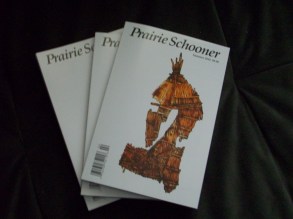
UPDATE: My review of Nadifa Mohamed’s novel Black Mamba Boy has been scheduled for the Summer 2011 issue of Prairie Schooner! This will be my second published review with PS.

It sounds like Flatmancrooked will be running my story “The Housekeeper” in their web journal next Wednesday, January 19.The story will also be featured in their upcoming print fiction anthology, Flatmancrooked 4, which is currently at the printers and should be hitting mailboxes before winter ends.

The first half of 2011 is shaping up nicely. My story “How to Die Young in a Nebraska Winter” will be in the spring issue of The Kenyon Review, in the next couple months I’d wager–no matter what Unadilla Bill has to say–and “The Current State of the Universe” will be published by The Cincinnati Review in May.

Weeks of Dec 6, 2010 – Jan 6, 2011: On Going First-to-Third

(Note: This isn’t a baseball entry.)

For the past month or so I’ve been toying with point-of-view in my novel, first going from a close third-person to first-person narrated by Jacob Bressler, my lead character. I’m not really sure what my goal for doing this was. Something just didn’t sound right with the “voice” telling the story and I wanted to try something different. Some of the feedback I’ve received from potential agents spoke to Hyphenates being a book focused on history and setting, rather than story and character, and I’m trying to break that hold. So I figured that Jacob could tell his story more succinctly, since it’s all he would care about. He wouldn’t obsess over Omaha history or factoids of the era as much as I do, certainly, and sometimes it’s easier to slip those lovelies in while in third-person. I needed a more discerning eye. It’s like how you don’t realize how embarrassing something is until you say it out loud to another person, or post it in online. But once you open your mouth, you can see things so much more clearly and objectively.

The experiment didn’t really work. Conventional wisdom says that novels shouldn’t be written exclusively, or even largely, in first-person, and I think that’s probably good advice. Around page fifty of the rework, it got pretty annoying to keep seeing and hearing that “I” all over the place. To be unable to break out of Jacob’s voice even for a minute is a problem, especially since he’s the focus of the book. But, even though I’m now in the process of reworking it back into third-person, I do think the exercise was worthwhile. It helped me see cuts and edits, and gaps where new work is needed, that weren’t apparent before. While it seemed acceptable to have a third-person narrator go into a page-and-a-half diatribe on the condition of organized labor in Omaha in 1917, having Jacob do the same was absolutely ridiculous. There were more than a few instances of this, where the scholarly, professorial voice would dominant for longish periods—and they all needed to be cut. The writing is much cleaner now, more focused and edgy in a way similar to my contemporary-set fiction.

I’d only made it through about a quarter of what I have drafted in the transition to first-person rework, but it may be worthwhile to push through the rest of it, even though I know that I’ll want it in third-person eventually. (I’ll probably want this.) I have used this technique in spots for the last year or so anyway, in fact, trying to tie the narration as closely to Jacob’s experience as I could. So much of the writing, especially in Part II, has already been rewritten, for my own benefit, in Jacob’s first-person. There’s just so much good that comes from writing around things like this. I imagine it’s similar to filmmakers shooting a scene from ten different angles, hoping to get one that looks and sounds and feels right. The dispatch below is a part I wrote new while in Jacob’s first-person, and it’s something I don’t think the third-person narrator could have come to. So there’s that.

Dispatch from The Hyphenates of Jackson County

“The bank was open when I left the saloon, it was two o’clock, but I still didn’t go there and ask for a job. The weather was nice. Again I walked downtown, but it was boring this time. No women brushed against me. My clothes disgusted them, my face was filthy. I waited out the day and then returned to the Courthouse lawn in the evening to sleep. It was warm and I’d been safe there the night before. I knew at what time to cops would come to roust me, and would make it a point to leave before they came out with their cudgels. It seemed simple. But I was arrested anyway, after midnight, for vagrancy, and put in the overnight with the drunks and other indigents. I wasn’t disappointed to be arrested, however, after I was released. At least there was black coffee this way, and in the morning a bowl of white beans with a couple pieces of fat. Otherwise I wouldn’t have eaten that morning. The whole night I wished that I’d gone to the bank that day, however. There was plenty of time for regrets in the overnight, because the drunks couldn’t keep quiet. I thought of everyone I might have wronged in my life up to this point. Any pocket of guilt that had been waxed over was reopened. I thought of you that night, Evie, and why it was you had to leave Jackson those many years before. I thought you took off on your own. It never occurred to me that they’d run you and your mother off. Not until they ran me off too.”

Personal Rejection Notes, Requests for More, and Other Nice Versions of No Thanks

Southern Humanities Review and Hayden’s Ferry for “Attend the Way”; Electric Literature for “On a Train from the Place Called Valentine”; and West Branch for “The First Night of My Down-and-Out Sex Life.”

Now Reading

Bad Marie by Marcy Dermansky.

Just Finished

A cover for Fortune designed by Chris Ware, by request. The magazine rejected it, of course. Pretty incredible nonetheless.

One of Ours by Willa Cather. A really great, Pulitzer Prize-winning novel set mostly in Central Nebraska and Lincoln, in the late 1910s. I was lucky to pick this up at the National World War I Museum in Kansas City this fall and it’s become a fantastic resource for me. The focus of the book is even a family named Wheeler! (I’ve gone over this before, I know. Indulge me.) The final third of the book, when Claude goes over to fight in the war, is pretty sentimental and Cather panders more than a little bit to jingoistic reactionism in these parts. But overall I really enjoyed the book. Cather has never disappointed. Plus, as an added bonus, there are a bunch of good old-timey ideas for home gardens in Nebraska, for all you green-thumbs out there. We’re going to try growing gourd vines up our pergola trellis this summer, and we have Cather to thank for that.


The Best American Comics 2010, edited by Neil Gaiman, Jessica Abel and Matt Madden. My favorites include “The Lagoon (Hiding in the Water)” by Lilli Carré, “The Alcoholic” by Jonathan Ames and Dean Haspiel, “Asterios Polyp” by David Mazzucchelli, “The War on Fornication” by Peter Bagge, “The Flood” by Josh Neufeld, and “Fiction versus Nonfiction” by Chris Ware. Ware also had a lengthy section of his ongoing series “Acme Novelty Library” reprinted, which I had seen some of before. In 2007 he gave a standing-room-only lecture at the Sheldon in Lincoln that Nicole and I attended, and a comics pamphlet featuring some of the comic reprinted here was given out as an example of his work. It was pretty cool to get the work then and is outstanding to see the longer version reprinted in a Best American. To make it even better, the comic is set in 1950s Omaha and uses the old Omaha World-Herald building (where Nicole worked when as first moved here) as a backdrop. There have been quite a few notable artists who have come out of Omaha in the last decade, but none of them have really attained giant-status in their field like Chris Ware has. It’s something that should really get more local recognition than it does.

Rivers Last Longer by Richard Burgin. A solid literary thriller with meta-fictional treasures abound. I’m currently writing a review on this now.

Up Next

Greetings from Below by David Philip Mullins.

The Year in Photos: 2010

Maddie turned two in January–and will be three already next month. She’s been in a Montessori school this fall and really doing well. She makes us feel so proud, and scared.
We went to New York in February. We walked next to many of the sycamores of Brooklyn and experienced the city in a snowstorm, when all those urban woodsmen really come in handy.
In March, I served a two-week residency at the Kimmel Harding Nelson Center for the Arts in Nebraska City. It was a great time and I did a bunch of work on my novel, in addition to meeting some pretty cool people and becoming a regular at a hot pink taco stand.
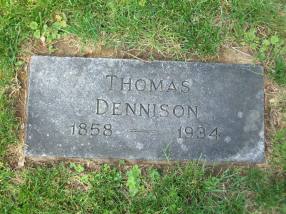
We tracked down the grave of former Omaha political boss Tom Dennison on Memorial Day. I was kind of baffled at first that his marker was so understated, as I expected to find an ornate mausoleum, but I dug up some research later in the year that suggest that Dennison may have been pretty much broke by the time of his death.
In June, my review of Lydia Peelle’s short story collection, Reasons For and Advantages of Breathing, appeared in the summer issue of Prairie Schooner.
In a busy June, we attended the Geist/Jonas wedding in Stoner Haven, Colorado. Er, Fort Collins. (We didn’t have time to visit the Cheba Hut, but did fit in a short visit to the New Belgium brewery for some samples.) A short story, “Let Your Hair Hang Low,”  appeared on MARY this month.
“The Man Who Never Was” appeared in Portland, OR rag Weekday in July. “Shame Cycle” was a finalist for the LitPop Fiction Contest, but didn’t ultimately take the prize.
July also saw us up to Niobrara for the Blankenfeld family reunion, which included a tour of the original homestead site. This was awesome.
The Cincinnati Review chose “The Current State of the Universe” as winner of its Robert and Adel Schiff Prize in Prose in September. The story will appear in their Spring 2011 issue. I also made a guest appearance on their blog, writing about the story’s inspiration.
In November, we visited the National World War I Museum in Kansas City. My review of Nadifa Mohamed’s novel Black Mamba Boy was also accepted for publication in a future edition of Prairie Schooner.

It’s been a great year and hopefully 2011 is even better. (Is anyone else having trouble not typing 2001?)

Best wishes!