Taking Stock at 30

At 12, this sign is what I wanted to see each night before going to bed, for the rest of my life.

We celebrated my thirtieth birthday a couple weekends ago. It’s a pretty weird age to turn, at least as milestone ages go. It isn’t really all that old–so people who are older still scoff at you, as probably always happens–“you think eighty is old, wait until you turn ninety!”–but it sounds pretty damn old to anyone in their twenties. I suppose it’s an adult-sounding age, the age by which you have settled into a life path of sorts, or not. Supposedly forty is the new thirty, but I don’t really think that’s the case for me. Thirty is pretty thirty. I kind of like adult life. Marriage, kids, a full-time job, these aren’t things I want to avoid. I try to find myself within them, not outside.

I did point, in the past few years, to being thirty as a sort of edge for my goals. I had a few informal “To Do By Thirty” lists. Most of the advice I received from friends who recently turned thirty ahead of me was to avoid thinking in terms of things that I wanted to accomplish by now, but didn’t, as that can only lead to disappointment. I’m going to anyway.

Ned Beatty, getting misty-eyed.

My main goal was to have a book published by thirty. It didn’t happen, and nothing is on the horizon either. I think this is my main disappointment, I guess–although I’ve published short fiction in lit journals more widely than I really expected too, frankly, if there’s mitigation here. I’ve still never seen an Irish game in Notre Dame Stadium, although I’ve seen games in Lincoln and Colorado Springs. I wanted to have an MFA degree, or be working toward a PhD, but that didn’t really pan out. I’m mostly okay with that. I do have an MA, and I really enjoyed the experience of earning it.

I became a world traveler this summer when Nicole and I went to Tel Aviv in July. Of course, if one really did all the travel they wanted to during their twenties, there wouldn’t be time to do much else.

I’m married, and we have one incredible daughter with another on the way. These were things I didn’t really plan on. They’re the great surprise of my life.

This is not me. I'm okay with that.

I haven’t fulfilled what I foresaw for myself when I was twelve–living in downtown Kansas City with Royals season tickets, working as a plotter of X-Men comics. I have not fulfilled my dream of being a spokesmodel for Hungry-Man Dinners.

In sum, birthdays are always overblown. After the hangover was hydrated, I actually felt quite a bit better than I had in a while. What I manage over the next thirty years is what will matter more, after all.

Family Photo Album: It’s a Girl!

Now that we’ve got the ultrasound photos, this is as good of time as any to announce that we will be welcoming an addition to the family in late March. Nicole, Maddie, and I are very excited. We’re still unsettled on a name, and I’ll take all suggestions, serious or otherwise, into consideration. So far I like Faye Bea Lynne, Nicole likes Busy, and Maddie likes Rosa (which would probably get changed to Rosalyn). Any thoughts, concerns, or salutations?

October in Review (2011)

The big news in what turned out to be a busy month—and this is unannounced news at that, which I hope is okay to make public—is that I’ve been appointed Blog and Social Networking Editor at Prairie Schooner! This is a new editorial position in which I’ve been commissioned to take an active role in the PS blog, social media presence, and other communications with subscribers and contributors. It’s a pretty cool opportunity and I’m excited to move up to the editorial staff. Sadly, I’ll be giving up my Senior Fiction Reader duties, although I doubt anyone would stop me from reading as many slush submissions as I care to.

More to come on this.

In other news:

Boulevard nominated my story “On a Train from the Place Called Valentine” for a Pushcart Prize, and for inclusion in a Best of the Midwest anthology. I’m usually a little wary of touting nominations, but this is awesome news, especially since the story won’t even run in Boulevard until March of next year. Wish me luck!

-“These Things That Save Us” was published in the debut issue of Conversations Across Borders. Here’s what I had to say about writing the story and Cab in October.

-My review of Rahul Mehta’s short story collection, Quarantine, appeared on The Iowa Review Online, just in case you missed it. The review is pretty good, I think. Plus, this marked the first time I’d been paid for a book review, which is something.

The Kenyon Review is offering a new fellowship opportunity to post-MFA/post-PhD writers. It’s pretty awesome. $32,000 a year, for two years, both teaching and editorial opportunities. Plus time to pursue a significant project. Some good stuff is surely going to come out of this; I’m fully prepared to be jealous of whoever receives the first fellowship.

-I got a little love from The Cincinnati Review on their blog recently, in this post by staff member Dietrik Vanderhill about “The Burn” by Craig Davidson. Here’s what Vanderhill had to say, as an aside, about my recent work in TCR:

I’m tempted to write a recommendation for “The Current State of the Universe,” winner of the Robert and Adele Schiff Award in Prose (in the latest issue of CR). This romping story by Theodore Wheeler follows one employee of a company called Make Things Right, Inc., a sort of karmic revenge business. […] a story with passages like this—along with such a provocative concept—can easily sell itself. It provides a direct, satisfying approach to “fixing” the world’s ills, albeit on a small scale.

“The Current State of the Universe” appeared in the Summer 2011 issue of The Cincinnati Review.

-I wrote a long post on this blog about Sherwood Anderson’s connection to the real Winesburg, Ohio–and how a similarly uncomfortable thing happened with my won writing of a fictional small town that turned out to have the same name as a real small town.

-And, finally, let’s not forget that October began with an awesome crossover blogger event, as Adam Peterson and I wrapped up the Royals 2011 season and, mainly, looked ahead to 2012.

Dispatch from “These Things That Save Us”

“Walking the dog allowed me a kind of privacy, which is also why I enjoyed traveling so much. I yearned for the bustling lonesomeness of airport white noise, the freedom to be secluded in public—to appear deeply pensive without someone asking, ‘Whatcha thinking?’ This is also why I liked to walk, to indulge in the secret adventures of a man and his dog, cruising down the sidewalk with nothing in particular owed to anyone. Just a man and his dachshund. We were free to look in our neighbors’ windows from the sidewalk, their domestic projections lit up incandescent. We could kick and sniff at garbage left at the curb. A man walking his dog has a right to be there.”

Personal Rejection Notes, Requests for More, and Other Nice Versions of No Thanks

Paris Review and Conjunctions for “Forget Me,” and Agni for “Shame Cycle.”

Now Reading

Shadow Traffic by Richard Burgin.

Best American Comics 2011, edited by Alison Bechdel.

Sin in the Second City by Karen Abbott.

Up Next

The Marbled Swarm by Dennis Cooper.

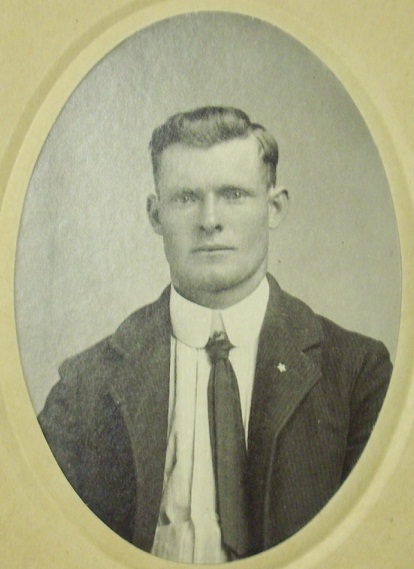
Family Photo Album: Henry Blankenfeld

Henry August Blankenfeld. My grandma Cleo’s grandpa.

Shown here at age 24.

Born: Oct 31, 1881 in Thornburg, Iowa. Died: Mar 14, 1963 in Niobrara, Nebraska. Married Mary Ellen Vaughn.  Son of Heinrich Jacob Blankenfeld (of Biechowo, West Prussia) and Maria Eigler Blankenfeld (of Rudwig, Austria). A second-generation immigrant, known for his engineering prowess.

The Real Winesburg, Ohio

Here’s a bit from Sherwood Anderson about his masterpiece, Winesburg, Ohio (from the Viking Critical edition):

Winesburg of course was no particular town. It was a mythical town. It was people. I had got the characters of the book everywhere about me, in towns I had lived, in the army, in factories and offices. When I gave the book its title I had no idea there really was an Ohio town by that name. I even consulted a list of towns but it must have been a list giving only towns that were situated on railroads.

I was so excited to come across this when rereading his collection last month. Most of my work is set in real cities and towns–in places like Omaha, Lincoln, Aurora, Valentine, McCook, Hastings, Bancroft, Atlanta–but I sometimes use a fictional town in my work–a place I called Jackson, Nebraska. (Or Jackson Township, or Jackson County.) I mostly use Jackson when I want to write about a nasty small town, so that my work doesn’t slander a real place. Notably, my novel is titled The Hyphenates of Jackson County, referring to this rural county where my fictional small town is located.

When I started using Jackson as a setting as an undergrad, with my story “The Scythian Defense,” (gsu review, Fall/Winter 2006) I checked an atlas to make sure that a Jackson, Nebraska didn’t already exist–just like Anderson did in checking to see if there already was a Winesburg, Ohio. The map and index I checked didn’t list a Jackson, Nebraska, so I thought I was in the clear. (Thanks a lot free State Farm atlas!) Much like Anderson, I was wrong. Maybe the atlas I had only listed towns that had a State Farm affiliate agent? Just kidding. Jackson is just too small and isolated to be on all maps, with a population just over 200. There are lots of places like that–and the people from these places often hold up their unmapped status as a point of pride. (There’s a town in western Nebraska that has a population of 2. It’s a must see, their house/city hall/library/school.)

I found out that Jackson, Nebraska was a real place when I started researching the life of notorious Omaha political and crime boss Tom Dennison during the early stages of writing Hyphenates. Dennison grew up in an Irish settlement in northeast Nebraska by the name of St. John’s. The settlement never really took hold and died off once its priest left–the Catholic parish still exists, St. Pat’s–but a town remained even after the settlement broke. A town named, of course, Jackson.

This was kind of weird to discover. I’d already planned, before finding this in the research, to set some scenes in a fictional town based in part on the place where Tom Dennison grew up, and I was committed to calling the place Jackson County, due to connections in my body of work that I wanted to play off of. Little did I know that the town was already called Jackson.

This kind of freaked me out, but I wasn’t too concerned about it. For one thing, the real Jackson wasn’t on the map, so it was an honest coincidence. Also, I like the connection there between Tom Dennison and my fictional lead character, Jacob Bressler, and my previous work set in fictional Jackson. I’d meant to draw that line anyway, so if it’s a little more real, so much the better, right? There should always be a distinction between fictional places and real places in fiction, of course, even if a lot of the work of the writer is to help the reader forget that what they’re reading isn’t real. Even my Omaha isn’t the real Omaha, of course.

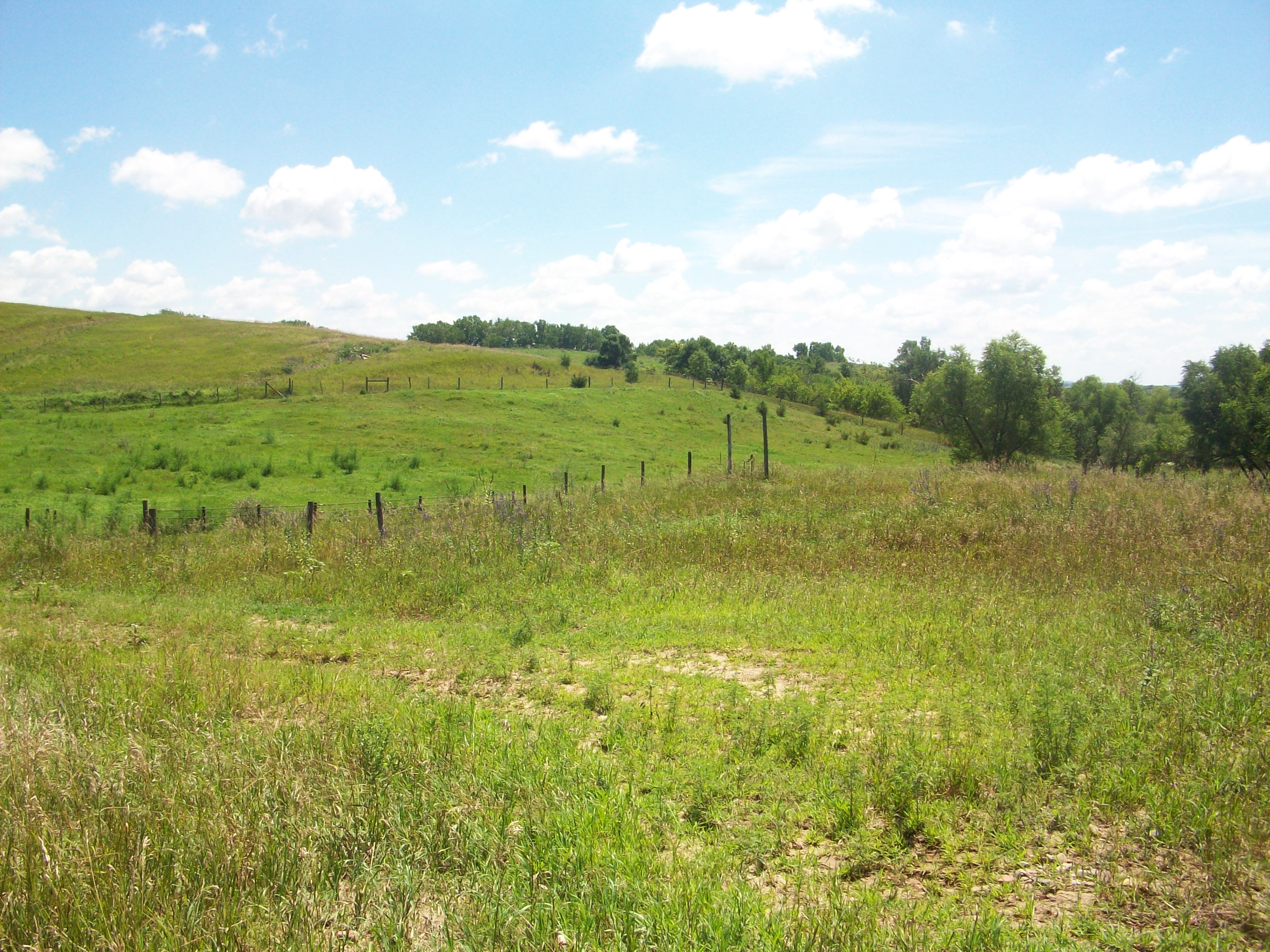
The Blankenfeld homestead, settled in 1885.

I ended up going through Jackson twice in 2010. Jackson is only 80 miles away from Niobrara, Nebraska, where some of my family comes from and still lives. I first ended up in Jackson when headed up to Niobrara for a funeral. (The second time was for a family reunion.) It wasn’t something I planned. My brother Matt and I were just going along the highway when we happened into Jackson. “Oh, shit,” I said, seeing a historical marker about the place. We stopped for some doughnuts and Mello Yellow. It was kind of surreal to be there. My fictional Jackson County is partially based on the area around Niobrara–and my forebearers who settled there, the Blankenfelds. I was thinking a lot about the landscape as we made the drive, and about those small towns, thinking through my novel at the same time. And then we ended up in Jackson. We just happened to stop in.

Turns out I’m in good company with Sherwood Anderson. The connection between one of my favorite writers excites me, and makes a special series of connections even better. Small world.

A/V Club-Ken Burns’ Prohibition: The Time is Now

Has everybody (or anybody) been watching Ken Burns’ new PBS documentary Prohibition this week? It’s really fascinating how much the face of the United States was changed in order to bring about Prohibition–and how it was largely anti-German sentiment surrounding America’s entry into World War I that was finally “the home run” for Prohibitionists, as most of the brewers were German-American, of course.

Below is a section that is period-relevant to the book I’m working on. The bit on the anti-German wave and World War I starts around 8:13.

For some reason I have real trouble getting stuff from PBS to embed correctly, so here’s the link: http://video.pbs.org/video/2082716396. Hopefully that works, and I’ll keep trying.

CAB Launches– “These Things…” Published!

“These Things That Save Us” was published today as part of the launch of new online literary journal Conversations Across Borders! The individual story is available for $2, or you can buy the entire issue for $10. The debut issue features poetry by Ilya Kaminsky, Gary Lemons, and Samuel Green, non-fiction by Nahid Rachlin, and my short fiction. All proceeds from the issue go to support literacy and literary programs, and writers. (When I first typed that sentence, my fingers accidentally put, “All proceeds go to supper…”, which is partially correct, I guess, as far as the writers are concerned.) Here’s how CAB explains their mission on the web site:

Conversations Across Borders is a 501(c)3-pending nonprofit literary-arts organization that presents fine literature and journalism from around the world; connects writers across borders; and supports underserved schools, literacy programs, literary programs, and individual writers through financial grants. By purchasing individual poems, essays, and short stories, you enjoy new, vital work from some of the finest writers in the world. You also make a direct contribution to schools and literacy programs in underserved communities. These contributions are given directly to the local school to assure that your gift directly invests in both education and the local economy, supporting local teachers and suppliers.

Yipirinya means “caterpiller” in Arrenente, as any of the students at Yipirinya School would be happy to tell you.

Not too shabby. The first program CAB supports is Yipirinya School of Alice Springs, Australia. Yipirinya School’s curriculum is at the forefront of “two-way” education. Students learn both their own indigenous culture and language, in addition to skills that will allow them to thrive economically and culturally in Westernized society.

I’m very excited and proud to be a part of Conversations Across Borders, and hope they’re able to accomplish a great deal with this important work. It’s an interesting project, using literature (and online literature in particular) as a means to directly improve the quality of life and literacy of people around the globe. Let’s do all we can do help them succeed.

As for “These Things That Save Us,” it is my fourteenth published short story. (Number fifteen, “The First Night of My Down-and-Out Sex Life” will be out in Confrontation this November; and number sixteen, “On a Train from the Place Called Valentine” will be in Boulevard in March 2012.) This is a story I worked on in a Brent Spencer-led workshop at Creighton University while getting my M.A. there. So thanks to him, as well as my cohorts in the class, Lucas Schwaller and Travis Thieszen. I also workshopped “These Things…” while at the Port Townsend Writers’ Conference, in an amazing and lively workshop led by the incomparable Chris Abani. So thanks to all those folks too! I think the story turned out well. As well as any story that gets its seed from thinking about off-color wife jokes can anyway. Further, thanks to Jordan Hartt and everyone else at CAB for getting this going, and for including me in the fun.

Mehta Review Goes Live on The Iowa Review Online

Check out The Iowa Review Online this month, as my review of Rahul Mehta’s debut short story collection, Quarantine, has gone live. It’s really a very good book, and one you should check out. Here’s a little of what I had to say about it in the review:

In his convincing debut collection of short fiction, Quarantine (Harper Perennial 2011), Rahul Mehta chronicles the lives of openly gay Indian-American men, their disappointments and betrayals, and the hard-earned personal connections they come to cherish. In an intimate, confessional style, Mehta’s characters dwell on botched relationships, on their romantic, familial, and cultural failures, and on the difficulty of sharing space with another person. Most of the stories focus on Western-born children and young adults bored by Indian social and religious traditions—rich kids, overfed on pop culture, who have trouble connecting with those around them, whatever their ethnicity.

This is my ninth published review; the first that’s appeared on TIR Online.

Three Questions for Adam Peterson About the Kansas City Royals

Lucky for all of you, fellow writer and baseball fan Adam Peterson and I decided to do a review of the KC Royals season–and in the ever-popular blog crossover format!

The Royals finished 71-91 on the year, which was good enough for 4th place in the perennially weak AL Central and a four game improvement over last year’s record. That’s not good, of course. But anyone who’s paid attention to baseball this year knows that the intrigue surrounding the Royals these days has little to do with their current record and nearly everything to do with the young players who look poised to lead a resurgence. We’ll see if KC can actually make the playoffs again in the next few years–which would be their first appearance since 1985, sadly–but there’s an excitement surrounding the team that we haven’t seen in quite a while. One, I felt, warranted the first ever sports post here on the site.

Below are three questions I asked, answered by Adam. On his site, Stock Photography Museum, you can find the three answers I provided to questions asked by Adam. Pretty simple.

Without further ado, here are a bunch of words about the Royals.

Adam Peterson is the co-editor of The Cupboard, a quarterly prose chapbook series. His series of short-shorts, My Untimely Death, is available from Subito Press, and his fiction can be found in Alaska Quarterly Review, Cincinnati Review, Indiana Review, The Southern Review, and elsewhere.

TW: On a scale from 2-70, how good has the Royals starting outfield been this year? There are all the doubles (136 combined), all the outfield assists (49!), the stolen bases (59), the consistency. They’re averaging a 20/20 hitter with plus defense, and all this from a group who came into the season without much in the way of positive expectations aside from Alex Gordon’s often mocked promise to “dominate.” One he followed through on, by the way. Personally, I would have thought it was more likely that all three of these guys would be playing in the minors or Japan by now than what we saw on the field. It seems improbable that Alex Gordon, Melky Cabrera, and Jeff Francouer will all be able to sustain their production after all three had career years this summer. Perhaps the better question, then, is which of the Royals outfielders will regress back to the mean next year, and by how much?

AP: Well, I think you did a pretty good job of illustrating exactly how good they were this year, Gordon especially who might (and certainly should) get some down-ballot MVP votes. Advanced stats have him being as valuable to the Royals as Melky and Francouer combined which is pretty remarkable when you think that both were also having career years. Now, if I can have my own Gordon-like moment of redemption, here’s what I wrote about him before this season started:

Here’s what I’ve been saying about Gordon recently: he’s either going to shock people or fall apart completely. And this is the season. I don’t think he’s going to be just average. There’s too much talent and too much that says his problems are mental. I think he either becomes a .280/.370/.500 guy or is somewhere in Nebraska hanging out with Eric Crouch next year. And, frankly, I still think he’s going to put it together. Yes, I know this is stupid, but I don’t care.

Well, well, well, look what wasn’t stupid. Alex’s line on the season was .303/.376/.502. Yes, I predicted Alex Gordon’s remarkable season to within .08 of his OPS (though, and I’ll take full responsibility for this stunning failure, his actual numbers were slightly more batting average driven. I’m sorry). I’m just kidding about my stunning prediction—well, not really, I feel pretty good about it—but what I didn’t predict would be the much lower offensive environment this season and how it makes Gordon’s numbers even better. Over on Royals Review they’re arguing that he put up the best season of a Royal since Beltran in 2003 which was itself the best season by a Royal since Brett in 1985. Yep. We should all be talking about this more: Alex Gordon is one of the best players in baseball. Finally. If I were him, I’d be screaming it at everyone in Kansas City. Hell, I’m not him and I’m still bragging about predicting his numbers.

Which I did. I totally did.

But next season is next season. I’m not worried about Gordon (except in getting him resigned). He may not be this good again, but he’s a player who could play a key role on a contending team and the Royals need to hold onto all of those they can get. Frenchie has already been locked up—for some reason—and I’m honestly okay with this. Nothing about his season seems like it couldn’t be repeated and there’s no one in the system that he’s blocking anyway. And hey, maybe he figured something out and will continue to walk a bit more and stay away from stupid pitches. (I have no confidence in this happening. I want to get him and Miguel Olivo in a room then lower a baseball from a ceiling to see which one swings at it first).

Melky is a different story. I want Lorenzo Cain. I love Lorenzo Cain. I love his name, his attitude, his scouting report, everything. Melky is the one outfielder most likely to regress and a smart GM would take this opportunity to sell high and try to get back some starting pitching. He’s a terrible defensive CF (despite the arm) and Kauffman stadium requires someone with some range out there. I don’t think he will be traded and Cain himself seems more likely to go (as does, gulp, Gordon). I hold no ill will towards Melky. He was great this year at the plate and that signing was by any accounts a brilliant one by GMDM, but he’s got to go.

Gordon, Cain, and even Francouer could be a part of a competing Royals ballclub in 2013 but Melky won’t be. The only way he resigns to the type of deal the team would want would be if he struggles and if he struggles, what would the point of having him on the team this year be when there’s a perfectly capable player at AAA? Hell, Dyson is a perfectly capable player at AAA too. Melky needs to go, and I have every reason to believe this won’t happen and instead he’s out there again next year only without the bat to justify his waddling defense.

TW: Should Steve Balboni be nervous about next year? (He holds the Royals single-season record with 36 home runs, in 1985, for those who don’t know.) I know you’re on record saying that Billy Butler is due to hit 30 some day, and there are three other guys I see as capable of hitting 30 or more homers—those being Gordon, Eric Hosmer, and Mike Moustakas. Is 2012 the year that the Great Balboni’s record falls? And, for bonus points, do more than one guy surpass Balboni’s total the year his 36 comes off the books as the Royals’ best?

AP: He should certainly be nervous, but I’ll go ahead and say that next year isn’t the year. You named the three players capable of breaking his record (and, yes, I’d optimistically add Billy to that list as a darkhorse candidate), but only Gordon seems particularly likely of making it happen next season. But I say he hits 31 and we’re all very happy.

That’s not to say Hosmer and Moustakas aren’t capable of doing it next year. I mean, Hosmer this year showed remarkable power when he came up, and I don’t think anyone was expecting so much so soon. Could he keep it going and shatter the record? Absolutely. Will he? I don’t think so. Something tells me that, while he’ll be great next year and solidify himself as a future star, he’s still going to have moments where he struggles and there’s a reason why this record, even though it’s pathetic, has lasted so long. Kauffman Stadium is just unforgiving on homeruns and while Hosmer will get his 36+ one season, I don’t think it’s next season. He still seems like Adrian Gonzalez 2.0 to me—though he certainly started faster—and just as Petco sapped Gonzalez’s power, I think the same think will happen to Hosmer. Still, Gonzalez managed to hit 36 or over twice there, and I’d expect the same from Hosmer.

Moustakas, actually, might have a better chance, as stupid as that is to think (and it is stupid and yet I do sort of think it). He’s all power, and is certainly capable of having one of those Hank Blalock-y kind of seasons where he hits .250 with few walks yet somehow ends up with 30 homeruns. You know, the sort of hitter Mike Jacobs was supposed to be. Let’s stop talking about this, actually. It’s making me sad.

To sum up: I think two of three will hit 36 homeruns someday while in a Royals uniform, but I don’t think any will do it next season.

TW: Of all the great rookie performance in 2011, which excited you the most? There’s a lot to choose from here. The game-changing, all-around play of Hosmer; Moustakas finally coming around to show the kind of hitter he is; Salvador Perez arriving a year early and looking like he’ll be an All-Star catcher sooner rather than later; the bullpen throwing fire, and showing great depth; the fact that Johnny Giavotella is not Chris Getz. A lot to choose from, a lot to like.

AP: Absolutely a lot to choose from but I’m just going to go ahead and ignore the bullpen. Not that they’re not great, just that, you know, they’re the bullpen. I’m certainly going to be happy to have them when this team is ready to compete, but I’m so concerned with the rotation that my enthusiasm for guys like Holland and Coleman and Tiny Tim Collins is a little bit tempered. It was, however, great to see Crow come up and perform. I have no idea what this means for his future—I’m not sure the Royals do either—but you’ve got to move him to rotation. I don’t even think it’s a discussion.

So Hosmer, obviously, excites me the most. One of the other smart things I said before the season was that Hosmer was our best prospect because guys like him never miss. And it’s true (it’s also what everyone was saying so I’m not going to take too much credit). I already threw out the Gonzalez 2.0 which is no faint praise no matter what people in Boston are currently thinking about him. Hosmer is good. He will likely be great. It would shock no one if he’s one of the best players in baseball as early as next season, and any reasonable observer should have him in the top-2 of his Rookie of the Year ballot. (Which he certainly has a shot at winning, but he’s not a sure thing given when he came up. A small part of me hopes he doesn’t win it for motivation/curse reasons, but he probably deserves it).

I’ve already talked about Moose, but I should say this: I’m not resigned to him being a .250/.300/.480 hitter, but I think it’s a distinct possibility. That’s still a useful player, especially if he can play a serviceable third base. But, unlike with Hosmer, I think there’s a real chance that line is in play and possibly even optimistic on both his on-base and slugging percentages. I think he can still put up great numbers and be a legitimate clean-up hitter, but next year is going to be telling. Can he make enough contact and can he walk enough to be a star? The jury is still out, obviously, but there are some question marks with him both offensively and defensively that there aren’t with Hosmer. If nothing else, it might just take him longer to get it figured out. I still want him to be Butler with power and the ability to play third. We’ll see. That potential hasn’t gone anywhere.

Perez? Who knows, honestly. Nobody thought he was going to perform like that offensively. The Royals love the kid and I sort of do too. I don’t expect him to hit nearly that well going forward, but if he’s even average, then he’s a great young player and can lead this team from behind the plate. I’m a fan. Future all-star? It’s possible though something tells me he’ll have problems standing out on this Royals team. If this were a bigger market? Absolutely in play.

Giavotella is really the hardest to predict. He certainly didn’t set the world on fire when he came up though, you’re right, not being Getz is its own special skill. I don’t think the Royals are very high on him, frankly, and it’s not hard to see why (though it does make me wonder what they thought they were getting when they took him in the 2nd round a few years back). I’m rooting for him, and there was certainly a time when I, like any fan, thought he could be Pedroia-lite but…I don’t know. He’s still a trainwreck defensively (though it does seem to be mental as much as anything) and offensively his skill set might be a tougher sell in the majors than it was in the minors (doubles power with a high batting average). Could he be a .300/.350/.420 hitter? Sure. I’m not holding my breath, however, and I think the Royals would love for Colon to step up and take over 2nd as soon as he’s ready (sadly, that doesn’t seem to any time soon).

And let me end by putting in a good word for Lorenzo Cain. I like Lorenzo Cain. The last and least smart thing I said in my Royals preview was this: He sounds like a guy who beat up a train. Like, in a folk song. Who wouldn’t want that on their team?

Don’t forget to check out the other part of this literary, Royals, TW, AP, crossover event here, at the Stock Photography Museum and blog. We both had a lot of fun putting this together, and hopefully a few of you enjoy it too.