Check out my interview of Justin Taylor, newly posted today on the Prairie Schooner blog. We discuss a variety of topics, including literary “patriarchal bullshit”, the writing of place, self-awareness (in writers and characters both), among others. Justin also recommends a host of great books and makes a case for a revival of Saul Bellow’s work.
Congrats to Eric Sasson, whose book Margins of Tolerance is officially available today from Livingston Press!
Here’s more about the book
Margins of Tolerance focuses on gay men in flux traveling, in transit, or at a crossroads in their lives, seeking to understand their place in the ever-changing landscape of gay identity. This collection also focuses on loyalty and betrayal: between gay lovers, among the gay community itself, and lastly between the gay community and the at-large heterosexual community.
You can read more about Eric, his work, and how his book came to be, at his blog, All Things Sassy.
The following are from Omaha: a Guide to the City and Environs, written and Compiled by The Federal Writers’ Project, Works Progress Administration, State of Nebraska, in 1935. It was part of the American Guide Series.
–
Rudyard Kipling (1889)
“[In Omaha, Kipling] was shocked at the tricks of the embalming trade, the caskets with plate-glass windows, and the burial garments exhibited to him by the obliging undertaker. ‘Bury me,’ he explained, ‘cased in canvas like a fishing-rod, in the deep sea; burn me on a back-water of the Highli with damp wood and no oil; pin me under a Pullman car and let the lighted stove do its worst; sizzle me with a fallen electric wire or whelm me in the sludge of a broken river dam; but may I never go down to the Pit grinning out of a plate-glass window, in a backless dress-coat, and the front half of a black stuff dressing-gown; not though I were ‘held’ against the ravage of the grave for ever and ever. Amen!'”
Mark Twain
“In 1902 the Omaha Public Library banned Mark Twain’s Huckleberry Finn from the juvenile department in the library on the grounds that the book was bad for the impressionable minds of small boys. […] In response to a telegram sent by the Omaha World-Herald regarding the ban, Mark Twain wrote, “I am tearfully afraid this noise is doing much harm. It has started a number of hitherto spotless people to reading Huck Finn, out of a natural human curiosity to learn what this is all about—people who had not heard of him before; people whose morals will go to wreck and ruin now. The publishers are glad but it makes me want to borrow a handkerchief and cry. I should be sorry to think it was the publishers themselves that got up this entire little flutter to enable them to unload a book that was taking too much room in their cellars, but you never can tell what a publisher will do. I have been one myself.”
Bret Harte (1874, to his wife)
“As I rode into Omaha this morning the streets were dumb with snow, and winter, savage and pale, looked into the windows of the cars. […] Imagine a hotel as large and finely appointed as the Occidental in San Francisco, and think of there being such a one in Omaha. Yet here I am—in a very pretty furnished parlor of the ‘Grand Central’ on the very outpost of the West, the cars of the Union Pacific starting on their long overland trip but a few blocks away. […] Verily the West is wonderful.”
Sandburg worked briefly as a coal heaver in Omaha.
Carl Sandburg
Omaha (1920)
Red barns and red heiffers spot the green
grass circles around Omaha–the farmers
haul tanks of cream and wagon-loads of
cheese.
Shale hogbacks across the river at Council
Bluffs–and shanties hang by an eyelash to
the hill slants back around Omaha.
A span of steel ties up the kin of Iowa and
Nebraska across the yellow, big-hoofed Missouri
River.
Omaha, the roughneck, feeds armies,
Eats and swears from a dirty face.
Omaha works to get the world a breakfast.
–
Sunset from Omaha Hotel Window (1918)
Into the blue river hills
The red sun runners go
And the long sand changes
And to-day is a goner
And to-day is not worth haggling over.
Here in Omaha
The gloaming is bitter
As in Chicago
Or Kenosha.
The long sand changes.
To-day is a goner.
Time knocks in another brass nail.
Another yellow plunger shoots the dark.
Constellations
Wheeling over Omaha
As in Chicago
Or Kenosha.
The long sand is gone
and all the talk is stars.
They circle in a dome over Nebraska.
An interview I did with notable novelist and memoirist Sigrid Nunez is up on the Prairie Schooner blog. I’m getting a little more comfortable with this interviewing gig, now that I’ve done a few. (Not counting high school journalism, I guess.)
Let’s go with a little bullet point action this time around:
-So I’ve decided to switch up the title of my novel with the title of it’s first part. The novel will now be The Uninitiated. Book 1 will be The Hyphenates of Jackson County. Any objections?
-I think two that I’ll combine Books 1 &2 of the novel into one, as they are of similar content and tone. The novel as a whole is coming together much more clearly now that I’ve gone through a draft of the whole book. I’m working my way through a long list of edits and rewrites now.
-We learned that Kid B will be a girl. For right now, at least, we’re leaning toward Clara Lynne for a name.
Dispatch from The Uninitiated
“Evie stayed with Jacob until he was better. It was two days. She was an impassioned nurse. She held cool rags to his forehead while she told him stories; she covered and recovered his kicking limbs in Afghans; she changed his sheets if the chamber pot spilled; she kissed his burning cheeks incessantly, even though there was a chance he might make her sick too; she soothed him, she promised he wouldn’t die, and that she wasn’t going to leave him. Somehow Marie Eigler tracked down a crate of oranges—which was a miracle, really, given the rations—and Jacob had to drink their juice, even though it burned his throat. It was a simple matter of whether or not Evie could keep up his strength. She made him drink turnip broth and a beaten raw egg every hour. Evie kept Jacob in line too. She didn’t let him forget for a second that was being taken care of, and that he was going to be fine. And then, suddenly, after two days, he was.”
Personal Rejection Notes, Requests for More, and Other Nice Versions of No Thanks
Southern Review for “Forget Me” and A Public Space for “Attend the Way”
Just Finished
Shadow Traffic by Richard Burgin. A solid collection of stories from front to back from one of our mainstay fiction writers.
Best American Comics 2011, Alison Bechdel, ed. A pretty good showing this year, the best edition since the first two. My favorites were Manifestation by Gabrielle Bell, St. Ambrose by John Pham, Nov. 3, 1956 by Joe Sacco (this one was particularly enlightening and horrifying), Soixante Neuf by David Lasky and Mairead Case, Jordan W. Lint to the Age 65 by Chris Ware, Browntown by Jaime Hernandez, The Pterodactyl Hunters (in the Gilded City) by Brendan Leach, Abby’s Road by Noah Van Sciver, The Mad Scientist by Jeff Smith, Winter by Danica Novgorodoff, Benjamin Percy and James Ponsoldt, and Weekends Abroad by Eric Orner. Maybe it would have been easier to just say the whole thing is awesome?
Upstream Metropolis: an Urban Biography of Omaha & Council Bluffs by Lawrence H. Larsen, Barbara J. Cottrell, Harl A. Dalstrom, & Kay Calame Dalstrom. An interesting history of the city and surrounding area. There’s so much overlap in these local histories, but this one seems to have a little new and interesting information at least.
Here’s a bit from Sherwood Anderson about his masterpiece, Winesburg, Ohio (from the Viking Critical edition):
Winesburg of course was no particular town. It was a mythical town. It was people. I had got the characters of the book everywhere about me, in towns I had lived, in the army, in factories and offices. When I gave the book its title I had no idea there really was an Ohio town by that name. I even consulted a list of towns but it must have been a list giving only towns that were situated on railroads.
I was so excited to come across this when rereading his collection last month. Most of my work is set in real cities and towns–in places like Omaha, Lincoln, Aurora, Valentine, McCook, Hastings, Bancroft, Atlanta–but I sometimes use a fictional town in my work–a place I called Jackson, Nebraska. (Or Jackson Township, or Jackson County.) I mostly use Jackson when I want to write about a nasty small town, so that my work doesn’t slander a real place. Notably, my novel is titled The Hyphenates of Jackson County, referring to this rural county where my fictional small town is located.
When I started using Jackson as a setting as an undergrad, with my story “The Scythian Defense,” (gsu review, Fall/Winter 2006) I checked an atlas to make sure that a Jackson, Nebraska didn’t already exist–just like Anderson did in checking to see if there already was a Winesburg, Ohio. The map and index I checked didn’t list a Jackson, Nebraska, so I thought I was in the clear. (Thanks a lot free State Farm atlas!) Much like Anderson, I was wrong. Maybe the atlas I had only listed towns that had a State Farm affiliate agent? Just kidding. Jackson is just too small and isolated to be on all maps, with a population just over 200. There are lots of places like that–and the people from these places often hold up their unmapped status as a point of pride. (There’s a town in western Nebraska that has a population of 2. It’s a must see, their house/city hall/library/school.)
I found out that Jackson, Nebraska was a real place when I started researching the life of notorious Omaha political and crime boss Tom Dennison during the early stages of writing Hyphenates. Dennison grew up in an Irish settlement in northeast Nebraska by the name of St. John’s. The settlement never really took hold and died off once its priest left–the Catholic parish still exists, St. Pat’s–but a town remained even after the settlement broke. A town named, of course, Jackson.
This was kind of weird to discover. I’d already planned, before finding this in the research, to set some scenes in a fictional town based in part on the place where Tom Dennison grew up, and I was committed to calling the place Jackson County, due to connections in my body of work that I wanted to play off of. Little did I know that the town was already called Jackson.
This kind of freaked me out, but I wasn’t too concerned about it. For one thing, the real Jackson wasn’t on the map, so it was an honest coincidence. Also, I like the connection there between Tom Dennison and my fictional lead character, Jacob Bressler, and my previous work set in fictional Jackson. I’d meant to draw that line anyway, so if it’s a little more real, so much the better, right? There should always be a distinction between fictional places and real places in fiction, of course, even if a lot of the work of the writer is to help the reader forget that what they’re reading isn’t real. Even my Omaha isn’t the real Omaha, of course.
The Blankenfeld homestead, settled in 1885.
I ended up going through Jackson twice in 2010. Jackson is only 80 miles away from Niobrara, Nebraska, where some of my family comes from and still lives. I first ended up in Jackson when headed up to Niobrara for a funeral. (The second time was for a family reunion.) It wasn’t something I planned. My brother Matt and I were just going along the highway when we happened into Jackson. “Oh, shit,” I said, seeing a historical marker about the place. We stopped for some doughnuts and Mello Yellow. It was kind of surreal to be there. My fictional Jackson County is partially based on the area around Niobrara–and my forebearers who settled there, the Blankenfelds. I was thinking a lot about the landscape as we made the drive, and about those small towns, thinking through my novel at the same time. And then we ended up in Jackson. We just happened to stop in.
Turns out I’m in good company with Sherwood Anderson. The connection between one of my favorite writers excites me, and makes a special series of connections even better. Small world.
“These Things That Save Us” was published today as part of the launch of new online literary journal Conversations Across Borders! The individual story is available for $2, or you can buy the entire issue for $10. The debut issue features poetry by Ilya Kaminsky, Gary Lemons, and Samuel Green, non-fiction by Nahid Rachlin, and my short fiction. All proceeds from the issue go to support literacy and literary programs, and writers. (When I first typed that sentence, my fingers accidentally put, “All proceeds go to supper…”, which is partially correct, I guess, as far as the writers are concerned.) Here’s how CAB explains their mission on the web site:
Conversations Across Borders is a 501(c)3-pending nonprofit literary-arts organization that presents fine literature and journalism from around the world; connects writers across borders; and supports underserved schools, literacy programs, literary programs, and individual writers through financial grants. By purchasing individual poems, essays, and short stories, you enjoy new, vital work from some of the finest writers in the world. You also make a direct contribution to schools and literacy programs in underserved communities. These contributions are given directly to the local school to assure that your gift directly invests in both education and the local economy, supporting local teachers and suppliers.
Yipirinya means “caterpiller” in Arrenente, as any of the students at Yipirinya School would be happy to tell you.
Not too shabby. The first program CAB supports is Yipirinya School of Alice Springs, Australia. Yipirinya School’s curriculum is at the forefront of “two-way” education. Students learn both their own indigenous culture and language, in addition to skills that will allow them to thrive economically and culturally in Westernized society.
I’m very excited and proud to be a part of Conversations Across Borders, and hope they’re able to accomplish a great deal with this important work. It’s an interesting project, using literature (and online literature in particular) as a means to directly improve the quality of life and literacy of people around the globe. Let’s do all we can do help them succeed.
—
As for “These Things That Save Us,” it is my fourteenth published short story. (Number fifteen, “The First Night of My Down-and-Out Sex Life” will be out in Confrontation this November; and number sixteen, “On a Train from the Place Called Valentine” will be in Boulevard in March 2012.) This is a story I worked on in a Brent Spencer-led workshop at Creighton University while getting my M.A. there. So thanks to him, as well as my cohorts in the class, Lucas Schwaller and Travis Thieszen. I also workshopped “These Things…” while at the Port Townsend Writers’ Conference, in an amazing and lively workshop led by the incomparable Chris Abani. So thanks to all those folks too! I think the story turned out well. As well as any story that gets its seed from thinking about off-color wife jokes can anyway. Further, thanks to Jordan Hartt and everyone else at CAB for getting this going, and for including me in the fun.
Because no one asked me to, I devised a system to rank creative writing graduate programs in the U.S. in order to provide an alternative to the controversial rankings published by Poets & Writers. (It’s not too late to join in the fun is it?)
The ranking system consists of several weighted categories. These include:
-Deductions for every time I saw someone criticize the rankings on social media because their school was ranked too low.
-Deduction for each school that Seth Abramson has attended. This one is just for fun. Seth’s work–along with the Creative Writing MFA Blog and the Creative Writing MFA Handbook–has moved the debate on creating transparency in the MFA application process, and has been great. The P&W rankings are really the least of what he and the MFA Handbook have accomplished.
-I reversed the Cost of Living rankings. If a city is more expensive, it must be better! A low cost of living is fine, but you also have to live there for 2-6 years. Is it really better to rank Syracuse, NY as more desirable than New York, NY? Or Spokane as more desirable than Seattle? I don’t think so.
-Added bonus for great college football tradition, minor and major league baseball, and for any school I attended, or that accepted me at some point. (My ranking is very open about its inherent bias.)
-Schools received a bonus if I have good friends who live in their city. Conversely, if my wife would never move to where a school is, points were deducted.
-Finally, I factored in popularity and prestige, using the P&W rankings. Here’s my thinking. Everyone wants to be liked and respected, right? Also, you don’t want people making sour faces at AWP when you tell them what program you’re in. It’s a little thing, but one that still counts.
Here are some other things to remember. First, I only did one list for MFA and PhD programs, and left low-residency programs out altogether. There’s a significant amount of farce in any ranking system, so deal with it. Second, what’s good for me may not be good for you. I’m sorry if you don’t like minor league baseball. But, to me, its presence is a critical part of any graduate program.
And the winners are…
1 University of Texas-Austin (64.3 points, #8 in the P&W MFA rankings)
Who knew that Bevo was such a literary afficionado? I fully expect to see poetry slams featured on the Longhorn Network–assuming Texas A&M doesn’t object.
2 University of Washington (63.7, 64)
3 Boston University (62.5, 50)
4 Portland State University (60.8, 68)
5 The New School (58.4, 42)
6 Emerson College (56.3, 63)
7 New York University (56, 16)
8 University of Oregon (54, 11)
9 Columbia University (52.9, 47)
10 Brown University (52.2, 4)
11 University of California-Irvine (51.1, 15)
12 Hunter College (49.8, 28)
13 University of Southern California (49.5, 6 in PhD)
14 Ohio State University (46.8, 33)
15 University of Nebraska-Lincoln (46, 10 in PhD)
16 University of California-San Diego (44.5, 31)
17 Arizona State University (43, 21)
18 University of Houston (40.7, 19 in MFA/4 in PhD)
19 University of Utah (40.5, 4 in PhD)
20 University of Iowa (40, 1)
21 Florida State University (39, 69 in MFA/2 in PhD)
22 University of Alabama (38.3, 18)
23 University of Idaho (37.9, 71)
24 George Mason University (37.4, 52)
25 University of Miami (37, 56)
—
You know, it’s not actually too bad of a list, for people who are biased against massive northern rust belt schools, of course. All of the listed schools above should expect to see a healthy boost to their application numbers this year. Feel free to thank me later.
First, my short story “These Things That Save Us” has been chosen to help launch the debut issue of Conversations Across Borders, an online journal that will feature literary writing and journalism from around the globe. The first issue will be available early in October, and will also feature work by Ilya Kaminsky (!), Sam Green, and Gary Lemons, among others. I’ll be sure to share some links and more information about CAB as it becomes more pertinent. From everything I’ve heard, it should be a pretty cool endeavor, and I’m excited to be in on the ground floor, so to speak.
Second, I’ve received a partial scholarship to attend the Key West Literary Seminar in January, 2012, and will be part of a workshop led by Robert Stone the following week! How awesome is that? I attended KWLS two years ago and am pretty amped up to be returning. (And I was scheduled to go three years ago to participate in a Robert Stone workshop, but had to cancel once we learned that Maddie’s due date was the same week. Looks like I’ll be getting a second chance at the workshop after all.) The theme of the seminar is, Yet Another World – Literature of the Future, and features Margaret Atwood, Jennifer Egan, Rivka Galchen, Jonathan Lethem, George Saunders, Joyce Carol Oates, Gary Shteyngart, and Colson Whitehead, among many others. They always have such a great lineup; this upcoming year’s is especially compelling. In addition to the literary program, I also get to spend a week on a tropical island during the heart of winter, which isn’t too shabby.
My view of William Kennedy, Russell Banks, and Joyce Carol Oates at the 2009 Key West Literary Seminar.
I’m also still up for a “named” scholarship, which would cover all expenses, including travel and a stipend.It would be nice to have everything paid for, of course, but I’m thrilled to have it all confirmed now, at least, with a large portion of it paid for by KWLS. I’m very lucky.
(Oh, and I apologize to anyone who might have been expecting ecclesiastically-themed content after looking at the post title. I have no updates on Holy Week at this time.)


 Nebraska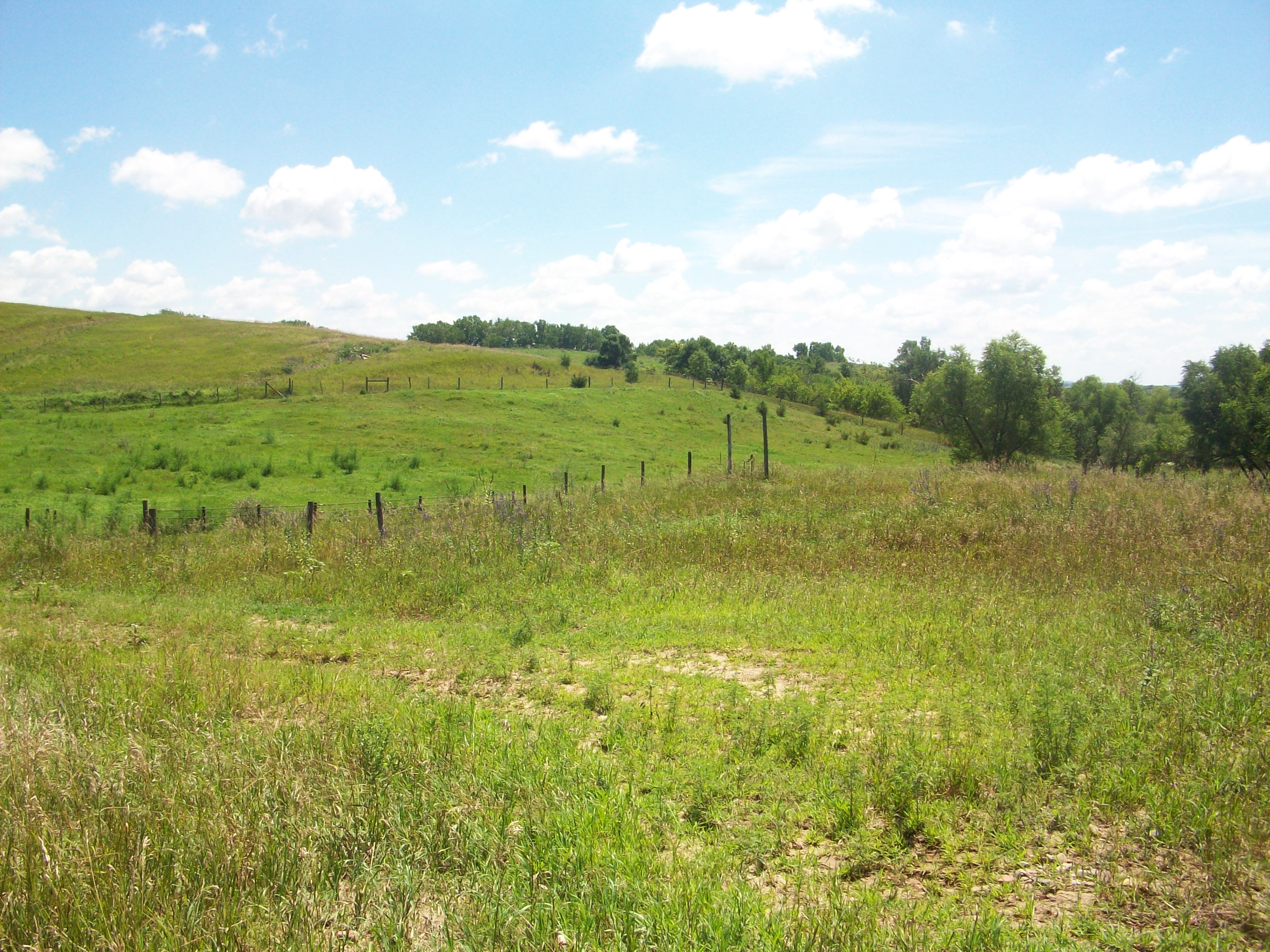


 Theodore Wheeler