July in Review (2011)

July was kind of a cluster, what with spending a week in Tel Aviv, and needing the week before takeoff getting ready for the trip. There wasn’t a whole lot of time to write, but I did manage to add another thirty pages or so to the final part to The Hyphenates of Jackson County, my novel. It wasn’t a ton of work to get done. But seeing how I spent most of May and June working on short stories, it was nice to get some momentum going on the novel again, and I think I did that. The ten hour flight from New York to Tel Aviv provided a big block of time to work, especially since I couldn’t sleep on the flight over. I also had three days of writing and revising in Israel, two days in a park and one at the beach. (Supposedly Jonathan Safran Foer moved to Tel Aviv to finish work on his latest book, so I’m in good company there. My hopes of becoming a superstar Jewish author are pretty slim, however. You know, because of this, among other reasons.) The change of scenery on the Mediterranean helped quite a bit, as a change often does. It’s almost always easier to think about home (or familiar things) when you’re far from home (surrounded by unfamiliar things). Being jarred out of my routine helped to get some gridlocked scenes moving again. I’ve kept writing outside this week too back in Omaha, working on the porch with a cold beer this afternoon. Not too shabby.

In other news:

-The big news of the month, in the small world of my writing, was that “On a Train from the Place Called Valentine” was selected for publication in Boulevard. The story will be featured in the noted journal in March 2012.

-Earlier in the month, my review of Suzanne Rivecca’s debut collection (Death is Not an Option) appeared on The Millions.

Nouvella Books unveiled their web site late in July. A spin off from Flatmancrooked’s Launch program, Nouvella is keeping the good fight going in helping to kick start the careers of some deserving writers. Best of luck to them!

-I received a small blurb in The Kenyon Review monthly newsletter about my prize-winning story “The Current State of the Universe” appearing in The Cincinnati Review in May. I think it’s very cool of TKR to do that kind of stuff. It’s a small bit, but very much appreciated.

-There was a great article about Daniel Orozco and his debut fiction collection in the recent Poets & Writers (print only) about dealing with agents and editors before you’re ready. Some very instructive stuff. Orozco’s first published story appeared in Best American Short Stories 1995 to quite a lot of fanfare. “Right after that I was getting calls from agents and publishers asking to see my other stories, to see my novel,” Orozco tells us. “But there wasn’t anything else. I was frantic for about a year–they all wanted something now. After a while they stopped calling and things quieted down, and I just settled back into my routine.” A mere sixteen years later, the collection has been published–and, again, Orozco is an author on the rise. It’s heartening to hear stories like this after my own experience in finding and losing an agent. The promise burns so bright when you’re in that situation—flying out to NYC to read, having agents contact you, hearing the sirens’ call of major publication and large advances—that when life slows back down, when that promise isn’t fulfilled, it feels like you’re washed up at twenty-eight. It’s rare enough to even get one real chance in this business. But as Orozco’s trajectory demonstrates, there are second chances too. If the writing is good enough, and if you’re persistent about putting yourself on the line, there’s opportunity yet.

Dispatch from The Hyphenates of Jackson County

“It’s something I wondered a lot about over the years since it happened. What would have gone through his mind? What would he have been thinking of, or could he even think at all, when the cops finally handed him over to that mob? Could he still see or hear, was his tongue a useless mass, did his skin still feel, once that first bullet ripped through him? It’s something I wondered about a lot. I wondered about that boy, Willy, and how it happened to him, and how, once it was all over, the war, the election, my time in Lincoln, I knew it wasn’t going to happen to me. But for a time that could have been me who had that happen to him. Not exactly the same, but something like that. So I wondered how it felt to be picked up by a lynch mob. Would his eyes and ears work, or would he be too afraid? Would he have been able to hear what that mob promised to do to him?”

Personal Rejection Notes, Requests for More, and Other Nice Versions of No Thanks

Conjunctions for “Shame Cycle.”

Just Finished

A Visit from the Goon Squad by Jennifer Egan. I never really fell in love with this one. I can see why people really like it, but it didn’t happen for me. For one thing, several of the stories were eerily close to some episodes from Season Two of Californication. The book seemed too trendy—in its formal choices and content—almost intolerably so. A good book, but one that gnawed at me.

The Call by Yannick Murphy. This is a very good novel. I’ll be reviewing this soon, so I won’t say much here now.

Now Reading

A Sport and a Pastime by James Salter.

Up Next

Winesburg, Ohio by Sherwood Anderson.

June in Review (2011)

June turned out to be all about new short stories for me. I completely reworked one short story, wrote a new one, and put the final touches on yet another. I’d planned on drafting new material for the novel this month, but was really swept up in the short form for a few weeks and had to put off any new writing for the novel. It had been so long since I had much passion for writing short fiction, I didn’t want to miss the opportunity. It felt pretty good to pump out a few stories in a small period of time, after working on one project for nearly two years now. To hear some new voices, to deal with different types of problems—those faced by married people, by people alive in this century, by those from the middle class—was kind of nice. It will also be nice to have some new stories to send out to journals this fall, which hasn’t been the case for a while.

In other news this past month:

The frontyard flower garden is in full bloom. Bumble bees rejoice.

-Mixer Publishing released my short story “The Housekeeper” on Amazon, available for download on Kindle or PDF. The story was originally published on Flatmancrooked earlier this year, but they have apparently taken down their entire site. That sucks.

-And if you’re already on Amazon, you might as well download the spring issue of The Kenyon Review, which features my short story “How to Die Young in a Nebraska Winter.”

-A story that just so happened to be reviewed on the blog Perpetual Folly as part of its Short Story Month 2011.

-Also, The Kenyon Review released their summer reading recommendations, including two of my picks.

-My review of Richard Burgin’s novel Rivers Last Longer appeared in the Pleiades Book Review.

-In other review news, The Millions will be running my review of Suzanne Rivecca’s debut short story collection Death is Not an Option sometime this month.

We traveled to State Center, IA, for a wedding of one of Nicole's cousins, and were greeted by a donkey.

Dispatch from “Impertinent, Triumphant”

“We talked about marriage for a long time. About the good stuff, then the bad, then the qualifications and excuses of what we’d said before. Something happened to Anna, she was emotional, she calmed down, something else happened a few weeks after that, and it wasn’t until later that she remembered the first thing, the original outrage, and by then it was too late for her to do something about it. My stories were the same, structurally. Eventually we turned listless and bleak, hearing about each others’ marriage wounds. They lacked finality. We wanted firm endings, closure, but that wasn’t possible.”

Personal Rejection Notes, Requests for More, and Other Nice Versions of No Thanks

Florida Review for “Attend the Way.”

Just Finished

The Names by Don DeLillo. I’ve read nearly all of DeLillo’s work now, and this is by far the most underappreciated novel of his I’ve come across. It’s really pretty good. One from his espionage meme, with a domestic twist, about a spy for the CIA who doesn’t know he’s working as a spy for the CIA. The only thing I can think of to explain its lack of recognition is that The Names, for one, comes from DeLillo’s first period of work, before he was famous, and, secondly, that it covers a lot of similar ground as some of his later intelligence novels, like Mao II, Underworld(my favorite!) and, to some extent, Libra.

Now Reading

A Visit from the Goon Squad by Jennifer Egan.

Up Next

The Call by Yannick Murphy.

May in Review (2011)

I’ve been working on a few new short stories lately, but the majority of May was devoted to beginning the initial drafting process for Part 5 of my novel The Hyphenates of Jackson County—the final section of the book. It’s all kind of a big mess right now, but it’s good to get into it. This always happens after I spend a couple months in revision, and this time was no different. The writing comes tough, in small amounts, 500-1000 words a day. It’s mostly blocking scenes, organizing notes, working out important descriptions and finding where symbolism might emerge. It takes a while to build some momentum and get a feel for how this part of the story should be told.

"The Hyphenated American"

The narrative style I use is pretty steady throughout the book—third-person, through the point-of-view of my main character Jacob Bressler, although I’m experimenting with some brief first-person sections, too—but the main issue comes from the time scope of the book. The present-time thread of the novel takes place over three years, from 1917-1919, or starting when the United States declares war on Germany in 1917 and ending with the Red Summer and Omaha Race Riot of 1919. It’s not a huge amount of time for a novel, gratefully, although there is a lot going on, and it’s a challenge to account for the lost, un-narrated time between parts. Particularly in first drafts, I think I pay too much attention to what’s happened in the time gaps, instead of just getting into the action at hand. A lot of that will be eliminated soon enough, most of it in the initial edits. But it makes things a little clunky and difficult in the first draft.

Anyway, I’m really excited to be this close to finishing a draft of my first novel. I hope to be done with a rough version of Part 5 by the end of the summer. And since I’ve been editing the other parts as I’ve gone along, there isn’t a tremendous amount of work yet to be done, relatively. (I’ve been working on the book for about two years now.) If all goes well, I should have a decent draft of The Hyphenates of Jackson County finished by Spring 2012. Here’s hoping anyway. It’s not like I’m on deadline or anything.

In other news this past month:

-“The Current State of the Universe” is featured in the new issue of The Cincinnati Review. The story won their Schiff Prize for Prose last year, and I’m very excited to make it into this journal.

Prairie Schooner accepted my review of David Philip Mullins’ Greetings from Below for publication. This will be my third review for PS, where I’m also currently a senior fiction reader.

-On cue, my second review for Prairie Schooner—of Nadifa Mohamed’s Black Mamba Boy—appears in our current summer issue. Check it out. It’s a pretty good one. (The issue, I mean. (The review is okay too.))

-In April we learned that Kwame Dawes was coming in as the new Editor of Prairie Schooner; in May we learned that Managing Editor James Engelhardt was leaving. James secured a position as the acquisitions editor for University of Alaska Press, and leaves for Fairbanks early in June. (Actually, today I think.) I owe a great debt to James for all he’s done for my editing and reviewing career, if I can call it that. James took me on as a reader after I received my MA from Creighton. I was looking to maintain some involvement in the literary world, and volunteering for Prairie Schooner has been a great anchor for me. After a year-and-a-half, I made my way up to a senior reader position; PS accepted my first book review, after some editorial help from James; my first two trips to AWP came with funding assistance from PS as well. I feel very grateful for what Prairie Schooner has done for me, in giving me the opportunity to work, particularly as someone who isn’t otherwise involved in the English Department at the University of Nebraska—and I owe much of that gratitude do James, I believe. Best of luck to him and his family on their Alaskan adventure! (And additional thanks for the fact that now, when I think of Alaska, I won’t think of Sarah Palin.)

-Nicole and I celebrated our fifth anniversary in San Francisco!

-This blog featured a longish post about researching the lynching of Will Brown, and coming across a great NPR feature about the execution of Willie McGee and his granddaughter’s quest to find out the truth about him many decades later.

Dispatch from The Hyphenates of Jackson County

“Jacob returned to Omaha the same morning President Wilson arrived from St. Paul. It was only partly coincidental it happened that way. Jacob was planning on coming back to Omaha that week anyway, to visit his friend Reinhold Bock, and then he read in the papers that Wilson was to arrive by train to the Union Station early Monday morning, before giving a speech on the League of Nations that afternoon. A parade route was planned out where Wilson’s car would meander the city. When Jacob read this, he went down to the station in Lincoln and got a ticket to Omaha for the next morning. He bought himself a suitcase too, at the store there that sold them. It was something simple, with cardboard sides, that didn’t lock. It wouldn’t have to last forever. Jacob didn’t know what he was going to do—he had no plan for the next year, or month, or for the next three days for that matter—but he wanted to see the president. He’d find a spot on Scandal Flats and wait for Wilson’s car to pass by. It felt like it would be significant to do that. Jacob didn’t know why. He just felt he needed to see the man. He needed to see the man as a man, that was it.”

Personal Rejection Notes, Requests for More, and Other Nice Versions of No Thanks

West Branch for “On a Train from the Place Called Valentine”; Southeast Review and Conjunctions for “Attend the Way”; Missouri Review for “Shame Cycle.”

Just Finished

The Cailiff’s of Baghdad, GA by Mary Helen Stefaniak. An excellent historical novel about racism and confronting the Other in depression-era Georgia, with a detour to the more famous Baghdad in ancient times. Very well done.

Quarantine by Rahul Mehta. I really enjoyed this collection—which revolves around the lives and loves of second-generation, homosexual, Indian-Americans—and will be reviewing it.

Now Reading

The Names by Don DeLillo.

Up Next

The Call by Yannick Murphy.

April in Review

-April turned out to be something of an uneventful month for me, which isn’t so bad. After all the good news and happening of March, it was nice to have a little more mental space to work in. I took a week off work and did a big revision of my short story collection, How to Die Young in Nebraska. A few stories were cut, I combined a few into a novella, and rearranged all of what was left into something kind of new. I took part in the initial screening for the Prairie Schooner Book Prize this year, and I tried to apply the lessons I learned from that experience as a screener/editor to my own collection. Hopefully it’s much better. I think it is. It’s a little shorter than before, the overall quality is a little more consistent, and the sense of narrative flow has been enhanced. We’ll see if there’s much of a response, as I have it out to a couple contests and small presses now.

-One thing I did a little different in my editing of the collection was to let myself revise older, published stories. My old agent was usually against this practice, maybe afraid that I would undo the magic of a piece by tinkering with it after it had already been edited and published. There’s a certain logic to that, but I felt it was time to make some smaller changes. My main motivation was thinking that I’m not exactly the same writer I was two or three or five years ago, and that the collection read a little too much like a fossil record of my stylistic changes over the period that I’ve been working on the book. Since I didn’t like that, I tried to make the book more consistent in style as well. That seems to make a lot of sense. Common sense even.

-Speaking of PS, Kwame Dawes was officially announced as the new Editor of Prairie Schooner. The last two years have been a little uncertain, as we looked for someone to replace longtime editor Hilda Raz, and I’m excited how it turned out.

-Darren and Lacey had their wedding this past weekend. Congrats to the Keens!

-I finally framed and hung a piece (see photo) that I made when I was at the Kimmel Harding Nelson Center for the Arts in March 2010. It’s pretty simple: an original Sunday supplement insert from the Omaha Daily News, from August 1912, on which I inked different descriptions of women that I wrote during my residency at KHN. I found the newspaper at an antique shop down the street from the arts center. It only took me a year, but I finally got the thing up on the wall, and I like it.

-Flatmancrooked officially called it quits in April. Here’s what I had to say about it.

-Looking ahead to May, The Cincinnati Review featuring my prize-winner, “The Current State of the Universe,” will be out on newsstands and in mailboxes. So get ready to hear more about that.

Personal Rejection Notes, Requests for More, and Other Nice Versions of No Thanks

“Attend the Way” was named a finalist in the Summer Literary Seminars’ Unified Fiction Contest. Kind of a slow month for rejections. I don’t really have that much stuff out there right now.

Just Finished

Greetings from Below by David Philip Mullins. A very nice collection that I’m in the process of reviewing. The final three stories are exemplary, and they make for a knock-out conclusion to the book. I can’t recall another collection that sprints to the finish as much as Greetings from Below does. Usually it’s more of a ruminative, self-reflective inching forward that gracefully puts an end to the proceedings, but GfB doesn’t really follow that format too much, which is good.

My American Unhappiness by Dean Bakopoulos. I’m still not really sure what to make of this book. It’s kind of chick-lit for thirty-something men, if that makes any sense. There are long stretches of great, interesting writing, but the first-person narrator is very glib and kind of a frustratingly clueless person at times. MAU will probably reignite some of the debates about unlikable lead characters that raged last year with the release of Jonathan Franzen’s Freedom.

Now Reading

The Cailiffs of Baghdad, Georgia by Mary Helen Stefaniak.

Up Next

Quarantine by Rahul Mehta.

March in Review

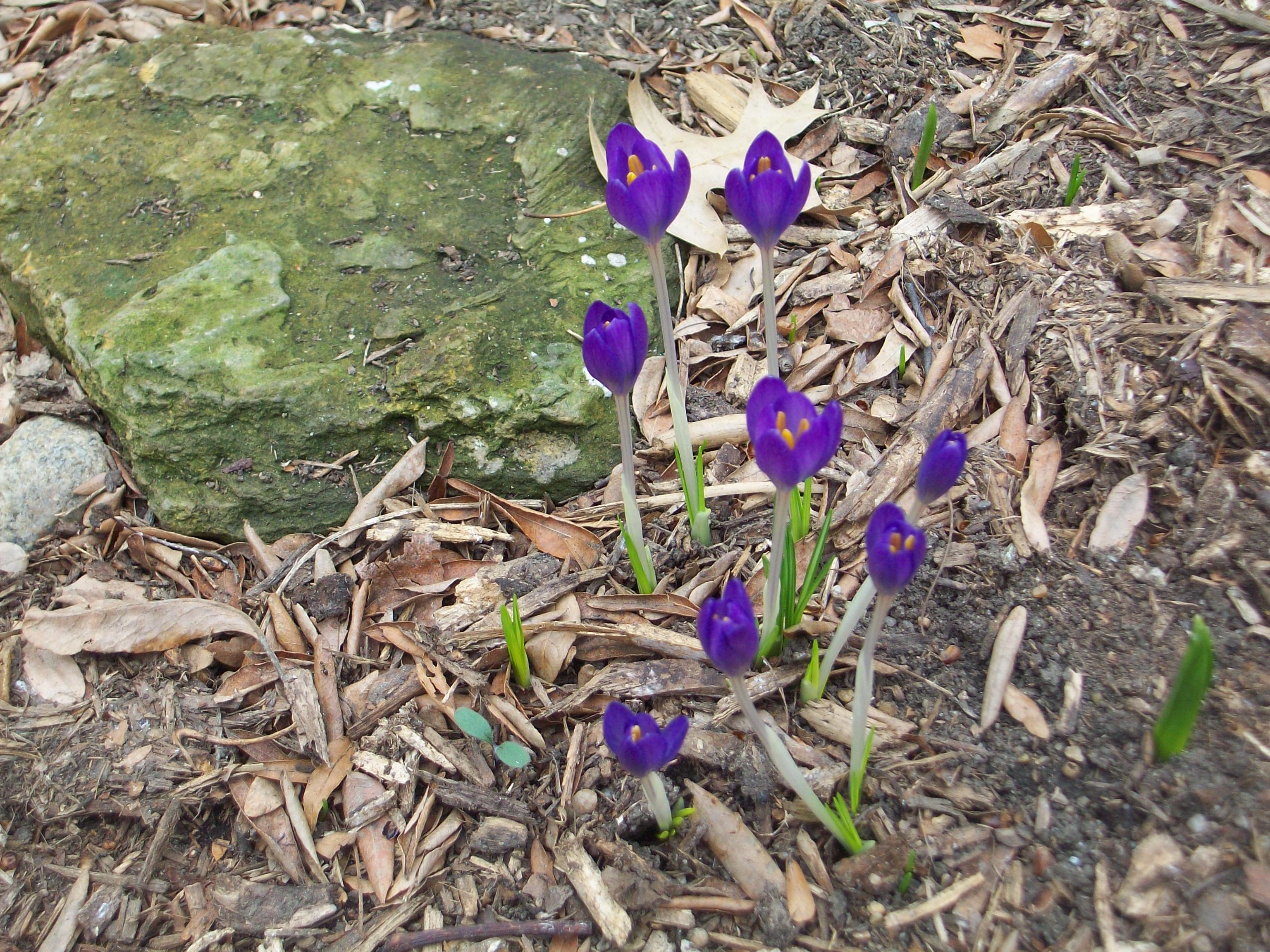
-We had out first flowers of the spring pop up mid month. The first sprouts we had were daffodil; the first blooms were crocus. Last year I was doing my residency at the Kimmel Harding Nelson Center for the Arts in Nebraska City when we had our first flowers, and I was pretty sad to miss them. Our winter wasn’t nearly as hard as the last one was, but it’s still pretty nice to be here to see things change. Our house was built in 1905, so we have things pop up pretty much everywhere too. Between the patio pavers, in the middle of the yard. It’s awesome.

-Tomorrow my wife Nicole’s new promotion and raise go into effect. She’s so smart. Although, being promised a raise on April Fool’s Day isn’t all that promising.

-The Royals lost their Opening Day game against the Angels this afternoon. It was a pretty good game, especially after LA starting pitcher Jered Weaver was pulled. KC should have one of the best, most exciting, and youngest middle relief corps in the majors this year. Too bad they’ll be pitching from behind most of the time.

-“How to Die Young in a Nebraska Winter” was published earlier this month in The Kenyon Review. It looks like they’re still running a friends-and-family special at this link, for anyone who’s interested in a discounted current issue or subscription. It was some pretty exciting stuff being in a TKR. I’ve had a few of these bigger publications now, and it’s really something a guy or gal could used to.

-I was also interviewed by The Kenyon Review Online in anticipation of the release.

-Then, to cap off a crazy week, Confrontation accepted my story “The First Night of My Down-and-Out Sex Life” for publication. I haven’t heard anything for sure, but, judging from the contract verbiage, I’m hoping it will run in November.

Personal Rejection Notes, Requests for More, and Other Nice Versions of No Thanks

Bat City Review and Missouri Review for “On a Train from the Place Called Valentine”; Ploughshares for “Shame Cycle”; and New Letters for “These Things That Save Us.”

Now Reading

Greetings from Below by David Philip Mullins. Still reading this, kind of. I’ve been knee-deep in book prize manuscripts for pretty much the whole month. I will be finishing up my recommendations next week and then will be back on to published books again. I’m very much looking forward to it.


Up Next

My American Unhappiness by Dean Bakopoulos.

February in Review

-I was lucky to see the National Christmas Tree when I was in Washington DC last month—as it fell over in a windstorm a couple weeks after I visited. My walking friend and I commented to each other at the time that the tree looked to be in pretty bad shape. Apparently it was! The tree I saw was installed during the Jimmy Carter presidency. A replacement will be planted this spring.

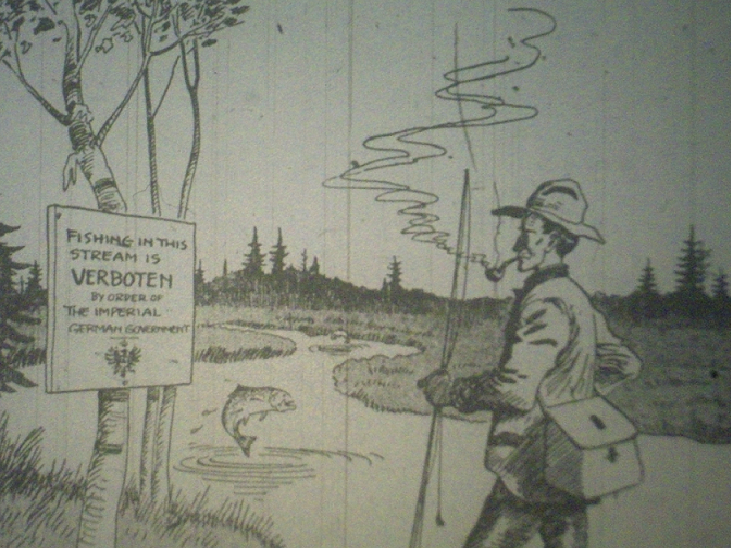
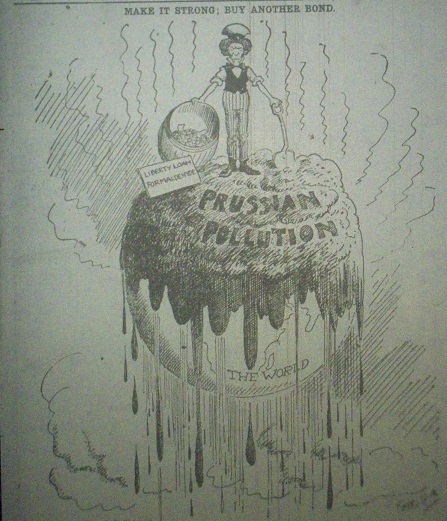
Another cartoon from the Evening Omaha World-Herald, from 1918, this one on the threat global domination posed to local fishermen.

-The reviews I did last year for Justin Taylor’s Everything Here is the Best Thing Ever and Teddy Wayne’s Kapitoil were mentioned in a couple different Best Books of 2010 lists. Here are the links:

http://bygonebureau.com/2010/12/08/best-books-of-2010/

http://robaroundbooks.com/2010/09/afterthoughts-kapitoil-by-teddy-wayne/

-A healthy portion of “Welcome Home” was put up on Google Books, as it appeared in Best New American Voices 2009. It’s not all there, but most of it is.

-“Welcome Home” was also mentioned on the news page of the Arts & Sciences College at Creighton University, where I did my MA. I should note, however, that the story may be selected for the Warrior’s Journey coursework. Nothing is official as of yet. If I hear anything I’ll be sure to post about it, as having my work included in that program would certainly be my biggest accomplishment to date. I’m very proud that they asked to use the story.

-My review of Marcy Dermansky’s Bad Marie was published on The Millions.

Personal Rejection Notes, Requests for More, and Other Nice Versions of No Thanks

McSweeney’s, Epoch, and Shenandoah for “On a Train from the Place Called Valentine”; Missouri Review for “The First Night of My Down-and-Out Sex Life”; and Crab Creek Review for “These Things That Save Us.”

Now Reading

Greetings from Below by David Philip Mullins.

Just Finished

The Sun Also Rises by Ernest Hemingway. “I overtipped him. That made him happy. It felt comfortable to be in a country where it is so simple to make people happy. You can never tell whether a Spanish waiter will thank you. Everything is on such a clear financial basis in France. It is the simplest country to live in. No one makes things complicated by becoming your friend for any obscure reason. If you want people to like you you have only to spend a little money. I spent a little money and the waiter liked me. He appreciated my valuable qualities. He would be glad to see me back.”

Nowhere Man by Aleksandar Hemon. A fantastic novel. Smart, melancholy and funny. I’ve only read two of his books so far, but Hemon is one of my favorite writers. He’s really great, and I need to make the time to read all of his work.

Up Next

Other People We Married by Emma Straub.

[Note: I’m trying something new with the format for these posts, going to whole months in review rather than what was turning out to be 3-4 weeks in review. It isn’t much of a change, except that I’ll be pulling the longer topical and reflective sections out and making those into their own posts. The month in review posts will be more bullet point stuff. Not much of a change in content, but more and smaller posts. Hopefully that’s a little easier to consume.]

Weeks of Jan 7 – Jan 27, 2011: When to Rewrite

For the past few months I’ve been working on a rewrite of my novel. A lot of the process has been interesting and fun. It’s kind of nice to open up long-settled writing and start playing with things like point-of-view, voice, and structure again. Of course, there are some not-so-fun aspects too. Probably the worst, at least emotionally, is figuring out if you’re at the point when a rewrite is necessary, or not. I doubt anyone really wants to take on such a large project that’s essentially redoing work you thought was done, work you may be pretty proud of. There’s so much emotional turmoil that comes with starting over. You start thinking of wasted months, years, the thousands of words that have already been thrown out. And that’s before you start reconsidering POV and structure, the rhythm and tone. It’s questioning your very way of being. It’s a painful threshold to cross. As I’ve been working through this, I wondered how others might confront this problem. Please comment if you have some tips or ideas, or what might be some helpful reading. I’d love to hear them.

In the meantime, here’s how I’ve handled it.

Generally my revision process is tied closely to my submission cycle, especially with short stories. The main thinking here is that, after a dozen rejections, you should have an idea of how a story is being received. Even if editors aren’t sending back hand-written notes or requests to see more work, such silence can still mean something. After a while, the feedback and notes, or lack thereof, point to a course of action. From there, you can ascertain whether the piece needs some tweaking or an overhaul. (Or maybe a trash can.) With short stories, getting positive notes helps point me to what stories are hot or close. I keep close track of them. I may let it roll unchanged then, or it may push me to take a really hard look at what may be a winning revision, knowing that it’s on the verge of acceptance. For the novel, it’s harder because the piece is so much larger. But feedback from agents can be invaluable, if you know how to read what they’re saying. I think the most common cause of an agent rejection is that they don’t connect on a personal level with the material, which can really mean anything. So, is it just that, a missed connection with an individual, or is there a more serious problem with the manuscript. How do you know? This is where volume comes into play. Getting a bunch of rejections can be a good thing, if there’s feedback involved. If you keep hearing the same thing over and over, that’s probably a sign of what the problem is. It’s pretty simple.

With my current novel, I’d received feedback from a half-dozen agents. This isn’t a ton, but all of them gave pretty specific reasons why they felt the book wasn’t right for them. Some of them were kind of dubious of my going from a collection of edgy, contemporary stories to writing a historical novel. I wondered if there’s something about historical fiction that precludes it from being edgy, but realized that that probably wasn’t the problem. It was the way my book was structured, the way I was trying to shelter my protagonist from doing bad things—which is a problem, since I have trouble writing “nice guys”—and the way I sometimes allowed the history to overpower the story and how this also put a dry, scholarly slant to the narrative voice. (And a lot of this came from my having to figure out the history too. It was hard to understand the scope and structure of the story while I was still learning new, game-changing things about the history I’m dealing with. I put a lot of stock in the idea that we think best through writing. It just took me a lot of words to grasp these ideas.) I couldn’t see these problems without my clutch of rejection notes, which is the larger point here. It sucks to struggle through a stack of rejections, but this is why I’ve always enjoyed the process of submitting stories. I’ve been pretty lucky to get some nice feedback from editors and agents—that’s a big part of it—but the process is such a great motivator, conscience, and teacher as well. It makes you be honest with yourself about what’s actually on the page, the quality of the work, and what more you’ll have to wring out of it to make the story a success.

I’m not sure if there’s any other way for me to write besides building out of a series of failures. Maybe I’m too prideful to see my mistakes until well after I’ve made them. Maybe this is how it is for everyone. In any event, I think the rewrite of Hyphenates is turning out well. This new series of stets, scribbles, false starts, and mistakes is progressing nicely.

Dispatch from The Hyphenates of Jackson County

yé-yé girl

“It was liberating to sit on the stoop early in a May evening, in those middle-spring hours when it was warm enough for Jacob to roll up his shirtsleeves and let the air hit his skin again. It was one of the main promises of spring, that there would be more of these nights to come, barefoot and comfortable, reclined in a sturdy chair. No mosquitoes yet, no bearing-down evening swelter. The whole world was green in those hours, breezy and clear.”

Personal Rejection Notes, Requests for More, and Other Nice Versions of No Thanks

New England Review and CutBank for “On a Train from the Place Called Valentine”; Copper Nickel and Third Coast for “These Things That Save Us.” And, of course, “The Housekeeper” was published on Flatmancrooked last week!

Now Reading

The Sun Also Rises by Ernest Hemingway.

Just Finished

Bad Marie by Marcy Dermansky. An interesting study of the anti-hero as filtered through French cinema. It’s pretty good! Highly recommended for all fans of movies set in Paris, or for anyone who has named their first-born child after the heroine of their favorite French film.

Up Next

Greetings from Below by David Philip Mullins.

Weeks of Dec 6, 2010 – Jan 6, 2011: On Going First-to-Third

(Note: This isn’t a baseball entry.)

For the past month or so I’ve been toying with point-of-view in my novel, first going from a close third-person to first-person narrated by Jacob Bressler, my lead character. I’m not really sure what my goal for doing this was. Something just didn’t sound right with the “voice” telling the story and I wanted to try something different. Some of the feedback I’ve received from potential agents spoke to Hyphenates being a book focused on history and setting, rather than story and character, and I’m trying to break that hold. So I figured that Jacob could tell his story more succinctly, since it’s all he would care about. He wouldn’t obsess over Omaha history or factoids of the era as much as I do, certainly, and sometimes it’s easier to slip those lovelies in while in third-person. I needed a more discerning eye. It’s like how you don’t realize how embarrassing something is until you say it out loud to another person, or post it in online. But once you open your mouth, you can see things so much more clearly and objectively.

The experiment didn’t really work. Conventional wisdom says that novels shouldn’t be written exclusively, or even largely, in first-person, and I think that’s probably good advice. Around page fifty of the rework, it got pretty annoying to keep seeing and hearing that “I” all over the place. To be unable to break out of Jacob’s voice even for a minute is a problem, especially since he’s the focus of the book. But, even though I’m now in the process of reworking it back into third-person, I do think the exercise was worthwhile. It helped me see cuts and edits, and gaps where new work is needed, that weren’t apparent before. While it seemed acceptable to have a third-person narrator go into a page-and-a-half diatribe on the condition of organized labor in Omaha in 1917, having Jacob do the same was absolutely ridiculous. There were more than a few instances of this, where the scholarly, professorial voice would dominant for longish periods—and they all needed to be cut. The writing is much cleaner now, more focused and edgy in a way similar to my contemporary-set fiction.

I’d only made it through about a quarter of what I have drafted in the transition to first-person rework, but it may be worthwhile to push through the rest of it, even though I know that I’ll want it in third-person eventually. (I’ll probably want this.) I have used this technique in spots for the last year or so anyway, in fact, trying to tie the narration as closely to Jacob’s experience as I could. So much of the writing, especially in Part II, has already been rewritten, for my own benefit, in Jacob’s first-person. There’s just so much good that comes from writing around things like this. I imagine it’s similar to filmmakers shooting a scene from ten different angles, hoping to get one that looks and sounds and feels right. The dispatch below is a part I wrote new while in Jacob’s first-person, and it’s something I don’t think the third-person narrator could have come to. So there’s that.

Dispatch from The Hyphenates of Jackson County

“The bank was open when I left the saloon, it was two o’clock, but I still didn’t go there and ask for a job. The weather was nice. Again I walked downtown, but it was boring this time. No women brushed against me. My clothes disgusted them, my face was filthy. I waited out the day and then returned to the Courthouse lawn in the evening to sleep. It was warm and I’d been safe there the night before. I knew at what time to cops would come to roust me, and would make it a point to leave before they came out with their cudgels. It seemed simple. But I was arrested anyway, after midnight, for vagrancy, and put in the overnight with the drunks and other indigents. I wasn’t disappointed to be arrested, however, after I was released. At least there was black coffee this way, and in the morning a bowl of white beans with a couple pieces of fat. Otherwise I wouldn’t have eaten that morning. The whole night I wished that I’d gone to the bank that day, however. There was plenty of time for regrets in the overnight, because the drunks couldn’t keep quiet. I thought of everyone I might have wronged in my life up to this point. Any pocket of guilt that had been waxed over was reopened. I thought of you that night, Evie, and why it was you had to leave Jackson those many years before. I thought you took off on your own. It never occurred to me that they’d run you and your mother off. Not until they ran me off too.”

Personal Rejection Notes, Requests for More, and Other Nice Versions of No Thanks

Southern Humanities Review and Hayden’s Ferry for “Attend the Way”; Electric Literature for “On a Train from the Place Called Valentine”; and West Branch for “The First Night of My Down-and-Out Sex Life.”

Now Reading

Bad Marie by Marcy Dermansky.

Just Finished

A cover for Fortune designed by Chris Ware, by request. The magazine rejected it, of course. Pretty incredible nonetheless.

One of Ours by Willa Cather. A really great, Pulitzer Prize-winning novel set mostly in Central Nebraska and Lincoln, in the late 1910s. I was lucky to pick this up at the National World War I Museum in Kansas City this fall and it’s become a fantastic resource for me. The focus of the book is even a family named Wheeler! (I’ve gone over this before, I know. Indulge me.) The final third of the book, when Claude goes over to fight in the war, is pretty sentimental and Cather panders more than a little bit to jingoistic reactionism in these parts. But overall I really enjoyed the book. Cather has never disappointed. Plus, as an added bonus, there are a bunch of good old-timey ideas for home gardens in Nebraska, for all you green-thumbs out there. We’re going to try growing gourd vines up our pergola trellis this summer, and we have Cather to thank for that.


The Best American Comics 2010, edited by Neil Gaiman, Jessica Abel and Matt Madden. My favorites include “The Lagoon (Hiding in the Water)” by Lilli Carré, “The Alcoholic” by Jonathan Ames and Dean Haspiel, “Asterios Polyp” by David Mazzucchelli, “The War on Fornication” by Peter Bagge, “The Flood” by Josh Neufeld, and “Fiction versus Nonfiction” by Chris Ware. Ware also had a lengthy section of his ongoing series “Acme Novelty Library” reprinted, which I had seen some of before. In 2007 he gave a standing-room-only lecture at the Sheldon in Lincoln that Nicole and I attended, and a comics pamphlet featuring some of the comic reprinted here was given out as an example of his work. It was pretty cool to get the work then and is outstanding to see the longer version reprinted in a Best American. To make it even better, the comic is set in 1950s Omaha and uses the old Omaha World-Herald building (where Nicole worked when as first moved here) as a backdrop. There have been quite a few notable artists who have come out of Omaha in the last decade, but none of them have really attained giant-status in their field like Chris Ware has. It’s something that should really get more local recognition than it does.

Rivers Last Longer by Richard Burgin. A solid literary thriller with meta-fictional treasures abound. I’m currently writing a review on this now.

Up Next

Greetings from Below by David Philip Mullins.

The Year in Photos: 2010

Maddie turned two in January–and will be three already next month. She’s been in a Montessori school this fall and really doing well. She makes us feel so proud, and scared.
We went to New York in February. We walked next to many of the sycamores of Brooklyn and experienced the city in a snowstorm, when all those urban woodsmen really come in handy.
In March, I served a two-week residency at the Kimmel Harding Nelson Center for the Arts in Nebraska City. It was a great time and I did a bunch of work on my novel, in addition to meeting some pretty cool people and becoming a regular at a hot pink taco stand.
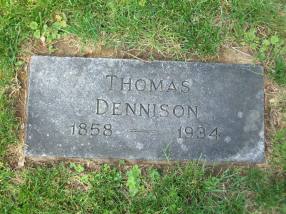
We tracked down the grave of former Omaha political boss Tom Dennison on Memorial Day. I was kind of baffled at first that his marker was so understated, as I expected to find an ornate mausoleum, but I dug up some research later in the year that suggest that Dennison may have been pretty much broke by the time of his death.
In June, my review of Lydia Peelle’s short story collection, Reasons For and Advantages of Breathing, appeared in the summer issue of Prairie Schooner.
In a busy June, we attended the Geist/Jonas wedding in Stoner Haven, Colorado. Er, Fort Collins. (We didn’t have time to visit the Cheba Hut, but did fit in a short visit to the New Belgium brewery for some samples.) A short story, “Let Your Hair Hang Low,”  appeared on MARY this month.
“The Man Who Never Was” appeared in Portland, OR rag Weekday in July. “Shame Cycle” was a finalist for the LitPop Fiction Contest, but didn’t ultimately take the prize.
July also saw us up to Niobrara for the Blankenfeld family reunion, which included a tour of the original homestead site. This was awesome.
The Cincinnati Review chose “The Current State of the Universe” as winner of its Robert and Adel Schiff Prize in Prose in September. The story will appear in their Spring 2011 issue. I also made a guest appearance on their blog, writing about the story’s inspiration.
In November, we visited the National World War I Museum in Kansas City. My review of Nadifa Mohamed’s novel Black Mamba Boy was also accepted for publication in a future edition of Prairie Schooner.

It’s been a great year and hopefully 2011 is even better. (Is anyone else having trouble not typing 2001?)

Best wishes!