-Some good news came along–announced in September, technically–as I’ve been awarded a scholarship to attend the 2012 Key West Literary Seminar and will participate in a workshop with the legendary Robert Stone.
-I announced in the same post that “These Things That Save Us” will appear in the premier issue of Conversations Across Borders.
“Lots of doughboys were in the crowd. This wasn’t all that surprising, as there were two forts nearby—Fort Crook and Fort Omaha. Jacob saw them around a lot then, in the year after the armistice—the doughboys come home, displaced from their jobs. There were plenty along the streets of the River Ward, husky kids still in uniform, their long green socks and puffy breeches, like football players lost from afield. An awful lot of them had what was called war neurosis. Some twitched, or struggled to keep their eyes open. Some had to constantly skim the palms of their hands over their faces and fuzzy, shaved skulls, like a cat preening itself. So many shuffled along in a painful, halting gait, or like they were slipping on ice, their whole bodies in spastic shaking. You didn’t want to think about what those suffering doughboys had seen or heard over there to make them out this way. The constant bombardments, the nerve gas, horses disemboweled on barbed wire barricades, the still-moving charred grist of a man caught by a flame thrower. There were doughboys who’d been buried alive when the man next to them stepped on a landmine, or in mortar fire, trapped when the four tons of earth thrown up in the explosion landed. There were the flyboys, crazy-eyed, sun-dazed, whose hands curled and shook, forever gripped on the timorous controls of their bi-plane’s yoke and machine gun trigger.”
Personal Rejection Notes, Requests for More, and Other Nice Versions of No Thanks
Electric Literature for “Shame Cycle.”
Just Finished
A Sport and a Pastime by James Salter. Often touted in recent publications as having the sexiest depictions of sex of any novel. It’s sexy, but not very erotic, if that makes sense. A good novel, though.
Winesburg, Ohio by Sherwood Anderson. A classic that I love to reread. The stories “Godliness,” “The Strength of God,” and “Death” just really can’t be beat. Simply amazing work from who is really the father of the American short form.
It took me almost exactly two years to get to this point–two and a half when counting research–but I now have a whole book on my hands and can start editing with a fuller knowledge of what happens in the book.
It feels kind of strange, even though it isn’t done by a longshot. There was always a little bit of doubt in the back of my mind that I would ever finish the novel, even a very rough draft of it. Maybe because I’d spent a year on a previous novel that I had to shelve and kill, the possibility that I’d keep switching projects for years without finishing anything loomed in my mind. Sometimes it’s good to be stubborn. Writing the final few paragraphs of Hyphenates was surreal and exciting, knowing that they are (or may be) the actual end of the novel.
If things go reasonably well, I should have a real finished version of the book in 6-8 months to start sending out. In any event, I’ll only work on this up to eight more years before I give up on it.
The bulk of my writing work this summer has revolved around the Omaha Race Riot of 1919, a tumultuous and hugely traumatic event that I’ve been attempting to dramatize in Part 5 of my novel-in-progress, The Hyphenates of Jackson County. The riot, a well-known scar on Omaha’s history, one that is referred to from time to time in this space, was set off and punctuated by the lynching of Will Brown, an itinerant black worker who’d been accused of rape.
Omaha World-Herald, Sept. 29, 1919.
A lot of my previous work has dark themes, and I felt pretty well accustomed to portraying violence in my work. But I haven’t been as prepared for the kind of in-depth experience that researching and writing about a lynching has been. The darkness has kind of caught me by surprise sometimes–maybe because these bad things really happened, where the violence in my previous work was purely fictional. It isn’t something that can just be packed away at the end of the day, going through hundreds of horrific images with a mind toward depicting them, or getting inside the psyche of a character who would shoot at a hanging body and burn a corpse, or trying to imagine what that person who would be lynched might be thinking as their days and hours dwindled, before they were about to die in an infamous way.
Many of these things I researched happened in places I walk by everyday, as I work as a reporter at the Douglas County Courthouse, where the riot and lynching occurred. It was easy to be reminded, which, I suppose, was kind of the point of the project in the first place.
Most of my work was spent reading and re-reading local newspaper accounts of the riot–in microfilm copies of the World-Herald, Daily Bee,Daily News, and Monitor, the black weekly, from 1919. Some of the accounts are chilling. Eye witness and insider accounts. The riot built over the course of eight hours, so there was considerable news coverage. The Bee‘s headquarters was right across the street from the Douglas County Courthouse (where the Woodmen Tower stands now) at the epicenter of the riot. There are many photos, some graphic accounts. The news now is pretty tame in comparison to what it used to be like, in some ways.
Here’s how the Nebraska State Historical Society describes the lynching of Will Brown on their web site NebraskaStudies.org:
Brown ended up in the hands of the crazed mob. He was beaten into unconsciousness. His clothes were torn off by the time he reached the building’s doors. Then he was dragged to a nearby lamp pole on the south side of the courthouse at 18th and Harney around 11:00 p.m. The mob roared when they saw Brown, and a rope was placed around his neck. Brown was hoisted in the air, his body spinning. He was riddled with bullets. His body was then brought down, tied behind a car, and towed to the intersection of 17th and Dodge. There the body was burned with fuel taken from nearby red danger lamps and fire truck lanterns. Later, pieces of the rope used to lynch Brown were sold for 10 cents each. Finally, Brown’s charred body was dragged through the city’s downtown streets.
The Omaha Race Riot happened toward the end of what James Weldon Johnson coined as the Red Summer, a period of months following the end of World War I when race riots gripped numerous major American cities. At least forty-three African-Americans were lynched in America, from January to September, in 1919. This was at the height of the Great Migration, at the same time as white soldiers were returning from service in Europe to find their old jobs filled, at the same time as labor disputes and strikes were common and heavily reported on by the Yellow Press, at the same time as the U.S. government was using global tension to crack down hard on any dissident group it didn’t like, and there were many they didn’t like. It isn’t surprising that so much violence broke out. What surprises is the utter glee with which that violence was undertaken.
I found that the more I read about the lynching of Will Brown, the harder it was to go through the rest of the day–which is as it should be when confronting such examples of dehumanization. It became necessary to split up the work, to take days off, to take time working on unrelated short fiction, so as to not walk around with a diseased soul all the time. To not be gripped with outrage and sadness.
In Tel Aviv I started writing by hand on a legal pad–out of necessity there, as I didn’t want to lug around a laptop overseas–and continued the practice here at home. It’s been very helpful to do this, in a surprising way. Not only have I kept writing on the legal pad, but I’ve done so outside of the house too. It’s been so much harder to write inside our house than it is to write outside of it. At first I thought it was a product of being bored in my office–where I do almost all of my work, thinking that the trip to Israel helped to bust loose some cobwebs–but I believe it’s been of a distancing method from the material on an emotional level more than anything. On some level, I think, I’m not really all that comfortable bringing this stuff into my house. It makes me nervous, or guilty, to write about a lynching across the hall from the room where my daughter sleeps. But if I’m outside our home–on the patio, at the Joslyn Sculpture Garden, at the courthouse itself, or out of the U.S. altogether–then the material comes out. I’m able to write about it. It’s been kind of strange, and I hope the work come off okay.
I’m almost done with the book. I’d been saving this stuff for last, not sure exactly how one writes about it.
Will Brown’s body was burned at 17th & Dodge Streets in Omaha. Photos like these were turned into souvenir postcards.
—
I’d like to share one of my online sources that I found particularly haunting–and that is the web site Without Sanctuary: Lynching Photography in America. (There’s a book also.) The site features hundreds of photos of lynchings from around the country. What’s even more disturbing, is that most of these photos were on postcards sold afterwards, in what has to be the darkest bit of Americana. They were found at flea markets and in private collections. Apparently quite a few of them are out there still.
—
Also, here is a database listing of lynchings by state, in case you’re interested. Over the period of 1882-1968 the database covers, 4,743 people–of all races–were lynched in forty-one different states.
Below is the final scene from the Roger Corman film Von Richthofen and Brown (1971) about German ace Manfred von Richthofen (aka The Red Baron) and the Canadian pilot Roy Brown who eventually shot down and killed him. The movie is pretty interesting, by the way. Although not precisely accurate in historical detail, the numerous air combat scenes and sense of camaraderie and competition between enemy squadrons are done quite well, as evidenced by these final shots.
And here’s some archive footage of Richthofen’s remains after the crash, and his funeral. There was such respect between the rivals that the Red Baron was given a full military funeral by Allied forces. His infamous red triplane, however, was quickly dismantled for souvenirs.
July was kind of a cluster, what with spending a week in Tel Aviv, and needing the week before takeoff getting ready for the trip. There wasn’t a whole lot of time to write, but I did manage to add another thirty pages or so to the final part to The Hyphenates of Jackson County, my novel. It wasn’t a ton of work to get done. But seeing how I spent most of May and June working on short stories, it was nice to get some momentum going on the novel again, and I think I did that. The ten hour flight from New York to Tel Aviv provided a big block of time to work, especially since I couldn’t sleep on the flight over. I also had three days of writing and revising in Israel, two days in a park and one at the beach. (Supposedly Jonathan Safran Foer moved to Tel Aviv to finish work on his latest book, so I’m in good company there. My hopes of becoming a superstar Jewish author are pretty slim, however. You know, because of this, among other reasons.) The change of scenery on the Mediterranean helped quite a bit, as a change often does. It’s almost always easier to think about home (or familiar things) when you’re far from home (surrounded by unfamiliar things). Being jarred out of my routine helped to get some gridlocked scenes moving again. I’ve kept writing outside this week too back in Omaha, working on the porch with a cold beer this afternoon. Not too shabby.
In other news:
-The big news of the month, in the small world of my writing, was that “On a Train from the Place Called Valentine” was selected for publication in Boulevard. The story will be featured in the noted journal in March 2012.
–Nouvella Books unveiled their web site late in July. A spin off from Flatmancrooked’s Launch program, Nouvella is keeping the good fight going in helping to kick start the careers of some deserving writers. Best of luck to them!
-I received a small blurb in The Kenyon Review monthly newsletter about my prize-winning story “The Current State of the Universe” appearing in The Cincinnati Review in May. I think it’s very cool of TKR to do that kind of stuff. It’s a small bit, but very much appreciated.
-There was a great article about Daniel Orozco and his debut fiction collection in the recent Poets & Writers (print only) about dealing with agents and editors before you’re ready. Some very instructive stuff. Orozco’s first published story appeared in Best American Short Stories 1995 to quite a lot of fanfare. “Right after that I was getting calls from agents and publishers asking to see my other stories, to see my novel,” Orozco tells us. “But there wasn’t anything else. I was frantic for about a year–they all wanted something now. After a while they stopped calling and things quieted down, and I just settled back into my routine.” A mere sixteen years later, the collection has been published–and, again, Orozco is an author on the rise. It’s heartening to hear stories like this after my own experience in finding and losing an agent. The promise burns so bright when you’re in that situation—flying out to NYC to read, having agents contact you, hearing the sirens’ call of major publication and large advances—that when life slows back down, when that promise isn’t fulfilled, it feels like you’re washed up at twenty-eight. It’s rare enough to even get one real chance in this business. But as Orozco’s trajectory demonstrates, there are second chances too. If the writing is good enough, and if you’re persistent about putting yourself on the line, there’s opportunity yet.
Dispatch from The Hyphenates of Jackson County
“It’s something I wondered a lot about over the years since it happened. What would have gone through his mind? What would he have been thinking of, or could he even think at all, when the cops finally handed him over to that mob? Could he still see or hear, was his tongue a useless mass, did his skin still feel, once that first bullet ripped through him? It’s something I wondered about a lot. I wondered about that boy, Willy, and how it happened to him, and how, once it was all over, the war, the election, my time in Lincoln, I knew it wasn’t going to happen to me. But for a time that could have been me who had that happen to him. Not exactly the same, but something like that. So I wondered how it felt to be picked up by a lynch mob. Would his eyes and ears work, or would he be too afraid? Would he have been able to hear what that mob promised to do to him?”
Personal Rejection Notes, Requests for More, and Other Nice Versions of No Thanks
Conjunctions for “Shame Cycle.”
Just Finished
A Visit from the Goon Squad by Jennifer Egan. I never really fell in love with this one. I can see why people really like it, but it didn’t happen for me. For one thing, several of the stories were eerily close to some episodes from Season Two of Californication. The book seemed too trendy—in its formal choices and content—almost intolerably so. A good book, but one that gnawed at me.
The Callby Yannick Murphy. This is a very good novel. I’ll be reviewing this soon, so I won’t say much here now.
I’ve been working on a few new short stories lately, but the majority of May was devoted to beginning the initial drafting process for Part 5 of my novel The Hyphenates of Jackson County—the final section of the book. It’s all kind of a big mess right now, but it’s good to get into it. This always happens after I spend a couple months in revision, and this time was no different. The writing comes tough, in small amounts, 500-1000 words a day. It’s mostly blocking scenes, organizing notes, working out important descriptions and finding where symbolism might emerge. It takes a while to build some momentum and get a feel for how this part of the story should be told.
"The Hyphenated American"
The narrative style I use is pretty steady throughout the book—third-person, through the point-of-view of my main character Jacob Bressler, although I’m experimenting with some brief first-person sections, too—but the main issue comes from the time scope of the book. The present-time thread of the novel takes place over three years, from 1917-1919, or starting when the United States declares war on Germany in 1917 and ending with the Red Summer and Omaha Race Riot of 1919. It’s not a huge amount of time for a novel, gratefully, although there is a lot going on, and it’s a challenge to account for the lost, un-narrated time between parts. Particularly in first drafts, I think I pay too much attention to what’s happened in the time gaps, instead of just getting into the action at hand. A lot of that will be eliminated soon enough, most of it in the initial edits. But it makes things a little clunky and difficult in the first draft.
Anyway, I’m really excited to be this close to finishing a draft of my first novel. I hope to be done with a rough version of Part 5 by the end of the summer. And since I’ve been editing the other parts as I’ve gone along, there isn’t a tremendous amount of work yet to be done, relatively. (I’ve been working on the book for about two years now.) If all goes well, I should have a decent draft of The Hyphenates of Jackson County finished by Spring 2012. Here’s hoping anyway. It’s not like I’m on deadline or anything.
In other news this past month:
-“The Current State of the Universe” is featured in the new issue of The Cincinnati Review. The story won their Schiff Prize for Prose last year, and I’m very excited to make it into this journal.
–Prairie Schooner accepted my review of David Philip Mullins’ Greetings from Belowfor publication. This will be my third review for PS, where I’m also currently a senior fiction reader.
-On cue, my second review for Prairie Schooner—of Nadifa Mohamed’s Black Mamba Boy—appears in our current summer issue. Check it out. It’s a pretty good one. (The issue, I mean. (The review is okay too.))
-In April we learned that Kwame Dawes was coming in as the new Editor of Prairie Schooner; in May we learned that Managing Editor James Engelhardt was leaving. James secured a position as the acquisitions editor for University of Alaska Press, and leaves for Fairbanks early in June. (Actually, today I think.) I owe a great debt to James for all he’s done for my editing and reviewing career, if I can call it that. James took me on as a reader after I received my MA from Creighton. I was looking to maintain some involvement in the literary world, and volunteering for Prairie Schooner has been a great anchor for me. After a year-and-a-half, I made my way up to a senior reader position; PS accepted my first book review, after some editorial help from James; my first two trips to AWP came with funding assistance from PS as well. I feel very grateful for what Prairie Schooner has done for me, in giving me the opportunity to work, particularly as someone who isn’t otherwise involved in the English Department at the University of Nebraska—and I owe much of that gratitude do James, I believe. Best of luck to him and his family on their Alaskan adventure! (And additional thanks for the fact that now, when I think of Alaska, I won’t think of Sarah Palin.)
-This blog featured a longish post about researching the lynching of Will Brown, and coming across a great NPR feature about the execution of Willie McGee and his granddaughter’s quest to find out the truth about him many decades later.
Dispatch from The Hyphenates of Jackson County
“Jacob returned to Omaha the same morning President Wilson arrived from St. Paul. It was only partly coincidental it happened that way. Jacob was planning on coming back to Omaha that week anyway, to visit his friend Reinhold Bock, and then he read in the papers that Wilson was to arrive by train to the Union Station early Monday morning, before giving a speech on the League of Nations that afternoon. A parade route was planned out where Wilson’s car would meander the city. When Jacob read this, he went down to the station in Lincoln and got a ticket to Omaha for the next morning. He bought himself a suitcase too, at the store there that sold them. It was something simple, with cardboard sides, that didn’t lock. It wouldn’t have to last forever. Jacob didn’t know what he was going to do—he had no plan for the next year, or month, or for the next three days for that matter—but he wanted to see the president. He’d find a spot on Scandal Flats and wait for Wilson’s car to pass by. It felt like it would be significant to do that. Jacob didn’t know why. He just felt he needed to see the man. He needed to see the man as a man, that was it.”
Personal Rejection Notes, Requests for More, and Other Nice Versions of No Thanks
West Branch for “On a Train from the Place Called Valentine”; Southeast Review and Conjunctions for “Attend the Way”; Missouri Review for “Shame Cycle.”
Just Finished
The Cailiff’s of Baghdad, GAby Mary Helen Stefaniak. An excellent historical novel about racism and confronting the Other in depression-era Georgia, with a detour to the more famous Baghdad in ancient times. Very well done.
Quarantineby Rahul Mehta. I really enjoyed this collection—which revolves around the lives and loves of second-generation, homosexual, Indian-Americans—and will be reviewing it.
These past couple weeks I’ve begun work on drafting the final section of my novel, The Hyphenates of Jackson County. Since I began the book, I knew the story would end with the events surrounding the Omaha Race Riot of 1919 and the lynching of Will Brown outside the Douglas County Courthouse, and in some ways I’ve been working backward from that point in my mind, figuring out both how such a thing came to happen and why it’s a part of the story I’m telling.
Will Brown, killed by lynch mob in Omaha, in 1919.
There’s quite a bit that’s been written about what happened in downtown Omaha on September 28, 1919–first-hand accounts, timelines of events, conspiratorial explanations for its cause, a Grand Jury investigation–but surprisingly little has been written about whether or not the accusation of rape that led to Will Brown’s brutal lynching was true or not, or somewhere in-between. This is so for a variety of reasons. Foremost, there was never anything resembling a trial that would have brought some of the details of the case to light; Brown was lynched a mere three days following his arrest. Beyond that, there was a fire at the police station years later that destroyed any police record of the event, and Will Brown wasn’t from the Omaha area, and he didn’t have family here that would remember or memorialize him. I imagine any of his friends would deny any connection to him after the riot, out of fear. Also, as is common, no one really wanted to talk about the incident after it happened, particularly in the intervening years. So the truth remains something of a mystery. Which is where the historical fiction writer comes in, I guess.
During my preparation for writing this final part of the book, I came across an NPR feature from last spring that is really quite enlightening, horrifying, and sad. I feel compelled to share it here, and strongly urge you to take a listen. I’m not sure if Bridgette McGee-Robinson–the granddaughter of a man, Willie McGee, who was accused of raping a white woman and subsequently executed in an electric chair–unearths a lot more information than she already knew before she sought out to find the truth about her grandfather, but the story illustrates so well why such things happened. Most likely, Willie McGee had an ongoing sexual relationship with woman for quite some time, and once that relationship was found out, it was easier for her to damn McGee than it would have been to suffer the stigma attached to a white woman who willingly carried on with a black man. It’s the pull of propriety that caused the whole thing to happen like it did. For the jurors (all white) to admit the possibility that a white woman had sex with a black man consensually would turn their society upside-down, of course. McGee was originally kept from being lynched by the National Guard, and if it wasn’t for that, the affair and its dirty, deconstructing realities would have disappeared much more quickly and completely, as was the case with Will Brown’s murder.
Willie McGee, executed by electric chair in Mississippi, in 1951.
But history doesn’t always stay buried like it’s supposed to, and that’s what makes this feature so interesting to me–in particular, that it’s a family historian, the granddaughter of an executed prisoner, who brings the story back into our field of vision and gives the accused a second chance at some kind of redemption. It’s amazing how far-reaching the impact of such injustices reach. But there were spouses involved in this case, and kids, and eventually grandkids too. That this can become a trauma that stretches generations makes perfect sense–and there would be a tangential shame attached to the plaintive woman’s lineage too, I’d imagine–but maybe it’s something that gets lost in all the drama of courtrooms, jail cells, and electric chairs. Even if the families never talked about what happened to so-and-so, there would be a gap in the line.
In doing research on my own family I’ve often come across gaps in the lineage, or points when a branch on the family tree stops. The family records don’t often go back that far. People just want to remember the good things, so the bad seeds are left out of the family history. It’s understandable, and I’m sure we all do something similar in our own families. However, a gap can be extremely disappointing if it so happens that that gap, that bad seed, was your great-great-grandfather, and there’s now no way to track down their history, or even their name, much less what they did to shame everyone so much. I’ve had particular trouble compiling information on the Wheeler line beyond a few generations. I have no real reason to suggest that the reason for this lack of information is something bad, I just don’t know. Although my great-great-grandfather, Squire H.P. Little, was stabbed to death in the streets, in 1918, by a man he was supposed to arrest. The assailant “had had some trouble with his wife,” according to The Democrat of Caruthersville, Mo. People talk about that, though. Maybe it’s just that they were too poor to really keep track of their lineage, and only the census bureau or the WPA cared enough to write these things down otherwise. More than likely, that’s the explanation.
As I mention above, nothing is really known about the family of Will Brown, but his relations are out there somewhere still, even if there are no direct descendants.
As reported in the NY Times here, Frank Buckles, the last surviving U.S. veteran of World War I, died this weekend at the age of 110.
More than eight decades after World War I ended, Mr. Buckles retained images of his French comrades. And he thought back to the fate that awaited them.
“What I have a vivid memory of is the French soldiers — being in a small village and going in to a local wine shop in the evening,” he told a Library of Congress interviewer. “They had very, very little money. But they were having wine and singing the ‘Marseillaise’ with enthusiasm. And I inquired, ‘What is the occasion?’ They were going back to the front. Can you imagine that?”
For the past few months I’ve been working on a rewrite of my novel. A lot of the process has been interesting and fun. It’s kind of nice to open up long-settled writing and start playing with things like point-of-view, voice, and structure again. Of course, there are some not-so-fun aspects too. Probably the worst, at least emotionally, is figuring out if you’re at the point when a rewrite is necessary, or not. I doubt anyone really wants to take on such a large project that’s essentially redoing work you thought was done, work you may be pretty proud of. There’s so much emotional turmoil that comes with starting over. You start thinking of wasted months, years, the thousands of words that have already been thrown out. And that’s before you start reconsidering POV and structure, the rhythm and tone. It’s questioning your very way of being. It’s a painful threshold to cross. As I’ve been working through this, I wondered how others might confront this problem. Please comment if you have some tips or ideas, or what might be some helpful reading. I’d love to hear them.
In the meantime, here’s how I’ve handled it.
Generally my revision process is tied closely to my submission cycle, especially with short stories. The main thinking here is that, after a dozen rejections, you should have an idea of how a story is being received. Even if editors aren’t sending back hand-written notes or requests to see more work, such silence can still mean something. After a while, the feedback and notes, or lack thereof, point to a course of action. From there, you can ascertain whether the piece needs some tweaking or an overhaul. (Or maybe a trash can.) With short stories, getting positive notes helps point me to what stories are hot or close. I keep close track of them. I may let it roll unchanged then, or it may push me to take a really hard look at what may be a winning revision, knowing that it’s on the verge of acceptance. For the novel, it’s harder because the piece is so much larger. But feedback from agents can be invaluable, if you know how to read what they’re saying. I think the most common cause of an agent rejection is that they don’t connect on a personal level with the material, which can really mean anything. So, is it just that, a missed connection with an individual, or is there a more serious problem with the manuscript. How do you know? This is where volume comes into play. Getting a bunch of rejections can be a good thing, if there’s feedback involved. If you keep hearing the same thing over and over, that’s probably a sign of what the problem is. It’s pretty simple.
With my current novel, I’d received feedback from a half-dozen agents. This isn’t a ton, but all of them gave pretty specific reasons why they felt the book wasn’t right for them. Some of them were kind of dubious of my going from a collection of edgy, contemporary stories to writing a historical novel. I wondered if there’s something about historical fiction that precludes it from being edgy, but realized that that probably wasn’t the problem. It was the way my book was structured, the way I was trying to shelter my protagonist from doing bad things—which is a problem, since I have trouble writing “nice guys”—and the way I sometimes allowed the history to overpower the story and how this also put a dry, scholarly slant to the narrative voice. (And a lot of this came from my having to figure out the history too. It was hard to understand the scope and structure of the story while I was still learning new, game-changing things about the history I’m dealing with. I put a lot of stock in the idea that we think best through writing. It just took me a lot of words to grasp these ideas.) I couldn’t see these problems without my clutch of rejection notes, which is the larger point here. It sucks to struggle through a stack of rejections, but this is why I’ve always enjoyed the process of submitting stories. I’ve been pretty lucky to get some nice feedback from editors and agents—that’s a big part of it—but the process is such a great motivator, conscience, and teacher as well. It makes you be honest with yourself about what’s actually on the page, the quality of the work, and what more you’ll have to wring out of it to make the story a success.
I’m not sure if there’s any other way for me to write besides building out of a series of failures. Maybe I’m too prideful to see my mistakes until well after I’ve made them. Maybe this is how it is for everyone. In any event, I think the rewrite of Hyphenates is turning out well. This new series of stets, scribbles, false starts, and mistakes is progressing nicely.
Dispatch from The Hyphenates of Jackson County
yé-yé girl
“It was liberating to sit on the stoop early in a May evening, in those middle-spring hours when it was warm enough for Jacob to roll up his shirtsleeves and let the air hit his skin again. It was one of the main promises of spring, that there would be more of these nights to come, barefoot and comfortable, reclined in a sturdy chair. No mosquitoes yet, no bearing-down evening swelter. The whole world was green in those hours, breezy and clear.”
Personal Rejection Notes, Requests for More, and Other Nice Versions of No Thanks
New England Review and CutBank for “On a Train from the Place Called Valentine”; Copper Nickel and Third Coast for “These Things That Save Us.” And, of course, “The Housekeeper” was published on Flatmancrooked last week!
Bad Marie by Marcy Dermansky. An interesting study of the anti-hero as filtered through French cinema. It’s pretty good! Highly recommended for all fans of movies set in Paris, or for anyone who has named their first-born child after the heroine of their favorite French film.
 I’ll keep this short, as it’s late and the big news about finishing the roughest draft of my novel was already covered in a post a couple weeks ago.
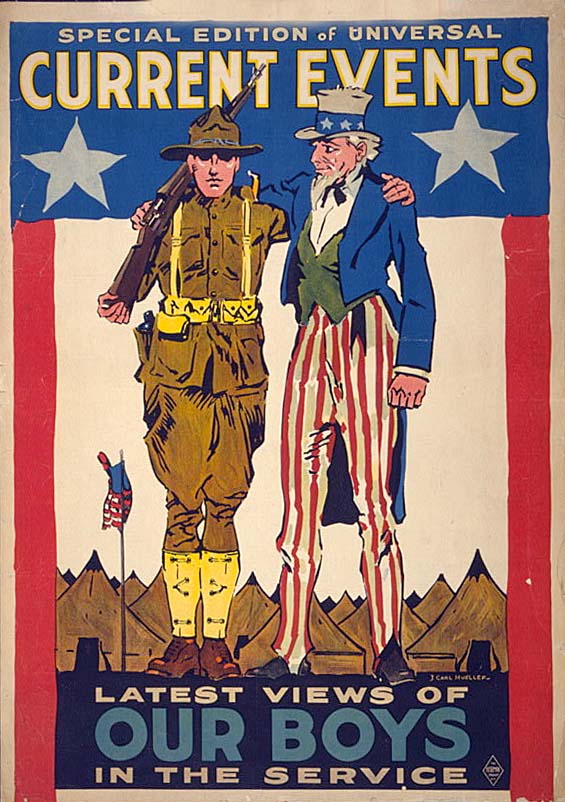 You didn’t want to think about what those suffering doughboys had seen or heard over there to make them out this way. The constant bombardments, the nerve gas, horses disemboweled on barbed wire barricades, the still-moving charred grist of a man caught by a flame thrower. There were doughboys who’d been buried alive when the man next to them stepped on a landmine, or in mortar fire, trapped when the four tons of earth thrown up in the explosion landed. There were the flyboys, crazy-eyed, sun-dazed, whose hands curled and shook, forever gripped on the timorous controls of their bi-plane’s yoke and machine gun trigger.”



 Theodore Wheeler