On Newstands Now: TKR Spring 2011

The Spring 2011 edition of The Kenyon Review hits shelves this week! The issue features my story “How to Die Young in a Nebraska Winter,” along with a story by Seth Fried, poems by Albert Goldbarth and Kevin Young, and a bunch of other great stuff. I’m eager to get mine. Single copies are available for $10 at the link above, or by clicking on the image on the right, if you’re interested. Or, use this link for a special friends and family discount to get 20% off the issue or a subscription.

(The Kenyon Review Online ran a micro-interview of me late last week, in case you missed it.)

Also, The Cincinnati Review has posted the cover artwork for its forthcoming Summer 2011 issue, which will feature my Schiff-Prize-for-Prose-winning story “The Current State of the Universe.” This looks to be awesome as well. We’re really rocking Ohio this year.

All in all, it’s been a pretty great day. My wife Nicole got a promotion at work, Maddie’s flu seems to be lifting, and I received a couple awesome emails this morning that have me pretty excited. Nothing on that yet, but wish me luck.

Pub Updates (and an Update to the Updates)

UPDATE: My review of Nadifa Mohamed’s novel Black Mamba Boy has been scheduled for the Summer 2011 issue of Prairie Schooner! This will be my second published review with PS.

It sounds like Flatmancrooked will be running my story “The Housekeeper” in their web journal next Wednesday, January 19.The story will also be featured in their upcoming print fiction anthology, Flatmancrooked 4, which is currently at the printers and should be hitting mailboxes before winter ends.

The first half of 2011 is shaping up nicely. My story “How to Die Young in a Nebraska Winter” will be in the spring issue of The Kenyon Review, in the next couple months I’d wager–no matter what Unadilla Bill has to say–and “The Current State of the Universe” will be published by The Cincinnati Review in May.

Weeks of Sept 11 – Oct 10, 2010

I promised more on the Cincinnati Review Schiff Prize, so here you go.

First, let’s do the numbers.

This is my 11th short story selected for publication.

…the 13th short story publication.

…the 17th publication overall, counting four reviews.

…the 2nd contest won.

“Attend the Way” is the 5th honorable mention in a contest.

Of all the contests I’ve entered, 4% of the stories have won.

…12% have received some sort of recognition.

Also, the very nice editors of the Cincinnati Review asked me to pen a commentary piece for their blog about the process of writing “The Current State of the Universe.” Fiction Editor Michael Griffith has this to say about the story:

The piece is a fantastic example of a high-concept story that manages to do wonderfully playful, inventive things without ever feeling like a riff or a vehicle for an author who’s showing off his chops. Wheeler perfectly and poignantly balances the psychological plight of his protagonist with the high-wire act of the story’s conceit.

The only thing I’d add to the linked commentary is to mention that “Current State” has gone through quite a few incarnations over the past few years. One early morning in the fall of 2007 I woke suddenly with the first few lines of the story and somehow convinced myself to rise before dawn and start up my laptop—which was a fifteen minute ordeal of loading and errors at that point. I’m not a morning person, so I didn’t write for long, probably less than an hour. As mentioned in the TCR blog, this was a story I’d been kicking around for a while and was just something I wanted to play around with. I did come up with a three or four page vignette that I thought was kind of funny and quirky. It wasn’t really something I thought would turn into a whole story though. The following spring, for the first night of a Susan Aizenberg-led graduate workshop at Creighton University, we were directed to bring in a short piece of our work as a means of introducing ourselves to the group. I brought the vignette because it was funny—plus it’s better to save the dark, rape-and-stabbing-filled material for later in the semester, as to gain some sense of normalcy in the minds of fellow workshoppers before trying to scare them later on with insights of mankind’s dark side. (That’s just a joke, I never actually did anything like that.) To my surprise, the small start I had received a very warm reception. So I kept at it.

This was also the semester when Maddie Annie was born, so this story has some larger significance for me. There were more than a few nights spent in the nursery chair with my laptop working on this story all night, listening to our newborn sleep. There are so many pleasant memories of those wonderful and difficult months: the blue luminescence of her jaundice-fighting lights, playing The Freewheelin’ Bob Dylan on repeat because Maddie would sleep if it was on, and being dead tired all the time but having the will to fight through it and work past what used to be the point of no return.

Dispatch from “The Current State of the Universe

“The real trouble started after I left for college. A string of MIPs and DUIs followed my initiation into a fraternity and occasioned my expulsion from the same institution. My grades were adequate but my moral certitude was flagging. My father was a strong believer of so-called ‘small town values.’ He believed in the agrarian movement and intimated that maybe the Capital City, or a libertine school, wasn’t the best place for me. But I didn’t agree and was eighteen years old. It was important I learned to stay out of trouble on my own, I insisted, then remained in school because it wasn’t his decision.

“It wasn’t until eight years later that I saw my father again. He bulged around the middle, but the rest of him was sickly, thin and weak from worry. He was bald then, with just a few whispers of red hair that still hung around the sides of his head and failing mustache. He’d heard a rumor from one of his parishioners about a McCook girl who was forced by circumstance to drop out of college and move back to her parents’ house. This gossip had the stain of sexual misdeed.  A freshman coed tricked into dangerous situations by an older man, tempted with alcohol, and, eventually, shuttled to an abortion clinic. I’ve forgotten some of the things they accused me of but they were all true. She was a student at Wesleyan, a confused thing when I found her. A hippie redneck invested in tie-dye tee shirts, hemp purses and cowboy hats. I never saw her again after the termination.

“When he cornered me on it, I told my father that I would never embarrass him again, something neither of us believed.”

Personal Rejection Notes, Requests for More, and Other Nice Versions of No Thanks

Colorado Review and Hunger Mountain for “Attend the Way” and Slice for “The Housekeeper.” Of course, “The Current State of the Universe” was first-prize in the Cincinnati Review’s Robert and Adele Schiff Prize for Prose, and “Attend the Way” received honorable mention in the same contest.

Just Finished

All Quiet on the Western Front by Erich Maria Remarque. This is really a great book. Sometimes you read a classic and kind of wonder why it enjoys a lasting reputation of high standing, and I must admit that I’ve long been dubious of All Quiet—in no small part owing to the fact that Ernest Borgnine and Richard “John-Boy” Thomas are featured on the cover of my paperback edition, which was released after a CBS “Hallmark Hall of Fame” adaptation. But the book does not disappoint. Pretty powerful stuff.

German Workers’ Culture in the United States, 1850 to 1920 edited by Hartmut Keil. This is mostly about Labor movements in Nineteenth Century Chicago and New York, but there were more than a couple things I can probably use in my book.

Now Reading

Death is Not an Option by Suzanne Rivecca.

Up Next

Sister Carrie by Theodore Dreiser.

Cincy Style

Some fantastic news arrived today! My short story “The Current State of the Universe” was awarded (and named Grand Champion, I assume) of the Cincinnati Review‘s Robert and Adele Schiff Prize in Prose! It will appear in the journal in May of 2011. As an added bonus, my story “Attend the Way” received Honorable Mention. Both stories are in my unpublished collection How to Die Young in Nebraska.

I’m pretty psyched to have found such a great home for the story, and that it’s done so in prize-winning fashion is that much more exciting.

More to come on this.

Weeks of July 3 – Aug 4, 2010

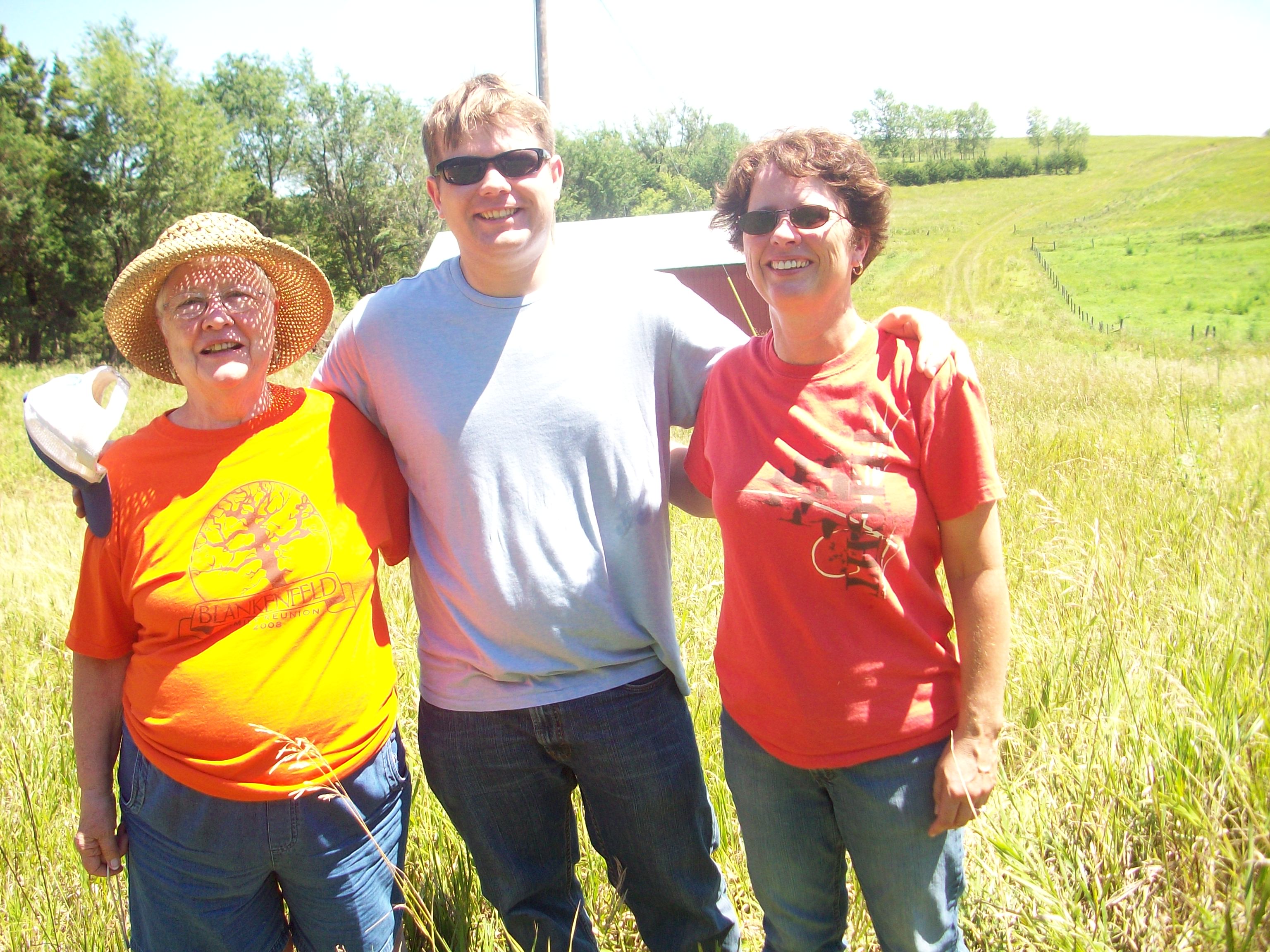
This last weekend we spent some time in Niobrara, Neb. at the Blankenfeld family reunion. As you may know, I’ve been working with my Grandma on some ancestry projects over the past year, and it was nice to share some of the fruits of that labor. I’ve also been using some of the Blankenfeld family lore as a model for Jacob Bressler in my novel-in-progress The Hyphenates of Jackson County. In this regard, the trip was especially significant for me.

On the Blankenfeld homestead with my Grandma Cleo and Mother Marta.

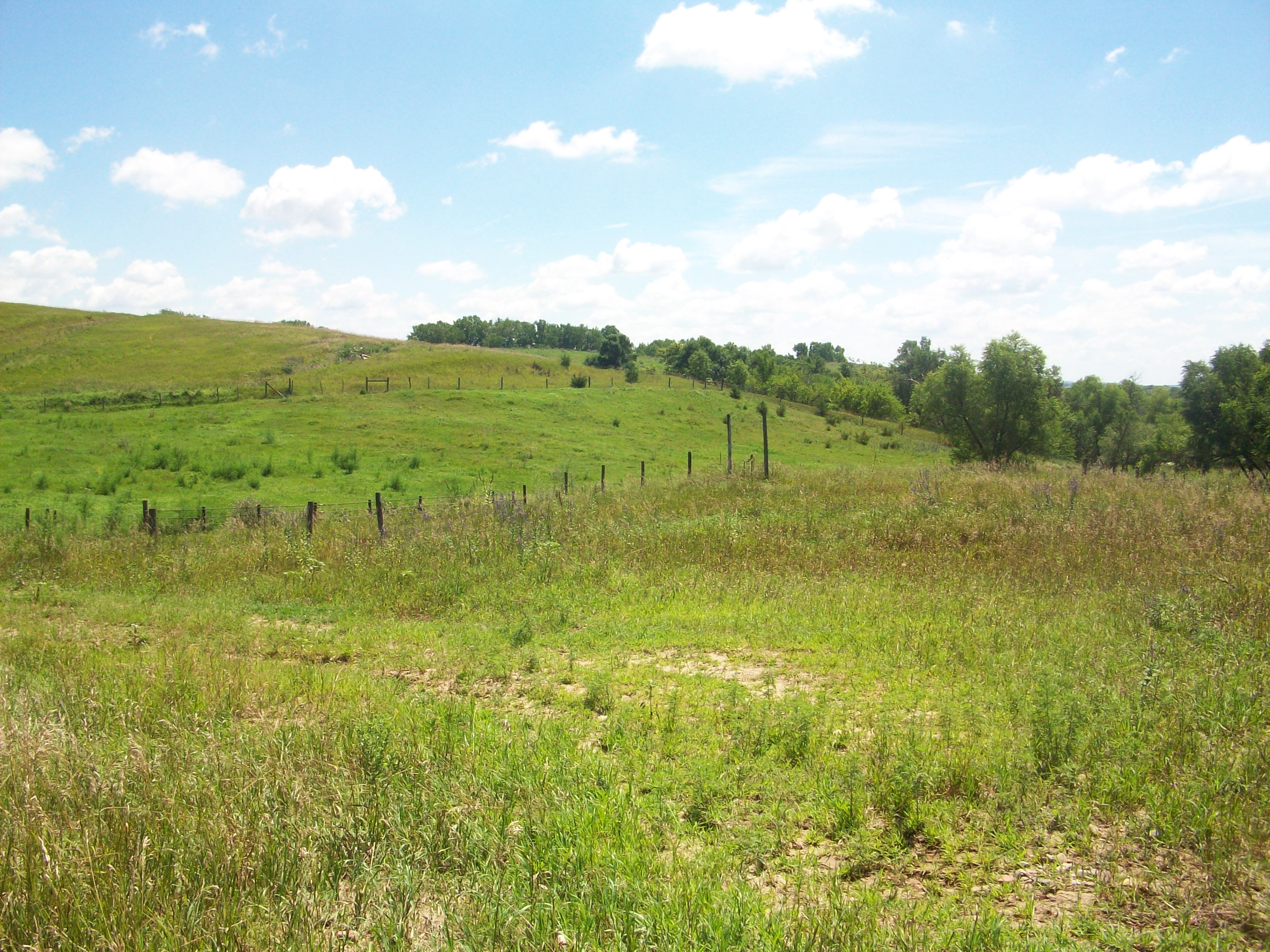
We were able to visit the original Blankenfeld homestead site, where Jacob and Maria settled in 1885. Although no structures remain—there was a hill where the original dugout had been—it was pretty cool to just stand there and appreciate the terrain. The area hadn’t seemed especially rocky and hilly before, in my previous trips to the area, until I imagined trying to cultivate it by hand. Later, we stopped into a museum of sorts that was made from the preserved farm of my Great-Great-Grandfather Henry Blankenfeld. He’s the model for Jacob in the novel–visually, and some of his history as the son of immigrants–so it was really exciting to walk through the house and barn he built himself, to eat an apple from a tree he planted, to descend the staircase his wife descended on the day they were married.

It’s always difficult to appraise how valuable experiences like these will be to my work. For one, who knows where the writing is going to take me. Will I need to know what the grass smells like? The flora? The fauna? Or how the sky there has its own unique blue, the air a particularly humid cloyingness? Also, in Hyphenates, Jacob comes from a different part of the state, one with a terrain closer to Omaha’s than Niobrara’s. So it isn’t like I can just sit down and make a sketch of the landscape to use in the novel.

The Blankenfeld homestead, originally settled in 1885.

Mostly it’s just helpful to be there, to be put in a spot that’s loaded with memories specific to my family, and where events took place that were crucial to my very existence. I’ve always had the kind of memory that retains periphery details well, so it’s a great benefit to just listen to stories, especially while smelling the grass and listening to the leaves in a tree. It isn’t that I necessarily came away with anything specific that I can add to the story—and I’m not saying I didn’t, I just don’t know yet—but it feels like I’ve gained a much better appreciation of what it was like to be alive in a time other than my own, even if it isn’t the exact era I’m writing about. And that’s something that can’t really be replicated in an archive or by looking at old photographs. It’s getting caught up in other people’s memories, and not just that, but doing so while standing on the very ground where things happened.

Dispatch from “Shame Cycle”

“Anna was sixteen when she approached you at a downtown record store and you began seeing her not long after that. This was the summer before your freshman year of college, when she invited you to a party and claimed possession of your body, parading you around the smoky rooms of parties. You considered it a move up in social scene from the part-time Nu Metal rebels you knew in high school to this career class of punks. The hard-drinkers, veteran sludge rockers, and sometimes transients who pocked the city so visibly in those days. These were people Anna exposed you to, her friends. They hitchhiked to New York and ran drugs from the Mexican border for South Omaha gangs, they bought a tattoo gun to save trips to the parlor, they had shaved-in mullets and handlebar mustaches, they screamed swear words into ice cream parlors as protests against capitalism. These people were the real deal as far as you were concerned then—or as close to it as one could get in Omaha.”

Maddie and Cocoa up on a Missouri River vista.

Personal Rejection Notes, Requests for More, and Other Nice Versions of No Thanks

BOMB for “On a Train from the Place Called Valentine”; Zoetrope: All-Story for “The Current State of the Universe”; Cincinnati Review, Hayden’s Ferry Review, and Indiana Review for “The Housekeeper”; Caketrain for “The First Night of My Down-and-Out Sex Life.” My story “Shame Cycle” was a finalist for Matrix Magazine’s LitPop Awards, but it did not end up winning. There was no consolation prize.

Just Finished

What He’s Poised to Do by Ben Greenman. An outstanding collection. Highly recommended. I liked it so much that I’ve written a glowing review of it, one that will hopefully be published soon.

Windmill at dusk.

Now Reading

Black Mamba Boy by Nadifa Mohamed.

Up Next

Death is Not an Option by Suzanne Rivecca.

Weeks of Jun 7 – July 2, 2010

Big Sky

Since returning from AWP in early April, I’ve been preparing to query agents, and I’m happy to report that this week I’ve finally reached the end of this process—and the beginning of the next phase of actually finding new representation. It’s taken much longer than I anticipated, mostly because of a few rewrites that became necessary in these middle stages of editing. (With big thanks to my wife Nicole for helping me to see how the shape/plot arc of Hyphenates Part I was not all it could be.) My first-choice agency requested full manuscripts almost immediately and is now deliberating. Wish me luck! Coincidentally, I received an out-of-the-blue email from a pretty big-time agent at the end of last week requesting some work. That was pretty cool. Maybe I’ll be sending him something before long, depending on how my first-choice responds.

It’s been somewhat of a weird process the last six months. My first agent left her agency right before Christmas last year, which left me without representation. It was kind of jarring at first, to be let loose like that. I’d probably put too much stock in having an agent, let my sense of self-confidence become too large based upon the fact that, like Don DeLillo, Al Pacinco and A-Rod, I had an agent out there stumping on my behalf. We worked together for over a year on my story collection and, what turned out to be failed, first novel. There were a lot of good things that came from the relationship–such as the idea to switch focus to the historical thread I’m telling with Hyphenates–and I feel much richer for the experience. But it was nice to move on, frankly, to have some free space to work out exactly what I was doing with my books, to dig deeper into myself, and to do so as a writer, rather than as a producer of potential market share. It reminded me of the reasons why I really love doing this, having the chance to indulge daily in the small acts of creation and destruction that eventually tease out a story. These six months have given me the opportunity to refine my projects considerably. And I’m thankful for them. But now, it’s time to get back in the game, to pursue book publication with all I’ve got, and to provide for my family as best as I’m able.

Next week it’s back to work on Part II, which is nearly completed in rough draft form. Hopefully by the end of the summer I’ll have it in some kind of acceptable shape and can move on to actually finishing the book by the end of this year. Not to jinx myself or anything.

Thanks a ton to all my readers who helped work my manuscripts into shape before I sent them off, sometimes on very short-notice. Amber, Bill, Mary Helen, Nabina, Nicole, Travis—you’re the best! And likewise for Jonis, Brent, Gregory, Justin, and Timothy, for giving advice and being advocates on my behalf. All of you are also the best.

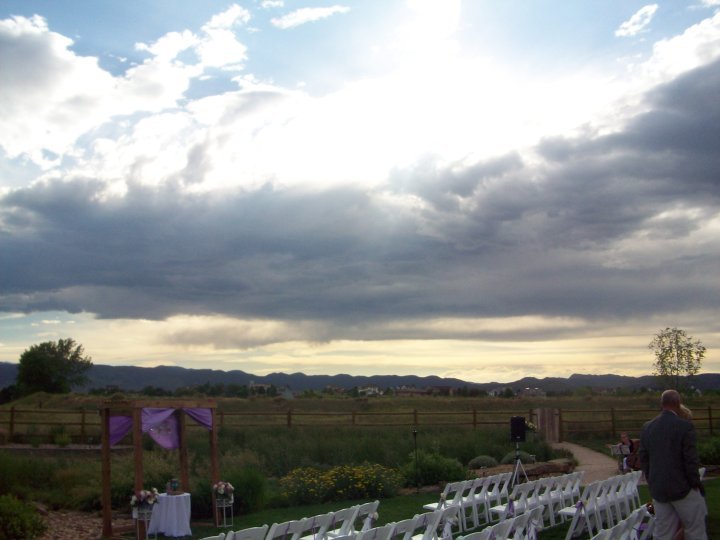
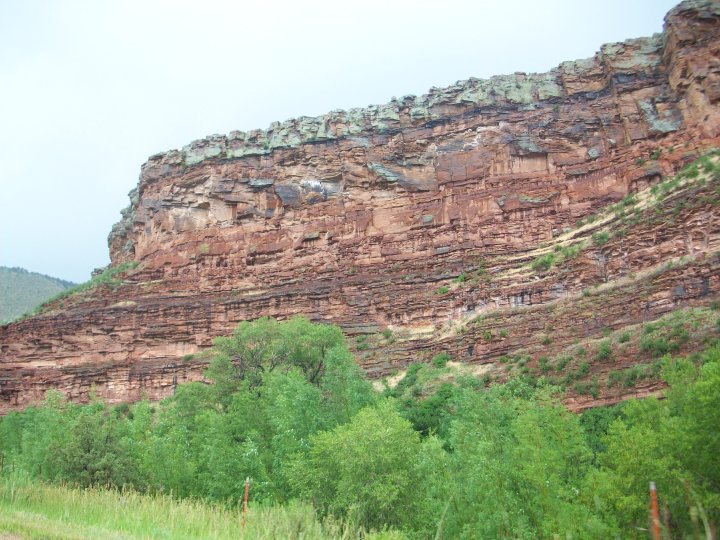
-Nicole, Maddie and I were off in Fort Collins last weekend at a wedding. The photos in this post are from the trip.

Maddie really loves weddings.

Dispatch from The Hyphenates of Jackson County

“She was in the same clothes as before, the heavy red dress, torn and dirty by then. Her hair was thin, unpinned and breezy about her face. ‘Is that her?’ Strauss asked. ‘That’s the one you were on about last week?’ Jacob said, ‘Yeah,’ still with his hand on the Pfarrer’s shoulder, their faces close together as they stared at the girl. She was only twenty yards away from them, steadying herself against the trunk of a locust tree, one of the trees Jacob had slept under his first night in Omaha. ‘Her betrothed skipped town,’ Strauss said. It was obvious that the girl lived on the street now, that her family had turned its back on her, or she’d gone crazy and willingly exposed herself to the mutilating fractions of a city.”

Personal Rejection Notes, Requests for More, and Other Nice Versions of No Thanks

Electric Literature for “The Current State of the Universe”; Alaska Quarterly Review for “On a Train from the Place Called Valentine”; Nashville Review for “The First Night of My Down-and-Out Sex Life.”

Just Finished

The Turk and My Mother by Mary Helen Stefaniak. The first novel of a beloved Creighton professor, this one is highly enjoyable. A kind of folksy post-modern historical novel that seems largely drawn from family history and deals with the tumultuous love lives of our parents and grandparents before we knew them. MHS has a second historical novel coming out this fall, by the way.

We drove up into the mountains in a thunder storm and didn't run over any of the many bicyclers!

Now Reading

What He’s Poised to Do by Ben Greenman.

Up Next

The Lonely Polygamist by Brady Udall.

Books That Came in the Mail

What He’s Poised to Do by Ben Greenman. The Lonely Polygamist by Brady Udall. Novel History by Mark C. Carnes. Bad Marie by Marcy Dermansky. Three Delays by Charlie Smith. The Great Lover by Jill Dawson. Lean on Pete by Willy Vlautin.

Weeks of Apr 21 – Jun 6, 2010 (Memorial Day Edition)

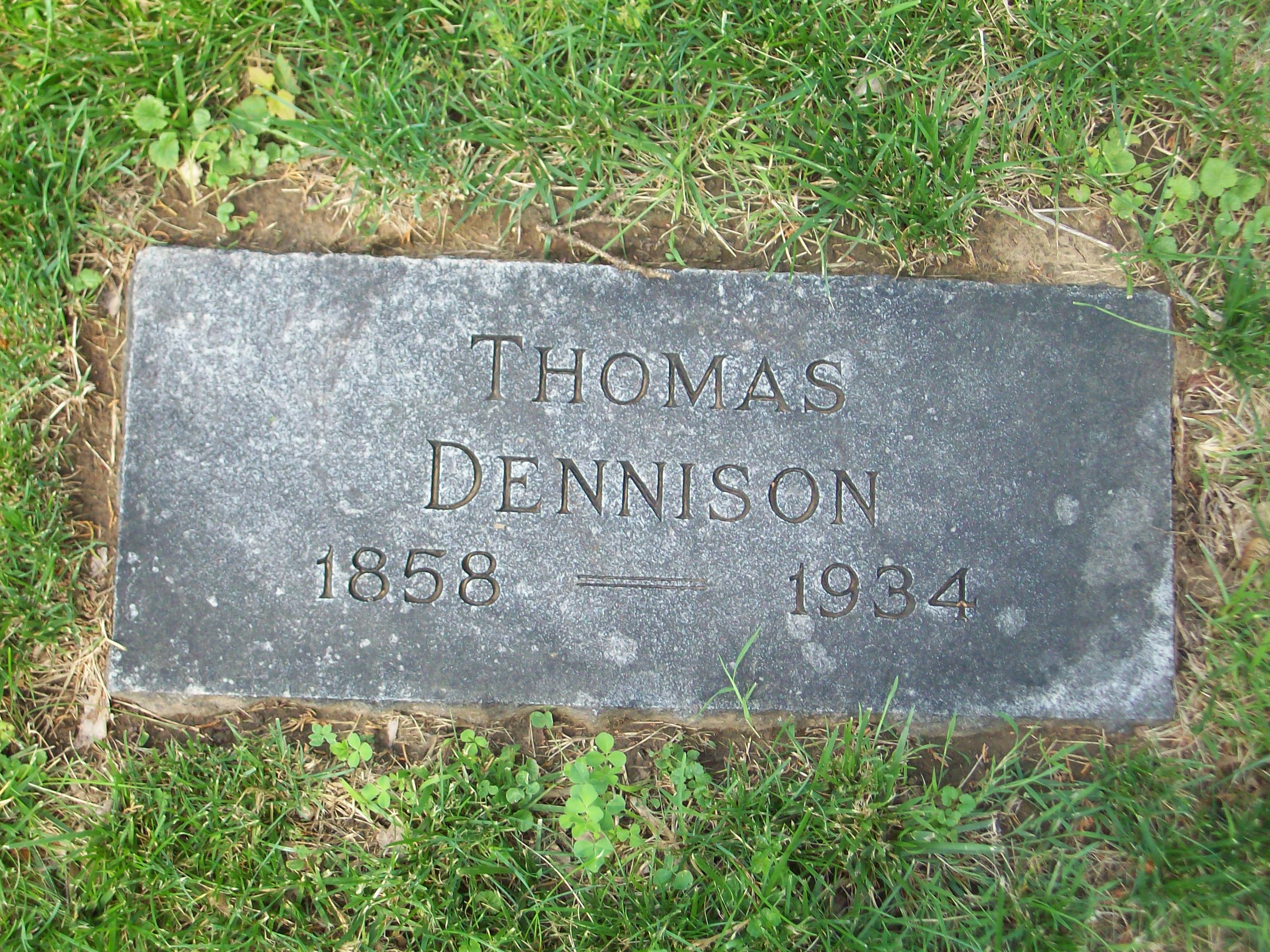
Last week on Memorial Day, on the way home from a Schneider family reunion in East Iowa Amish country (Nicole’s side), we stopped at Forest Lawn Cemetery in north Omaha. For a long while now I’ve been meaning to find the grave of Tom Dennison, who plays a major role in my historical novel-in-progress, The Hyphenates of Jackson County.

Tom Dennison with his second wife, Nevajo Truman.

The Forest Lawn website has an awesome database that helped immensely with this. (There’s also a walking tour of the cemetery, for anyone interested in Omaha history.) Of course, when we followed a whim and decided to stop after a day’s driving, we didn’t have any of the necessary information, but it didn’t really matter. We found it anyway, after an hour of walking and deductive reasoning. (Nicole is especially adept at graveyard searches. We usually end up in cemeteries on our vacations and are seldom disappointed. Some of our favorites include the Cimètiere Notre Dame-des-Neiges in Montreal (in a snow storm!), the Key West Cemetery, and many of the solitary headstones we came across while on our fern-thick honeymoon in the Green Mountains of Vermont.)

Over the months anticipating a visit to Dennison’s grave, I had these ideas in my head of a massive tomb, or an iron-doored, stained-glass mausoleum. As the longtime Boss of a wide-reaching political machine, Dennison was massively wealthy, so it stood to reason that he would have erected a memorial to celebrate himself. Forest Lawn, as the final resting place to many of Omaha’s founding fathers and first families, is home to many extravagant mausoleums and statues. I’d even worked up this day-dream where people would go to Dennison’s grave and take a shot of bourbon in some archaic ceremony of patronage. The reality, however, was much different from what I’d expected, as there is merely a large family headstone denoting the Dennison name, and then three smaller markers for Tom, his first wife Ada, and one shared by two sons who, presumably, died in their infancy. It was all very simple. No last words, no statues, no inscriptions.

I’d like to find out more about this, as there seems to be a story here. On the one hand, Dennison typically dressed simply, he came from very humble beginnings and was by most accounts a quiet, private man. So it isn’t out of the realm of possibilities that he would eschew a flamboyant mausoleum. But on the other hand, there were over a hundred cars in his funeral procession, a fact suggesting that his interment was anything but quiet and private. I hypothesized that perhaps the original gravestones were damaged, destroyed or vandalized—and the simple markers were replacements—but I have no evidence to support this. It was strange, too, that none of his children who survived to adulthood were buried there either, which goes against much of what I’ve learned about his private life. Maybe they’d moved away from the area by then. If anyone knows about this, I’d love to hear from you.

Dispatch from The Hyphenates of Jackson County

“Word among those hanging on along the streets, afterwards, was that Tom Dennison had summoned the enforcers to reestablish control after the uprising, and that he’d been slow to give the order because he was vacationing in California and had to be wired with the news. They said that he was on a yacht off the coast of San Diego and they had to wait until he returned to harbor. Johann didn’t believe these stories, he speculated that Dennison was probably in his office downtown, or his mansion west of Benson, that he’d tried to keep things in control but couldn’t. Johann interpreted the delay as yet another breach in the Old Man’s armor—and, after what they’d witnessed from the bathroom window of the Potsdamer, more than a few of their friends agreed with him.”

Personal Rejection Notes, Requests for More, and Other Nice Versions of No Thanks

New England Review for “The Current State of the Universe”; Mid-American Review, West Branch, and Yale Review for “Attend the Way.”

Just Finished

By Night in Chile by Roberto Bolaño. If you like the following things, this book is probably not for you: quotation marks, paragraph breaks, chapter breaks, short simple sentences. Otherwise, this is really an engrossing read. Some great sections involving European priests who use falconry as a means to stop pigeons from defecating on cathedrals and on the intersection of artistic patronage and military authoritarianism in Chile.

Netherland by Joseph O’Neill. This is one of my favorite books, now, and I highly recommend it. The best writing about cricket I’ve ever encountered, which makes this sound like a lesser accomplishment than it really is, since I don’t recall reading about cricket ever before. There was a lot of talk about this being a post-9/11 novel with echoes of The Great Gatsby, but I didn’t really find these elements that central to the story.

Now Reading

Roscoe by William Kennedy.

Up Next

The Lonely Polygamist by Brady Udall.

Weeks of Feb 22 – Mar 17, 2010

Did I mention we went to New York last month?

Dispatch from The Hyphenates of Jackson County

“The sidewalk was cluttered with her belongings, her furniture and clothes, a Victrola phonograph cabinet and a stack of records, a crate of wine bottles, a small painted portrait of a girl who could have been Evie standing on the plush cushion of a high-backed chair. There were several lounging chairs the men brought out too, upholstered with threadbare green fabric, small pillows to match. They were cheap pieces, second hand, perhaps, but nicer than what most people had on the Ward. And maybe her furniture didn’t look so shabby in a dark room, Jacob thought, out of the sun. It was very bright suddenly, the air warming on what was becoming a cloudless August sky. Jacob could feel the heat of it on his skin, through his shirt.”

Personal Rejection Notes, Requests for More, and Other Nice Versions of No Thanks

American Short Fiction for “The Current State of the Universe”; Salt Hill and The Missouri Review for “The Housekeeper”; Hunger Mountain for “These Things That Save Us”; Identity Theory for “You Know That I Loved You”; Makeout Creek for “Lycaon” and “From Indiana.”

Just Finished

Point Omega by Don DeLillo. Mostly it’s enjoyable for its language, with some nice plot here and there too. I didn’t really go for much of the eschatological theory, although that might be how it’s supposed to be taken.

Now Reading

The Unnamed by Joshua Ferris. I thought this started off horribly slow and redundant, but have been getting into after the first hundred pages.

Up Next

31 Bond Street by Ellen Horan

Catch Up Time: November 1 – December 13, 2009

Novel Work

Over the last month I’ve been trying to immerse myself a little deeper in books and movies that take place within the same general time period that my novel is set, using 1900-1935 as a wide range of years to pull from, as the events of my novel occur over 1918-1919. The idea here is to, for one, gain a better understanding of the traditions, practices, and standards of the historical narrative form. I believe this falls under the due diligence umbrella. The second reason for this immersion is to acquire something of an ear for the way people spoke at the time. It’s always struck me strange when characters speak so differently than we do in historical pieces—thinking mostly of characters with vocabulary dominated by slang who speak in nasally, affected tones—but how am I to know how people really spoke in, for example, 1920s Kansas City. My main hesitation then, during the drafting process, has been trusting my intuition against what I see is a practice of accentuating slang in historical forms to give it an “old-timey” feel. (It’s also important to note that typically only teenage or early twenties characters from lower economic classes use this thick slang. In It’s a Wonderful Life we only really see Ernie the cab driver speak in this affected way, certainly not Potter, or the grown version of George Bailey. Or in Robert Altman’s Kansas City, mostly it’s Jennifer Jason Leigh’s character with the period accent, and the black gangsters to a degree, but certainly not the kidnapped Senator’s wife.)

One of the ways I’ve been trying to bridge that information/experience gap is by reading local newspapers from the area on the microfilm collections of Omaha libraries, mostly the Evening World-Herald at this point—an idea I picked up from Ron Hansen. Now, this is a somewhat formal medium, so the language used there isn’t exactly street, but I’m not sure that’s something I want anyway. (If I don’t use a lot of slang in my contemporary stories, why would I do so in my historical ones? Plus, my main character is a country boy from a rural immigrant community and probably wouldn’t have been exposed to too much popular culture anyway.) What I’ve really been struck by in doing this kind of research is how little things have changed in the past ninety years. Surprisingly, the most obvious evolution in tone and style has actually developed in the hard news stories, because the Public Pulse letters are eerily consistent in tone, language, style, and even content if you replaced Germans with Muslims and German-Americans with illegal immigrants. I’m not really sure what I expected to see, but the similarities were striking.

So there is a tension in the writing process between authenticity and expectation. From what I can tell, people in 1918 Omaha didn’t really speak too much differently than we do in 2009 Omaha—or they didn’t write much differently, at least. (Again, this is focused mostly on middle-class white communities who were/are engaged in civic, political, and cultural issues.) However, it doesn’t necessarily follow that my book’s audience would accept dialogue that doesn’t sound “old-timey.” More than likely a balance must be struck between what I decipher as authentic and what the tradition tells me an audience will expect. What that balance means exactly will probably have more to do with my own ear (going with what looks and sounds the best) then anything else in the end.

Dispatch from The Open City

“The United States National Banking Company had been the first place Jacob stopped in at, a white sandstone building with large columns in the heart of downtown. The bank lobby was a bustling place, so unlike the sleepy office of the Jackson Building & Loan, where the farm deed was held. There were several stations here that one must wait in line for in order to be served. Each of them had signs indicating their purpose, Drafts, Pass Books, Deposits, but Jacob didn’t know which one to approach. He’d never had to find a job before; he’d been a family farmer up until this point. The lobby was packed with impatient people—suit-and-tie men with derby hats, holding packets of receipts for inspection, gloved women in ankle-length skirts and fine, flowered hats, clutching small purses—and the stuffy enclosure was stifling with the odor their colognes and perfumes. The bank’s one large room was divided by the cashier’s cages, heavy brass frames that held glass plates, a slot at the counter where documents and money were exchanged. There were cages in the back too, these made of heavy iron wire, containing adding machines and quick-fingered clerks whose only job was to note figures from morning til night. Beyond them was the heavy steel door of the vault, tilted open as a matter of reassurance. In the middle of the lobby stood a pot belly stove with a smoke stack the reached to the top of the twenty foot ceiling. Jacob gravitated towards the stove because it was the only place where people weren’t clustered. The metal was cold against his skin, his hands brushing against it.”

Personal Rejection Notes, Requests for More, and Other Nice Versions of No Thanks

Alaska Quarterly Review for “The Current State of the Universe”; Mid-American Review for “These Things That Save Us”; Hunger Mountain for “Let Your Hair Hang Low”; The Collagist for “You Know That I Loved You”; Grasslimb for “From Indiana”

Just Finished

Olive Kitteridge by Elizabeth Strout. As important as the first stories seemed, the final few seemed just as trivial. The conceit of having each story involve Olive in some way really wore thin on me. I still enjoyed this book and would recommend it, but give me Winesburg, OH any day.

Everything Here is the Best Thing Ever by Justin Taylor. Like the teenage and twenty-something characters who people his work, Taylor seems to be aware of what might be the limited shelf-life of these stories, but he risks irrelevance in the future because of the confidence that what he writes about has a broader significance. That despite the pop culture references and out-of-style fashion, there’s something vital simmering under the surface.

The Best American Comics 2009. My favorites include “Justin M. Damiano” by Daniel Clowes, “Indian Spirit Twain & Einstein” by Michael Kupperman, “The Company” by Matt Broersma, “Berlin” by Jason Lutes, “Jordan W. Lint” by Chris Ware, “Freaks” by Laura Park, “Antoinette” Koren Shadmi, “Glenn Ganges in Pulverize” by Kevin Huizenga, and “Papa” by Gilbert Hernandez. My absolute favorite was Art Spiegelman’s “Portrait of the Artist as a Young %@#*!!”

Now Reading

An American Tragedy by Theodore Dreiser.

Up Next

Kapitoil by Teddy Wayne.

Link of the Week

Nathan Bransford Blog.   A cool blog by a literary agent attempting to demystify the largely secret processes of book publishing. A very nice resource.