I’ll be reading new work from my novel-in-progress, along with a couple of buddies and great poets, Alina Nguyễn & Natasha Kessler.

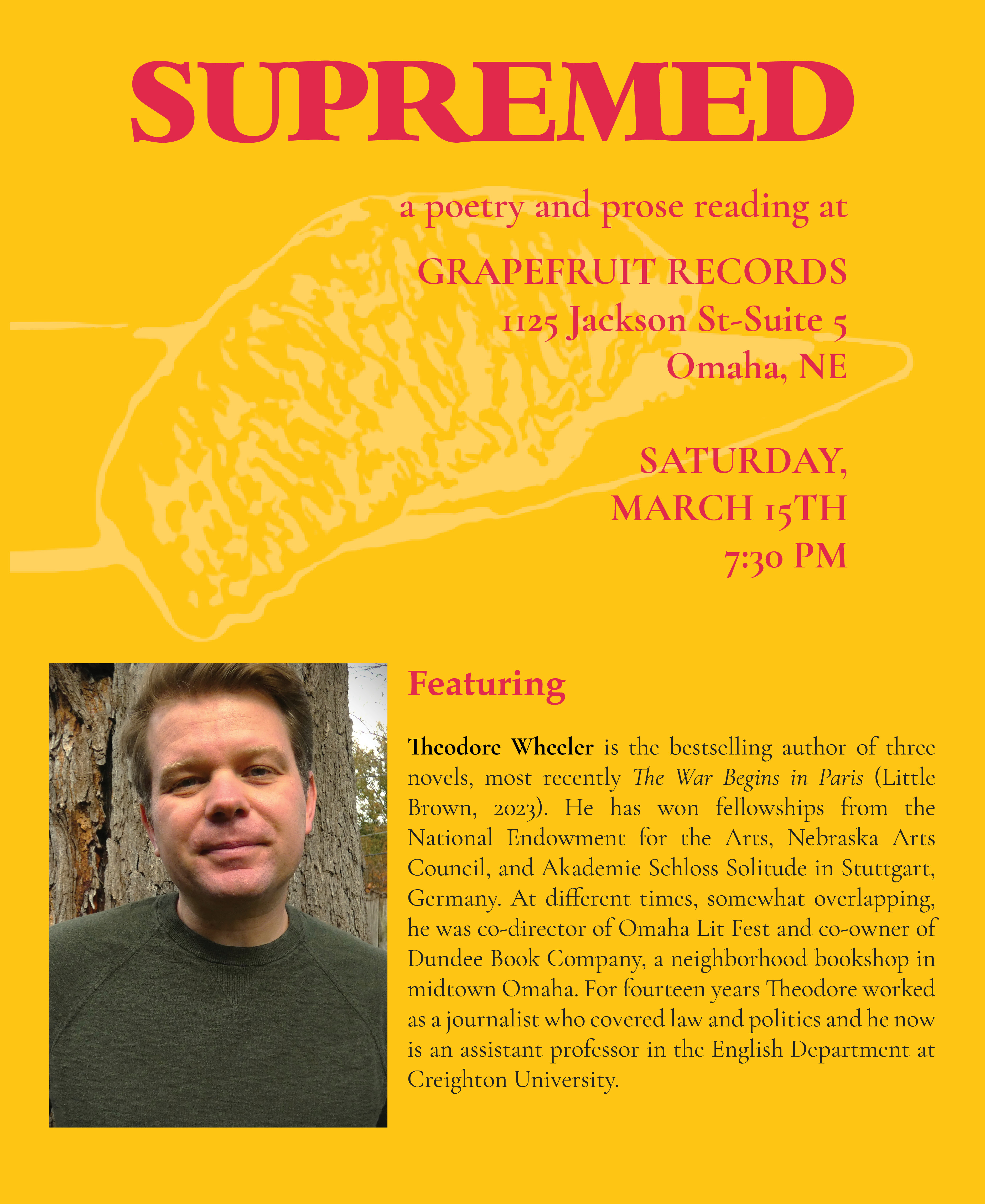
I’ll be reading new work from my novel-in-progress, along with a couple of buddies and great poets, Alina Nguyễn & Natasha Kessler.
In case you missed it a couple weeks ago, I made an appearance on my favorite radio show: All About Books with Pat Leach.
Mostly we talked about my new novel–The War Begins in Paris–and the process of writing the book, but there’s so much more. I love talking about Nebraska with Pat, who was director of Lincoln City Libraries for many years and earned the title of “Lincoln’s Most Passionate Reader.” How cool is that?
The segment originally aired state-wide on Nebraska Public Media and many fine NPR stations. But you can give it a listen here!
Last week I appeared on Nebraska Public Media’s Friday Live program. My first appearance on live radio!
You can listen to the interview here, starting at around 26:45!
So happy to share an endorsement from my dear friend and collaborator, Kassandra Montag!
I publish nothing without showing it to Kassandra first and The War Begins in Paris is no different. Such a keen mind and generous spirit. She’s the best.
“A riveting novel with dynamic characters, The War Begins in Paris illuminates how intoxicating and destructive obsession can be. Wheeler ratchets up the drama with his nuanced, glowing prose, and portrays two complex women who believe in their ideals, no matter the peril. I couldn’t put it down.” —Kassandra Montag, author of After the Flood

I’m so honored to share this fantastic endorsement for The War Begins in Paris from one of my favorite novelists (and the godfather of Nebraska authors) Timothy Schaffert!
His Paris novel, The Perfume Thief, is so charming, and being in conversation with Timothy about The Perfume Thief was my highlight of the last Omaha Lit Fest we did in back 2021. I can’t wait for his new novel, The Titanic Survivors Book Club, which is due out in April.
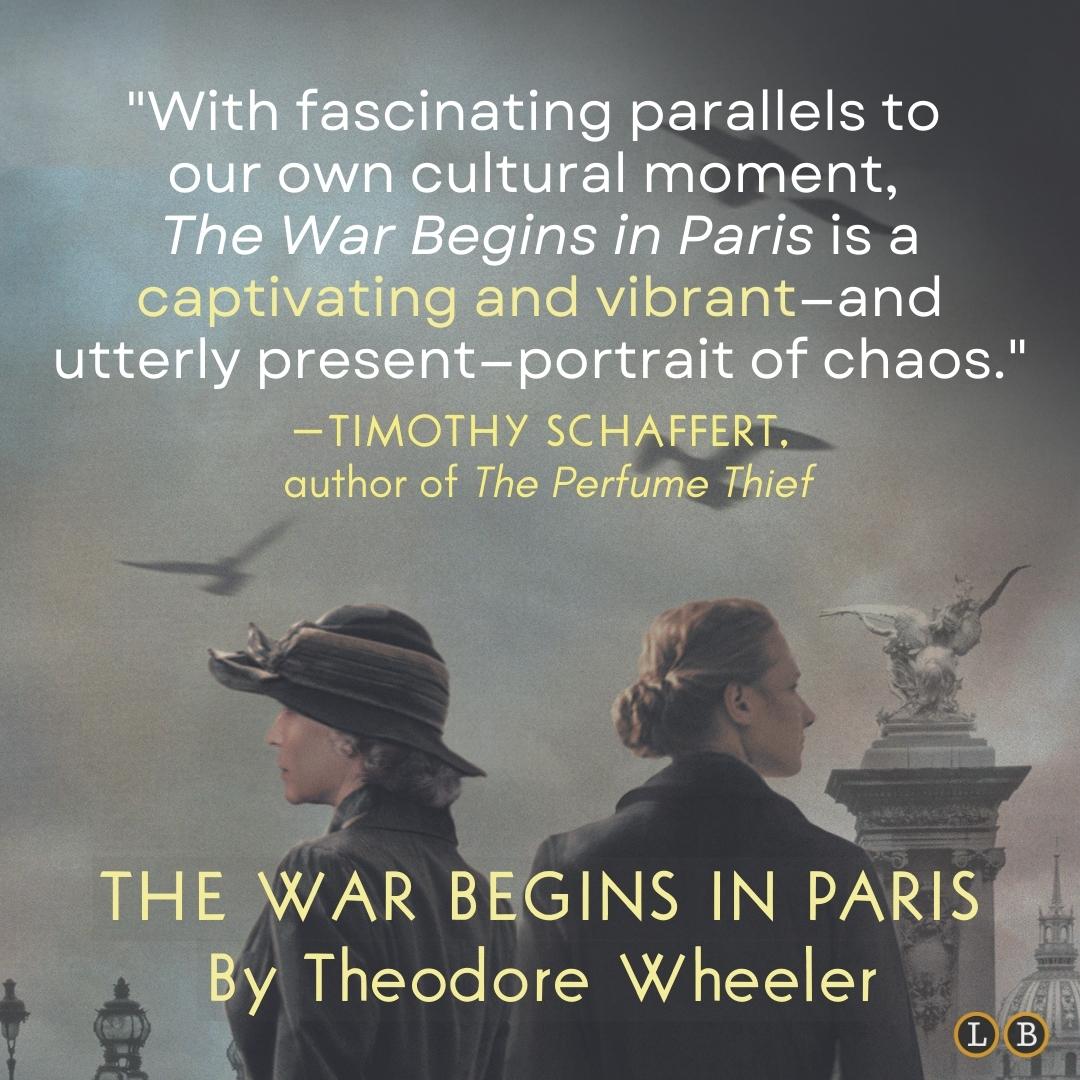
“This vivid novel takes on one of my favorite subjects: journalists in the war zone. Here we have ‘radio traitors’ among them, everybody wound tight, with questions of truth and trust all caught up in threat and propaganda. With fascinating parallels to our own cultural moment, The War Begins in Paris is a captivating and vibrant—and utterly present—portrait of chaos.”
—Timothy Schaffert, author of The Perfume Thief

What a thrill to have the great novelist Ron Hansen put his recommendation behind The War Begins in Paris! And even more so since Ron will be appearing with me, in conversation, at Politics & Prose Bookstore in Washington DC on January 13!
So many of Ron’s novels have been an inspiration to me. The prologue to The Assassination of Jesse James by the Coward Robert Ford is something I always go back to when trying to write the opening pages of a novel. It’s perfect. And Mariette from Ron’s Mariette in Ecstasy was a model for the character of Mielle in my new novel.
Still buzzing over this. What a rare mix of generosity and genius.
“Theodore Wheeler’s informed and fascinating novel uses the invented character of fashion reporter Marthe Hess to float us through this dark milieu and acquaint us with the financial, antisemitic, and often unthinking justifications for a journalist’s alliance with evil. The War Begins in Paris is a great idea for a book and it’s insightfully and thrillingly told.”
-Ron Hansen, author of Hitler’s Niece
The War Begins in Paris will be published on November 14, 2023, but you can pre-order your copy now. (Order a signed copy here and have you shipped to you in November.)
Check out this wide-ranging conversation with the incomparable Pat Leach on All About Books from a few weeks ago
We talk about our favorite Nebraska novels, how we tell stories about ourselves, the differences between writing contemporary and historical fiction, how to make space for (and why to remember) oral storytelling. So much good stuff! This is going to be a very interesting series. Thanks, Pat, for including me in the series, and for all you do!
You can listen at the link above, or download the file if you want the podcast version.

Check out this new interview of me in conversation with Ryan Borchers that’s up on The Rumpus. Thanks so much to both Ryan and the editors for making this happen. The Rumpus has been kind enough to publish reviews of my two previous books (here and here). That kind of support means so much.
This was an interesting one to revisit, as our conversation took place last January, then we edited the interview over February and March. I was really interested to see if my thinking was noticeably different here in a pre-pandemic way. Nothing stands out too much, really. But it’s worth thinking about how the notion of cyber-security and privacy from the government has evolved considerably over the last year. In the rush to find ways to keep people safe and get the economies rolling, we’re also in the process of giving up even more of our privacy than before. In that way, among many, we’re transitioning to a post-9/11 zeitgeist to a pandemic zeitgeist. It will be worth watching how the issues of privacy rights evolve as we one day move into a post-pandemic world. As I’m fond of saying, the government isn’t in the habit of giving back powers that it assumes in emergencies.
The interview itself has plenty of gems about the craft of writing novels and what it means to be an Omaha author. Please give it a glance.
Here’s a taste:
Rumpus: That’s what’s so interesting to me; the book makes the reader rethink their relationship to the characters in any novel. You think you’re reading about somebody’s life, and you feel like you’re getting into that person’s skin, but this novel almost makes me stop and think, Well, how close does a reader get to any fictional, made-up character? Does that make sense?
Wheeler: I think so. There are moments in any novel—and any person in real life, too, you know—when you’re not the same person you were three years ago and the person you’re going to be in three years is different from the person you are now. Thinking about that in terms of character, it comes off false when we make our characters too consistent, instead of just letting them go through their trials. And doing that from the point of view of surveillance, where you have these transcripts of what people said in emails and phone calls, then letting them be unreliable within that, too, letting them change or contradict what the record suggests, that was exciting for me. The narration is meant to be very self-aware and playful in how it plays out on the page. And maybe the perspective helps us feel more human in a way, because even with a catalogue of all existence, there are still mysteries, exceptions, things we can only feel and not know. For a novel that’s suspicious of religion and fanaticism, this nod to the unknowable was important to do.
 Theodore Wheeler