Bad Connections

As I was working on my review of Marcy Dermansky’s excellent novel Bad Marie (up on The Millions, by the way) a few ideas popped up that didn’t really fit in the review. They were mostly questions about how authors connect with readers through “bad” characters—bad meaning anything from those lacking a sense of acceptable morality, to liars, cheaters, criminals and abusers of different kinds, to those characters who are just basically losers, to curmudgeons and those who can’t keep their mouths shut. They are tricksters mostly, as they function in a literary sense.

I should note that as I began working on this post, I came across this awesome essay by Emily St. John Mandel on The Millions (“In Praise of Unlikable Characters”) which nearly silenced me here. She says many things I was thinking, and in much more lucid terms than I could manage. It’s a great read and you should check it out. Anyway, as I said, it nearly convinced me to forgo this post. Nearly. But her essay is framed around likability, which isn’t exactly what I mean to get at.

It seems counterintuitive that we would be drawn to characters of poor moral fiber, but it does make a certain amount of sense when one thinks about it. In any intimate communication, we often connect more readily with others when revealing our faults. This is why relationships bloom much quicker when we’re under the influence or on the Internet, right? It’s how we give ourselves an aura of humanity, by painting in the shadows behind us; and for a writer, it’s how we make a character real. Moreover, in both cases, it makes for a much more interesting narrative that we’re trying to sell someone on. Exhibiting faults, or having a sense of honest dishonesty, creates an intimacy that is far more satisfying than you could have with any character who’s approaching perfection.

On one level, it’s hitting at the secret fears of readers. The fears we have about what kind of people we really are—not who we try to convince others we are, or who we want to be. These are the memes attractive to introspective, personal guilt readers—a group I often fall in with—those in search of catharsis. These are the kinds of faults one cannot help, like Gregor Samsa waking from uneasy dreams to find himself transformed into a gigantic insect. It hurts others, it’s bad, but he can’t help it. That’s life.

On another level, admissions of badness provide a sort of fantasy. It’s an enactment of guilty pleasure taken to extremes. This is why it’s so interesting to see a character like Marie in Bad Marie get drunk at work, or indulge in taboo sexual relationships. You get to go along for the ride, without endangering your own livelihood or marriage. I’m not sure if it’s necessary that these kinds of characters get their comeuppance in the end, but my instinct tells me that it is.

I don’t mean to suggest that you can’t interact with a text on both of these levels at the same time either. Curb Your Enthusiasm is an excellent example of this. The character Larry David, a classic trickster, has a profound capacity to expose the foibles of the society he lives in. He says what we all wish we would say—to a degree anyway—in response to the hypocrisy and idiocy we’re confronted with on a daily basis. Maybe you wouldn’t want to say it exactly like Larry does, but having the daring to speak your mind is something we all wish for at one time or another. Larry certainly has that. But it doesn’t end there, of course. The plot must be satisfied, and the fact that Larry is a spectacular screw-up means that the plot always will be satisfied. No matter how astute he may appear in pointing out the shortcomings of others, the fact remains that Larry is still a card-carrying member of the same idiotic society. He’s the one standing outside a hotel after an earthquake, draped in a bed sheet with a hole cut in it; he’s the one who must apologize to a smug Ted Danson, or sleep alone, or who embarrasses himself beyond all expectation; he’s the loudmouth who reminds you why it’s usually better to keep your mouth shut. The end of those long winding plots is where guilty pleasure and catharsis meet.

For those who read like I do, or watch TV like I do, or meet people on the street like I do, a struggling character of poor moral fiber is always more interesting. Someone who falls short of doing the right thing, whether they’re actually trying to do the right thing or not. Then it’s better if they can improve, or at least instructive if they don’t even try to. It’s more honest, and maybe more familiar to how we see ourselves and others.

Micro-Interview with The Kenyon Review

A micro-interview I did for The Kenyon Review Online has been posted to their blog. It’s a pretty cool thing. I guess they are doing these interviews with contributors to help promote their upcoming issues–and mine was the first they did! Hopefully it turned out all right.

The post also reveals that their spring issue, which features my story “How to Die Young in a Nebraska Winter,” will be shipping next Thursday, March 10. How awesome is that? I’m pretty psyched. This is something I’ve really been looking forward to.

Thanks so much to Laura Briskman for doing the interview; and to David Lynn, Tyler Meier, John Pickard, James Flaherty, and everyone else at TKR for all their work and help in making this happen. My experience with The Kenyon Review has been exceptional.

February in Review

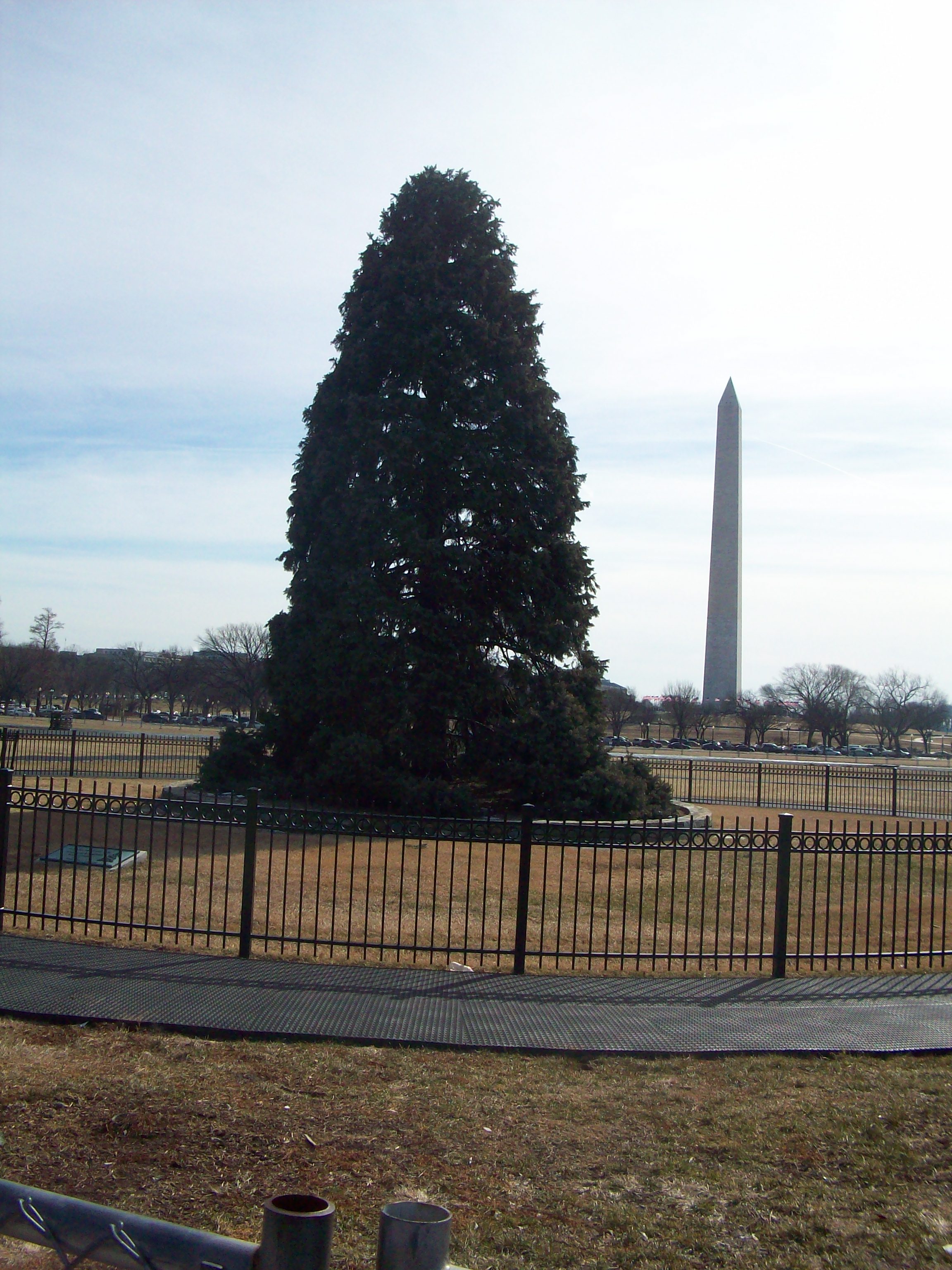
-I was lucky to see the National Christmas Tree when I was in Washington DC last month—as it fell over in a windstorm a couple weeks after I visited. My walking friend and I commented to each other at the time that the tree looked to be in pretty bad shape. Apparently it was! The tree I saw was installed during the Jimmy Carter presidency. A replacement will be planted this spring.

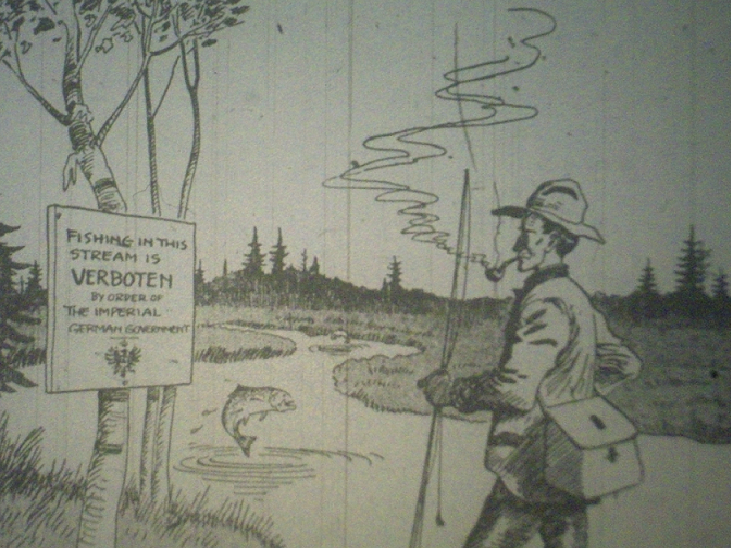
Another cartoon from the Evening Omaha World-Herald, from 1918, this one on the threat global domination posed to local fishermen.

-The reviews I did last year for Justin Taylor’s Everything Here is the Best Thing Ever and Teddy Wayne’s Kapitoil were mentioned in a couple different Best Books of 2010 lists. Here are the links:

http://bygonebureau.com/2010/12/08/best-books-of-2010/

http://robaroundbooks.com/2010/09/afterthoughts-kapitoil-by-teddy-wayne/

-A healthy portion of “Welcome Home” was put up on Google Books, as it appeared in Best New American Voices 2009. It’s not all there, but most of it is.

-“Welcome Home” was also mentioned on the news page of the Arts & Sciences College at Creighton University, where I did my MA. I should note, however, that the story may be selected for the Warrior’s Journey coursework. Nothing is official as of yet. If I hear anything I’ll be sure to post about it, as having my work included in that program would certainly be my biggest accomplishment to date. I’m very proud that they asked to use the story.

-My review of Marcy Dermansky’s Bad Marie was published on The Millions.

Personal Rejection Notes, Requests for More, and Other Nice Versions of No Thanks

McSweeney’s, Epoch, and Shenandoah for “On a Train from the Place Called Valentine”; Missouri Review for “The First Night of My Down-and-Out Sex Life”; and Crab Creek Review for “These Things That Save Us.”

Now Reading

Greetings from Below by David Philip Mullins.

Just Finished

The Sun Also Rises by Ernest Hemingway. “I overtipped him. That made him happy. It felt comfortable to be in a country where it is so simple to make people happy. You can never tell whether a Spanish waiter will thank you. Everything is on such a clear financial basis in France. It is the simplest country to live in. No one makes things complicated by becoming your friend for any obscure reason. If you want people to like you you have only to spend a little money. I spent a little money and the waiter liked me. He appreciated my valuable qualities. He would be glad to see me back.”

Nowhere Man by Aleksandar Hemon. A fantastic novel. Smart, melancholy and funny. I’ve only read two of his books so far, but Hemon is one of my favorite writers. He’s really great, and I need to make the time to read all of his work.

Up Next

Other People We Married by Emma Straub.

[Note: I’m trying something new with the format for these posts, going to whole months in review rather than what was turning out to be 3-4 weeks in review. It isn’t much of a change, except that I’ll be pulling the longer topical and reflective sections out and making those into their own posts. The month in review posts will be more bullet point stuff. Not much of a change in content, but more and smaller posts. Hopefully that’s a little easier to consume.]

Last Doughboy Dies

As reported in the NY Times here, Frank Buckles, the last surviving U.S. veteran of World War I, died this weekend at the age of 110.

More than eight decades after World War I ended, Mr. Buckles retained images of his French comrades. And he thought back to the fate that awaited them.

“What I have a vivid memory of is the French soldiers — being in a small village and going in to a local wine shop in the evening,” he told a Library of Congress interviewer. “They had very, very little money. But they were having wine and singing the ‘Marseillaise’ with enthusiasm. And I inquired, ‘What is the occasion?’ They were going back to the front. Can you imagine that?”

Dermansky Review

My review of Marcy Dermansky’s novel Bad Marie is up on The Millions today!

This is my fifth published review, the fourth with The Millions. Two more are scheduled for print journals this summer, one of Nadifa Mohamed’s Black Mamba Boy in Prairie Schooner and of Richard Burgin’s Rivers Last Longer in Pleiades.

Bad Marie is really a good book and an excellent read. It’s a rare combination of being both literary and a good summer read. Highly recommended, in particular, for any fans of French film. The review goes into this, but its depiction of Paris is very enjoyable.

My AWP: 2011

The National Christmas Tree, with the Washington Monument in the background.

So the giant writers, editors, and publishers trade show, otherwise known as AWP, was last week in Washington D.C. It’s kind of hard to pull together anything too coherent regarding a constant stream of cocktails, skipped lunches, reunions, readings, casual encounters, and events, so I’ll go after this in bullet point fashion.

-I really had no idea that DC was such a fun city. My preconception was mostly made up of tour groups, packs of roving lobbyists, and motorcades. (I did see two motorcades, which was kind of exciting.) However, the Adams Morgan neighborhood was pretty awesome, as nights at Madam’s Organ Blues Bar and the Black Squirrel proved. Elijah Jenkins and Flatmancrooked put on an awesome event with the Literati Gong Show at Madam’s Organ on Thursday night. The place was absolutely packed and the attention was warranted. Here’s hoping the LGS becomes a mainstay. It’s a great twist on literary readings.

-It was somewhat curious how many street people accused me of “running game.” So that means I look like an easy mark, right?

Detail from the World War II Memorial.

-I heard the Jhumpa Lahiri keynote was kind of disappointing—I couldn’t make it back for it—but the Junot Díaz reading on Friday night was really something special. He spoke with lucidity and freshness about so many writerly issues that it kind of felt like an important, albeit informal, commencement address. His comments on Robert Smithson’s Somewheres and Elsewheres and the essay “The Monuments of Passaic” made it clear to me why—as a writer from a backwaters—Díaz’ work resonates with me. And his response to the question about profanity was really heartfelt and fascinating as well.

-The Benjamin Percy, Rick Moody, Joshua Ferris, Jennifer Egan reading was a highlight as well. You would expect a reading with such big names to be good, but this was as mind-blowing awesome as something can be right after lunch on a Saturday afternoon. It exceeded high expectations.

-There were only a few panels I made it to, and none of those were all that interesting. Much of the problem is that I pigeon-holed myself a little too much, picking panels that were similar to those I’ve seen in the past. That was pretty much the problem. It was too much of an echo from last year. Going outside the box will be important for next year.

-The Book Fair was pretty good though. It seemed really crowded, which is a good thing. More than that, most everyone was pretty enthusiastic and friendly, and only a few people came up to the Prairie Schooner table to sell us something. Awkward. It was great to meet some new people, to animate some Facebook faces, and to reconnect with a few friends. All of which is pretty much how it’s supposed to be. It was especially nice to meet the journal editors I’ve been working with over the past year.

Madam's Organ Blues Bar, host to the Literati Gong Show, Episode 1.

-The conference can be kind of exhausting, particularly in that you’re constantly talking about your own writing and reading and thinking. For someone who doesn’t get that much stimulation along these lines, it takes a bit of stretching out. This, however, was one of the best parts of the week. After all, you can’t feel too bad about being asked to talk about yourself. Anyway, it’s a great self-reflective exercise, as you’re forced to distill the components that express what your work is about down to a few cogent sentences. If you’re not sure what your book is about, or what the core conflict is, or what the basis of your main characters are, trying to explain these things a dozen times a day is a great way to find out if you have something going, or if you’re full of shit. (It’s okay to be full of shit, of course. But you should know you are, and then be able to do something about it.) It helped refresh my conception of my own work and showed me what ideas had dropped by the wayside. These kinds of oral exams can be painful to go through, but I think they’re important.

-Look out Chicago 2012!

Item of Interest

I received word today that a review I’ve written of Richard Burgin’s new novel Rivers Last Longer has been accepted for publication by Pleiades and will appear in an issue this June!

This will be my sixth published book review, and my first piece of any kind to be published in Warrensburg, Missouri, where we spent an enlightening few days back in the spring of 2004.