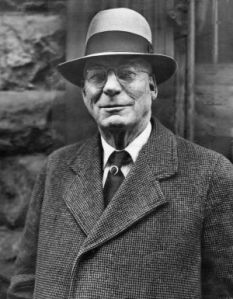
Commemorating the World War I Centenary

With the centenary of Gavrilo Princip’s assassination of Archduke Franz Ferdinand in Sarajevo coming up this June 28, one would think World War I will be much more in the news soon–at least in the US and Britain. (Here’s how Washington DC plans to celebrate, if you’re interested.)

I’ve been keeping an eye out for possible commemoration events to maybe attend while in Europe this summer, but have mostly come across apathy and an urge to forget among Germans. Something that’s perfectly understandable when I think about it. (Here’s a dispatch from Berlin about why Germans no longer celebrate the history of belligerence the way other countries do; and an article on tensions between Britain and Germany over centenary celebrations. Lots of good reading out there now.) That being said, it looks like there will be a fair amount of events in Europe, particularly in Bosnia, Belgium, and France. Centenary News has the lowdown and is keeping a running itinerary.

Of course, while in-person events and the unveiling of monuments is interesting, what’s coming out on the web now is more compelling, at least to a more historical, less political perspective.

The Atlantic has launched a ten-part photo archive from Alan Taylor called World War I in Photos. It’s awesome. Definitely recommended. The depth of the selections is striking. I particularly like how the images are pulled from the different sides. It seems like most of the stuff I’ve seen before has been very American-centric and jingoistic, although this isn’t always the case, the History Channel aside.

Interesting stuff.

Omaha’s Underground City

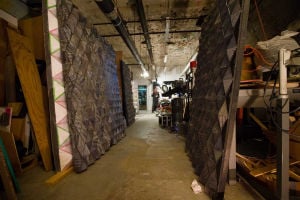
Photo by Kent Sievers.

The Omaha World-Herald ran an interesting piece this week with Erin Golden’s “Life beneath the street: Downtown sidewalks conceal a hidden world underground.” The article details the condition and current use (or non-use) of several giant vaults that remain under the streets and sidewalks of downtown Omaha.

Per the article:

Some of the below-ground history is clear. The vaults were used for storing coal and merchandise, which could be dropped in through chutes or lowered through metal trap doors built into the sidewalks.

But there are other possibilities, too. In the late 1800s and early 1900s, spaces like Hawkins’ were directly below the heart of an area known as the Sporting District, where a crime boss ran bootlegging and prostitution operations.

My novel Kings of Broken Things contains several pivotal scenes in tunnels under the city–the crime boss ones–so this is pretty interesting to me. From what I’ve read, I don’t think vaults like the one pictured had much to do with criminal operations. Pimps and bootleggers were more concerned with secrecy and transportation, less so with storage, so narrow tunnels were favorable. As is fictionalized in my book, tunnels were used to connect hotels with brothels, so patrons could move discretely without being scene walking in the front door of the house where they took their pleasure. Several of Tom Dennison’s offices and saloons he ran were rumored to feature tunnels as well, to facilitate a quick get-away if necessary.

Society as a whole seemed to be obsessed with tunnels and secret underground vaults those days. Many people had them dug under their yards, to their garages, elsewhere. Big retail stores like the Brandeis had tunnels that connected from the bargain basement level to nearby banks–so customers didn’t have to go out into the weather should they need to make a withdrawal. “Tunneler” was a pretty common professional during these times too. As a dangerous job that demanded skill, I’m sure it paid well.

Thinking of this reminds me of the scenes in The Jungle when Jurgis Rudkus joins the project to dig the Chicago subway. Or, more recently, Colum McCann’s captivating portrayal of the sandhogs who tunneled under the East River to connect Manhattan and Brooklyn by rail in This Side of Brightness, my favorite McCann novel.

At any rate, I’m pretty jealous of Phil Hawkins, the artist whose kept a studio in one of these vaults the past few years. Not that I’d want to give up my cozy home office or anything, but that’s awesome.

One Last Key West Photo–TW Reading at the Seminar

Wheeler-KWLS-2014-5517
Photo by Nick Doll.

I had a jacket on and everything! And only look a little puffy and haggard. Not bad for Day 12 at the KWLS. This was taken during the award-winners reading on the final Sunday of festivities at the San Carlos Institute. I presented part of my piece that won the Marianne Russo Award, “On the River, Down Where They Found Willy Brown,” which is excerpted from the novel I’m working on.

Autumn in Review (2013)

No big news regarding the novel-writing at this point. I’ve been busy reworking the reworks. Tried half a dozen more ways to do the opening pages and feel like I’m getting closer on that. For a long time I leaned on having a sort of prologue opening, but decided to cut all but four pages of that, as it seemed to be more of a crutch for me as writer than anything that might interest a reader. Always a tricky business figuring out what actually needs to be on the page and what needed to be written for the writer only. Getting closer though.

There was some more tangible news related to The Uninitiated over the season though, as Boulevard published an excerpt of the novel in October, titled “River Ward, 1917.” This is the first bit of writing from the novel that’s been published, so definitely exciting news there.

Meanwhile, in December, another excerpt, “On the River, Down Where They Found Willy Brown,” brought home the Marianne Russo Award from the Key West Literary Seminar. Among the many benefits are free travel and lodging at this year’s seminar, the opportunity to read my work as part of the regular program at the seminar, and an 11-day stay in Key West. It will be sad to miss over a third of Nebraska’s January, but somehow I’ll soldier through.

These two things, along with a fellowship to Akademie Schloss Solitude, winning the Tarcher/Penguin Top Artist contest, a long-list notice in the Inkubate novel contest–all of which was based on work done for The Uninitiated–makes me hope I’m on the right track here.

There was more publishing news in November, as Five Chapters accepted “Impertinent, Triumphant” for publication. The story will run sometime in March, probably. Really looking forward to that too.

Also, some interesting thoughts on living abroad are offered here in this article.

Finally, congrats to emily m. danforth and her novel The Miseducation of Cameron Post for taking the “Woman Writer” award at the High Plains Book Awards. So happy for emily and all of her success.

Dispatch from The Uninitiated

“Tom thought it over as he paced the brick drive that led up to his house, two days after the vote. Bullet straight and tree-lined, the drive gave the impression of something fantastic as his house slipped into view, large and unreachable, a mirage. The house was wood-framed with finishes of granite at certain edges, the cellar and foundation limestone, highlights of plaster festoons above the front door. A few chimneys rose above beveled eaves. Off the second floor bedrooms were balconies as wide as the patios below, where a tiered-garden overlooked the industrial valley. There were pergolas holding grape vines, arbors abloom with creeping red ivy. Everything here was made for entertaining, for looking at, for admiring, but up close these spaces didn’t serve any purpose. This was an unpeopled luxury, a lonely glutton of riches in and of itself. If Tom was being honest, he had to admit this.

“Years before, an enemy left a bomb on the front doorstep. An ingenious design, the bomb, a simple wooden box with six sticks of dynamite and a pistol inside. A string was tacked to the porch and connected to the trigger of the pistol. If someone had lifted the box, his wife Ada or daughter Frances, the whole house would have been blasted clean off the earth, leaving only a rubbled crater. Frances found the box with a friend, and she told Tom about it. A smart girl, Frances didn’t touch the infernal device at all. Tom noticed the trip wire when she brought him to see. He had police dismantle the bomb. After that Tom closed the grounds. Bodyguards were kept outside around the clock. You had to be a close family friend, a known friend, if there was such a thing, or else you couldn’t get in. The bomb changed things. That’s when Tom put the machine gun across his lap in the car. That’s when everything here, all this bounty he’d won over the years, all of it, started being lonely.”

Just Finished
The 42nd Parallel by John Dos Passos. I’d always avoided the USA Trilogy for some reason. Dos Passos is so often only a foot-note to Hemingway among the great writers of the Lost Generation, although his novels are consistently lauded and canonized as well. I’d just never known anyone who actually read him, so there wasn’t much of a conversation to join, I guess. After reading this first third of the trilogy I can see why Dos Passos is still relevant. So much of his pro-labor and socialist message is probably lost to most contemporary readers–it’s similar to reading The Jungle at times–but the level of energy and innovation is very high here too. Very rich, poetic, and affecting.

The Rings of Saturn by W.G. Sebald. The way these conversational essays seem to be written more for effect–that your mind wanders with the flow of information, sometimes parallel to it, sometimes not–produces an interesting reading experience. I’d read about Sebald’s work a lot before I ever read it, so I kind of knew what to expect. At the same time, I’m still not really sure what to think.

The Assassination of Jesse James by the Coward Robert Ford by Ron Hansen. Really enjoyed this. A lot more than I thought I would, frankly. I met Ron when he visited Creighton University this fall, which is what prompted me to finally pull this off my “To Read” book shelf. The psychological depth of the novel is pretty astounding. Plenty of shoot-outs and train robberies too, of course.

The Castle by Franz Kafka. A monster of an unfinished novel. I was compelled to read this after watching Michael Haneke’s film adaptation, and really enjoyed both quite a lot. The idea of reading an unfinished novel always intrigues me, particularly ones of this class that could just as accurately be called “unfinishable” novels. It isn’t so much that the plot line is incomplete, more that the story could never finish. It’s not like K.’s going to find some sort of victory in the end, or defeat for that matter. The novel follows his string of embarrassments and slight advancements and eventually stops as he reaches the end of his inertia. I kind of wondered if the novel wasn’t finished after all.

Hide Island by Richard Burgin. A review I wrote of this collection of short stories will be appearing in Prairie Schooner‘s Briefly Noted online book review, probably in February.

Now Reading

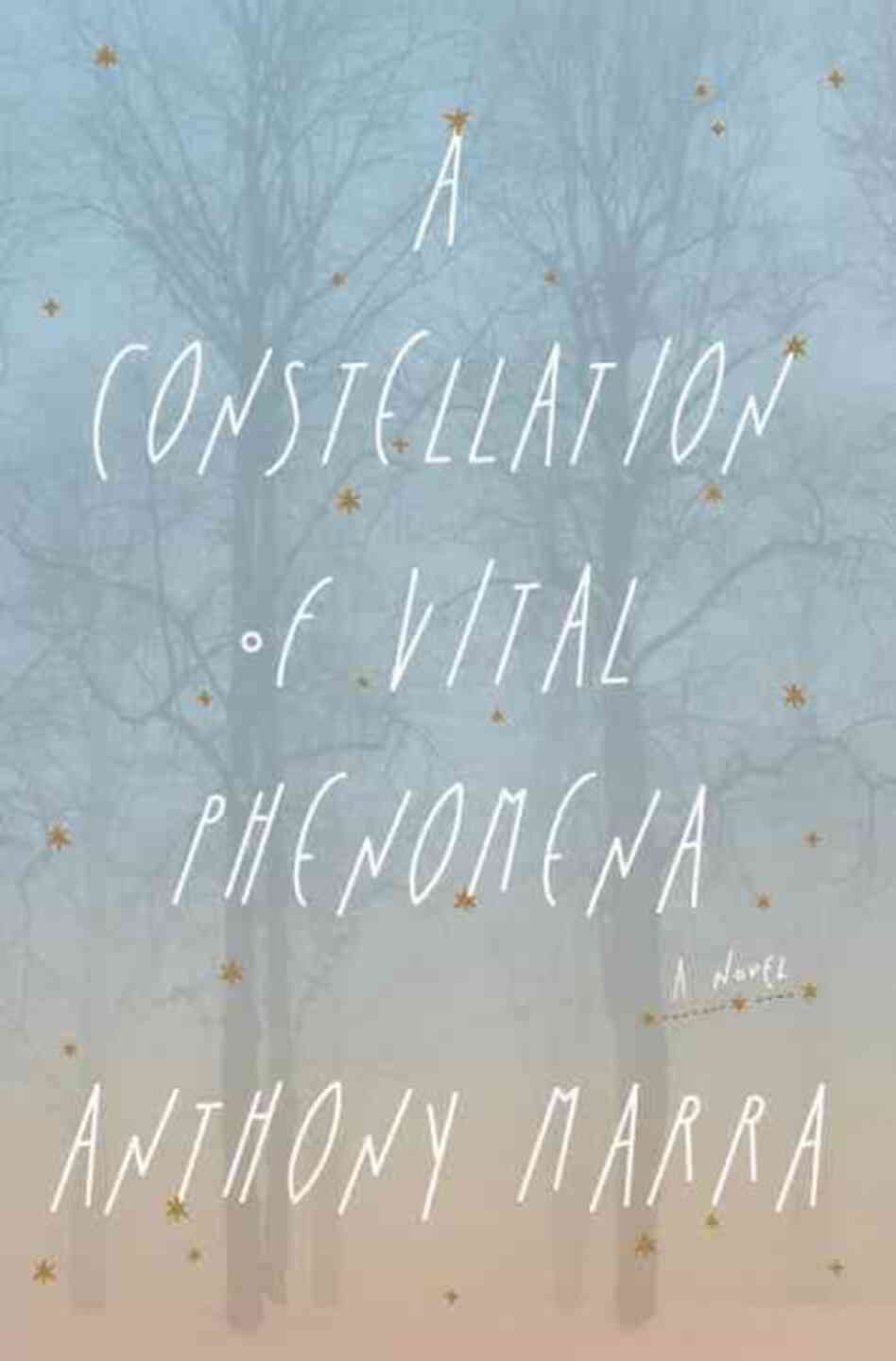
A Constellation of Vital Phenomena by Anthony Marra. This has been pretty engaging so far, although the writing sometimes comes off as haphazard, particularly when it comes to POV. Maybe haphazard isn’t the right word, superfluous?, but I often question some of the strategies Marra uses here to tell the story. A good book nonetheless. I can certainly see why it made so many Best of lists this year, mostly because of the story of an orphaned little girl and two eccentric doctors in war-torn Chechnya is so remarkable.

An American Tragedy by Theodore Dreiser. I’ve been reading this off and on for a few years now. I come across some criticism about Dreiser a while ago that lumped him into a group of American novelists who have novels regarded as classics (Dreiser has two, of course, with Sister Carrie also showing impressive staying power) even though the writing itself isn’t really all that remarkable. I’d tend to agree with the assessment. Nobody is going to confuse Dreiser with Hemingway or Fitzgerald, as far as style and form go, although the story of his novels really is so quintessentially American (for its time, place, and class) that it’s hard to dispute the status of his novels as classics. Steinbeck was the other novelists lumped into this category, which seems to fit as well.

Up Next

The Third Book about Achim by Uwe Johnson. The follow-up novel to Speculations about Jakob. These books can be difficult to locate, but I happened to find one at the always excellent Jackson Street Booksellers and was lucky enough to get the other from Nicole for Christmas.

Hansen Writes on Tom Dennison for the Omaha World-Herald

dennisonSome more Tom Dennison content to share, as Matthew Hansen’s column in yesterday’s Omaha World-Herald gives an overview of Dennison’s forty year career as political boss in Omaha. The column focuses on the 1932 Prohibition trial of Tom and his associates, and features a few quotes from Dennison expert Orville Menard, whose book River City Empire was recently reissued.

ORDER KINGS OF BROKEN THINGS, A NEW NOVEL ABOUT DENNISON-ERA OMAHA!

While the article doesn’t really offer a whole lot of new information, it’s certainly worth a read. Here’s a highlight:

Tom Dennison, the dapper Irishman who strode to the witness box in November 1932, had for all intents and purposes run Omaha for nearly four decades. He had never been mayor, and, in fact, he never ran for political office. Instead, he got mayors, city councilmen, judges and even congressmen elected — or defeated — based on how willing they were to bend to his will. Neither was Dennison a reputable big-business man, the equivalent of a modern-day Fortune 500 CEO. It’s a tad difficult to fit in with the black-tie crowd when you are dogged by accusations that you had murdered rivals, robbed trains and become the Capone of the Cornhusker State. Not that the man on the witness stand was hurting for cash. He moved rivers of liquor during Prohibition, ran several wildly profitable illegal casinos, controlled and profited from the city’s 2,500 prostitutes and collected cash from every business — both reputable and underworld — that needed his protection. He also tampered with juries, stuffed ballot boxes, bought off the Omaha police, installed relatives and cronies into made-up city jobs, allegedly ordered the murder of one of Omaha’s biggest businessmen and may have purposely inflamed the racial tension that led to the 1919 race riot and lynching of a black man. A Chamber of Commerce stalwart he was not. But Tom Dennison was something else. He was untouchable.

From the sounds of things, Hansen will be devoting more of his column space to Tom Dennison in the future–the gangland murder of Harry Lapidus in particular–so that’s something to look forward to. Hansen has really done a great job since taking over as a columnist earlier this year. Some of his stuff has been pretty compelling, in both goof-ball and more touching ways, so I’m excited he’s turned his attention to this era of Omaha history.

“River Ward, 1917” Published in Boulevard

My contributor copy of the Fall 2013 edition of Boulevard arrived in the mail today, making it official that “River Ward, 1917” (the first excerpted piece from my novel-in-progress) has appeared in print!

Here’s the breakdown from when the story was accepted for publication back in March, with more background on the story. As noted, this is the fourth time my work has been in Boulevard. Special thanks to Editor Richard Burgin and the staff at Boulevard, as always.

This issue also features work from Joyce Carol Oates, Albert Goldbarth, Gerald Stern, and many others. You can subscribe here, fyi.

Here’s a sample of “River Ward, 1917”:

There were tents and lean-tos three deep along the muddy banks of the Missouri River, from the southern tip of the mills under the Douglas Street Bridge to the northern edge of Jobbers Canyon. A bawdy heat radiated from the flats, from open fires and juiced up men, from rosy-cheeked women who circulated the crowd, from the kids with trays tethered over their shoulders who sold tobacco and a drink advertised as mulberry wine, from the mud itself, from the burning solder soot that pumped out mill chimneys and rose above the industrial dusk of the valley. The odor was overwhelming. Jacob didn’t understand how a river so big, that moved so fast, could smell so bad. Most men smoked constantly to mask the stench with cheap tobacco. Others were too drunk to notice. They dipped forward on shaky legs and relieved themselves where they stood. Some were in socks after their shoes were sucked off in the mud. They slopped happily to an open tent flap and peeked in at the occupant. If a man liked who was inside, he entered and the flap fell closed behind him. Every so often there was an enforcer astride a horse with a loaded shotgun broke across his chest. Scuffles erupted constantly in the muck. The enforcers set things straight.

Summer in Review (2013)

photo(2)
Nothing better than seeing the Royals shut out the Tigers on a 4000 degree day in mid-July, right, grumpy baby?

Things slowed down as summer officially began. Not a lot of news fit to print. (Besides the KC Royals making an honest to God playoff run, that is. That 4% chance of making the post-season they’ve been nursing the past month or so has brought me a not small amount of joy.) [EDIT: We also won 7th place in Dole’s Taste of Spain sweepstakes, which includes a free Bag o’ Salad. So the winning streak continues.] A lot of this was by design to savor a couple things that will be in short supply next summer–cash and family time.

Inkubate did select the winners of their Literary Blockbuster Challenge. Although part of the long-list of finalists my work was not selected as one of the cash winners. Apparently they are sharing my work with a group of participating agents and editors, so there’s that.

I also finished the rewrite of my novel and am now hard at work in the revision of the rewrites. All in all I’d declare the multiple POV experiment a success. A main thread emerged through the character of Karel, a nine year-old boy when the novel begins. I’ve never done much with child characters in my work before–with a notable exception coming when “How to Die Young in a Nebraska Winter” was published in The Kenyon Review in 2011–and it’s turned out well.

An excerpt from The Uninitiated will appear as “River Ward, 1917” in Boulevard soon, so keep an eye out for that.

Dispatch from The Uninitiated

16th & farnam
16th & Farnam Street.

“That night Karel turned on his lamp, just briefly, to take off his shoes and tuck them safely under the mattress. He was a bit drunk and didn’t feel like sleeping right away. At the same time he was too anxious of himself to join the boys at the loud end, so he sat for a while to think about his predicament. He wished that the feeling he created on the baseball diamond when he played ball followed with him once he made it home, but this couldn’t be so. There was too much weight in familiar places. The stuff about his mom he didn’t want to believe. What happened with Braun, the demise of SOSA; and not long after Jacob being ran out of town in disgrace, a thug, a thief, good riddance. And Anna. Karel could do nothing to change what had happened to Anna, and what would.

Instead he was in this dorming house, sitting on the quiet end with his lamp on. He annoyed those around him but they could roll over and grumble, for all he cared. They could order him to douse his lamp. He’d tell them to fuck off. Karel was sitting in the lamplight. That’s all. Something he never did. He’d never wanted to put off the others but he didn’t care now. The room looked strange to him, drunk, the way the shadows were victorious against the lamp in the corners, under beds, up in the airy loft above him when the rafters crossed each other. Sometimes the room reminded Karel of the time he’d visited Anna up at the state home. For she too slept in a long dormitory hall like this one. The two rows of beds. All girls there—as this was all boys—strangers to one another, which made them compatriots in a way. It was always lonely to fall asleep in a row of beds, particularly if you were bracketed by silent neighbors. If he couldn’t hear their breathing, Karel wondered if they’d died in the night, and remembered how it was when he’d shared a bed with his sister, how he fell asleep to her dainty snoring most nights, and the terror of waking up to silence in the middle of the night, Anna’s snoring stopped, and him to speculate why. Karel didn’t like to have a bed to himself, despite believing he did. He’d never slept alone before and wasn’t sure how to do it. He’d stay up late and stare into the rafters. He’d listen to the card players. This night he’d leave the light on.”

Just Finished

The Piano Teacher by Elfriede Jelinek, translated by Joachim Neugroschel. In preparation for my trip to a German arts organization next summer I’ve been acquainting myself a bit with the German-language canon, so as to not appear so much as a self-centered, hegemonic American jerk. The Piano Teacher was really great. I’m not sure that there’s anything so formally striking about it, but the close, close POV (even when split) was remarkably well done, and wonderfully hard to read at times, and the evocation of Vienna in the 1980s very engaging.

Speculations About Jakob by Uwe Johnson, translated by Ursule Molinaro. I’d never heard of this book before, but I’m grateful I came across it and picked it up. Originally published in German in 1959 (the English translation went public in the US in 1963) Johnson provides a striking panorama of what life was like in East Germany in the 1950s, at the time of the Hungarian Revolt–and, more importantly, what East Germans thought of West Germans and why not all East Germans dreamed of becoming refugees in the West. While the style of the narration–multiple, often overlapping points-of-view–can be challenging, the book is a masterpiece. Very highly recommended.

Amerika by Franz Kafka, translated by Willa Muir. This unfinished novel is kind of known for being factually inaccurate–what? you didn’t know that the Statue of Liberty held a giant stone sword?–as Kafka never traveled to the United States and was kind of writing by the seat of his pants as far as research went. It’s still a pretty good novel, although not always very Kafkaesque, surprisingly. This being one of his earliest works, you can tell he was still feeling out his style by writing what is basically a pretty conventional travel story, at least in the beginning. Things get a lot weirder towards the end.

The Joke by Milan Kundera. It’s kind of interesting to read the so-called “lesser” works of such a well-known author, since it can be hard not to give the novel its own treatment, rather than reading everything through the lens (or in comparison) of The Unbearable Lightness of Being, in this case. So while The Joke is a very good book, I seemed to appreciate it less in the beginning because it wasn’t THE Kundera classic. That being said, The Joke offers its own pleasures. It’s a little deeper experience in some ways, more focused on single events and the ironies of the characters as their plots intertwine.

Eat the Document by Dana Spiotta. A finalist for the National Book Award, Spiotta’s 2006 novel is highly entertaining, and pretty spot on in its portrayal of activist and outsider culture in the United States, both in the 1970s and the early 2000s. I kind of cringed reading the sections set in 2003, remembering how some of my friends and I worked so hard to craft political consciousness through fashion. A lot of times I take issue with novels that try to depict aspects of my generation, particularly if they hit close to home, as everyone does, I’m sure. But Spiotta’s writing is so sharp, her points so precise and intuitive, there really wasn’t much to argue about.

Now Reading

The Assassination of Jesse James by the Coward Robert Ford by Ron Hansen.

Up Next

The Rings of Saturn by W.G. Sebald.

Spring in Review (2013)

Anna Wilson house in 1920s
This the building that housed Anna Wilson’s notorious Omaha brothel. Pictured here in the 1920s. After Wilson’s death, the building was converted into a hospital, per her wishes. (Courtesy of Wilson & Washburn, a new bar downtown that’s named after Anna and Josie Washburn, a prostitute turned reformer who makes a cameo in my novel.)

Summer is here in just about every way imaginable, so it’s time to recap what’s gone down the past few months.

First, some news about Tom Dennison’s house at 7510 Military Ave was passed on to me by a reliable source who wishes to remain anonymous. (Previous posts about the Dennison house can be found here and here.) There was some confusion about which side of Military the house was actually located, and my source let me know that the address of the house would have changed at some point after Dennison died. So while it was originally 7510 Military, it would have been on the 7300 block of Graceland Drive for most of the time it was standing, putting it south of Military, on the property of Skyline Retirement Community rather than on Marian’s side like I thought. That the address changed clears everything up.

Some more info from the source:

From the 1960s until it was torn down in 2006, the house was used as a guest house by Skyline Manor, and later as administrative offices. There was an effort to remodel the home before the decision to raze it was finalized, but the cost of a new roof, structural repairs, asbestos removal, etc, etc, was deemed too great. Skyline also offered the house free to anyone who wanted to relocate it to a new property, but, again, the cost of moving the house vastly exceeded its monetary value. The spot where the house stood is now a parking lot.

Other news from what was a pretty busy season:

-I was awarded a fellowship and residency by Akademie Schloss Solitude in Stuttgart, Germany. (Get the whole story here and here.) Summer of 2014 can’t come soon enough. We’ve been busy planning out the trip and addressing all sorts of logistical issues. I thought Maddie would be a little more nervous, but she’s still very excited about the whole thing, just so long as she gets to watch movies on the airplane and have torte for dessert every meal. Not such unreasonable demands.

-Some more good news for my novel came in June when The Uninitiated was announced as a long-list finalist for Inkubate’s Literary Blockbuster Challenge. News of the winners will come later this summer.

-My short story “Shame Cycle” was selected for publication in Gargoyle!

-The College of Arts & Sciences at Creighton University was nice enough to interview me for an alumni profile. I also offered up some summer reading recommendations for The Kenyon Review.

-“The Hyphenates of Jackson County,” an excerpt from my novel-in-progress, was short-listed as a finalist for the Summer Literary Seminars Unified Literary Contest. It did not win.

New Stories from the Midwest 2012 was released, with my story “The Approximate End of the World” garnering an Honorable Mention.

-Not a lot of travel lately, although we did spend a few days in Los Angeles in April, which was really nice. On the docket for this summer: the Ozarks, Kansas City, and a family trip to Chicago to give the girls a little more flight experience before crossing over to Germany next summer. Tentative plans call for a little jaunt to New York this fall to retrace and expand last year’s bratwurst tour of Manhattan.


Madchen.

Dispatch from The Uninitiated

Tom hadn’t exactly been feeling fit, but he didn’t feel any worse than he had the month before, and maybe he was a little better than the month before that. His daughter had him doing all sorts of things to feel better. Morning ablutions. Evening exercises. A Bulgarian hulk came to stretch his legs with a rubber strap and burn his back with rocks. He had a steambath installed in the back lawn. Tom submitted because she begged him to. Ada had him consuming all sorts of herbs and minerals too, he didn’t even ask what the names of her magic were. Selzter water mixed with salts from the Dead Sea, she claimed anyway. Now why he wanted to drink Dead Sea saltwater he didn’t know. Wasn’t dead the very thing he was trying to avoid? All it did was keep him in the bathroom all morning, and he suspected more than once that maybe this was Ada’s way of getting him to spend less time at work. It surely kept him occupied.


Just Finished

Woes of the True Policeman by Roberto Bolaño. Supposedly this is Bolaño’s final unfinished novel, what he was working on when he died, I guess, and it’s writing that ranks up with his best. A lot of it reads like stuff that was cut out of 2666, which is fine by me. The focus on Óscar and Rosa Amalfitano yields quite a few wonderful stories.

In a German Pension by Katherine Mansfield. A series of sketches about the guests of a German health resort. Mansfield is vastly underappreciated, and this is yet more great work from her. (The Kindle version of this is now free, fyi.)

Laughter in the Dark by Vladimir Nabokov. I’d never heard of this novel before, but picked it up on a recommendation while at Book Soup in Los Angeles, and I’m glad I did. A comedy of manners that romps through Berlin and Italy.

Death in Venice by Thomas Mann. I’ve been meaning to read this for years and finally got to it now that I’m trying to get a feel for the German canon before I’m over there next summer. A masterpiece. Maddie kept asking me to read it aloud for her–a little uncomfortable given the subject matter–because it’s so beautiful. I’m pretty sure she didn’t understand many of the words…hoping anyway.

Freedom by Jonathan Franzen. After all the controversy and hoopla surrounding this book when it came out a few years ago, I decided to give myself some space before reading it. I’m big fan of Franzen, but not so much this book.

The Slippage by Ben Greenman. A solid offering, but not quite on the level of his short fiction.


Now Reading

The Piano Teacher by Elfriede Jelinek. Really digging this. I’d been meaning to read this for a while too–being how I’m a fan of the Michael Haneke film based on the novel–and am glad I got to it.


Up Next

Amerika by Franz Kafka.

The Last of the Doughboys

Here’s a great story that ran on NPR’s All Things Considered last month about Richard Rubin’s search for the last living American soldiers who served in World War I. It’s pretty fascinating to hear some of these stories, with the best part being the audio recordings of the old doughboys themselves telling stories about things they haven’t mentioned in many decades, some in over seventy years. Very touching.

Give it a listen! Or read Rubin’s book. The Last of the Doughboys looks pretty interesting too.