Weeks of Dec 6, 2010 – Jan 6, 2011: On Going First-to-Third

(Note: This isn’t a baseball entry.)

For the past month or so I’ve been toying with point-of-view in my novel, first going from a close third-person to first-person narrated by Jacob Bressler, my lead character. I’m not really sure what my goal for doing this was. Something just didn’t sound right with the “voice” telling the story and I wanted to try something different. Some of the feedback I’ve received from potential agents spoke to Hyphenates being a book focused on history and setting, rather than story and character, and I’m trying to break that hold. So I figured that Jacob could tell his story more succinctly, since it’s all he would care about. He wouldn’t obsess over Omaha history or factoids of the era as much as I do, certainly, and sometimes it’s easier to slip those lovelies in while in third-person. I needed a more discerning eye. It’s like how you don’t realize how embarrassing something is until you say it out loud to another person, or post it in online. But once you open your mouth, you can see things so much more clearly and objectively.

The experiment didn’t really work. Conventional wisdom says that novels shouldn’t be written exclusively, or even largely, in first-person, and I think that’s probably good advice. Around page fifty of the rework, it got pretty annoying to keep seeing and hearing that “I” all over the place. To be unable to break out of Jacob’s voice even for a minute is a problem, especially since he’s the focus of the book. But, even though I’m now in the process of reworking it back into third-person, I do think the exercise was worthwhile. It helped me see cuts and edits, and gaps where new work is needed, that weren’t apparent before. While it seemed acceptable to have a third-person narrator go into a page-and-a-half diatribe on the condition of organized labor in Omaha in 1917, having Jacob do the same was absolutely ridiculous. There were more than a few instances of this, where the scholarly, professorial voice would dominant for longish periods—and they all needed to be cut. The writing is much cleaner now, more focused and edgy in a way similar to my contemporary-set fiction.

I’d only made it through about a quarter of what I have drafted in the transition to first-person rework, but it may be worthwhile to push through the rest of it, even though I know that I’ll want it in third-person eventually. (I’ll probably want this.) I have used this technique in spots for the last year or so anyway, in fact, trying to tie the narration as closely to Jacob’s experience as I could. So much of the writing, especially in Part II, has already been rewritten, for my own benefit, in Jacob’s first-person. There’s just so much good that comes from writing around things like this. I imagine it’s similar to filmmakers shooting a scene from ten different angles, hoping to get one that looks and sounds and feels right. The dispatch below is a part I wrote new while in Jacob’s first-person, and it’s something I don’t think the third-person narrator could have come to. So there’s that.

Dispatch from The Hyphenates of Jackson County

“The bank was open when I left the saloon, it was two o’clock, but I still didn’t go there and ask for a job. The weather was nice. Again I walked downtown, but it was boring this time. No women brushed against me. My clothes disgusted them, my face was filthy. I waited out the day and then returned to the Courthouse lawn in the evening to sleep. It was warm and I’d been safe there the night before. I knew at what time to cops would come to roust me, and would make it a point to leave before they came out with their cudgels. It seemed simple. But I was arrested anyway, after midnight, for vagrancy, and put in the overnight with the drunks and other indigents. I wasn’t disappointed to be arrested, however, after I was released. At least there was black coffee this way, and in the morning a bowl of white beans with a couple pieces of fat. Otherwise I wouldn’t have eaten that morning. The whole night I wished that I’d gone to the bank that day, however. There was plenty of time for regrets in the overnight, because the drunks couldn’t keep quiet. I thought of everyone I might have wronged in my life up to this point. Any pocket of guilt that had been waxed over was reopened. I thought of you that night, Evie, and why it was you had to leave Jackson those many years before. I thought you took off on your own. It never occurred to me that they’d run you and your mother off. Not until they ran me off too.”

Personal Rejection Notes, Requests for More, and Other Nice Versions of No Thanks

Southern Humanities Review and Hayden’s Ferry for “Attend the Way”; Electric Literature for “On a Train from the Place Called Valentine”; and West Branch for “The First Night of My Down-and-Out Sex Life.”

Now Reading

Bad Marie by Marcy Dermansky.

Just Finished

A cover for Fortune designed by Chris Ware, by request. The magazine rejected it, of course. Pretty incredible nonetheless.

One of Ours by Willa Cather. A really great, Pulitzer Prize-winning novel set mostly in Central Nebraska and Lincoln, in the late 1910s. I was lucky to pick this up at the National World War I Museum in Kansas City this fall and it’s become a fantastic resource for me. The focus of the book is even a family named Wheeler! (I’ve gone over this before, I know. Indulge me.) The final third of the book, when Claude goes over to fight in the war, is pretty sentimental and Cather panders more than a little bit to jingoistic reactionism in these parts. But overall I really enjoyed the book. Cather has never disappointed. Plus, as an added bonus, there are a bunch of good old-timey ideas for home gardens in Nebraska, for all you green-thumbs out there. We’re going to try growing gourd vines up our pergola trellis this summer, and we have Cather to thank for that.


The Best American Comics 2010, edited by Neil Gaiman, Jessica Abel and Matt Madden. My favorites include “The Lagoon (Hiding in the Water)” by Lilli Carré, “The Alcoholic” by Jonathan Ames and Dean Haspiel, “Asterios Polyp” by David Mazzucchelli, “The War on Fornication” by Peter Bagge, “The Flood” by Josh Neufeld, and “Fiction versus Nonfiction” by Chris Ware. Ware also had a lengthy section of his ongoing series “Acme Novelty Library” reprinted, which I had seen some of before. In 2007 he gave a standing-room-only lecture at the Sheldon in Lincoln that Nicole and I attended, and a comics pamphlet featuring some of the comic reprinted here was given out as an example of his work. It was pretty cool to get the work then and is outstanding to see the longer version reprinted in a Best American. To make it even better, the comic is set in 1950s Omaha and uses the old Omaha World-Herald building (where Nicole worked when as first moved here) as a backdrop. There have been quite a few notable artists who have come out of Omaha in the last decade, but none of them have really attained giant-status in their field like Chris Ware has. It’s something that should really get more local recognition than it does.

Rivers Last Longer by Richard Burgin. A solid literary thriller with meta-fictional treasures abound. I’m currently writing a review on this now.

Up Next

Greetings from Below by David Philip Mullins.
Weeks of Oct 10 – Nov 7, 2010

-For my birthday this week, Nicole took me to the National World War I Museum in Kansas City. We had a pretty engaging afternoon there and really enjoyed the experience. None of the exhibits had a ton of specific relevancy to the novel I’m working on—besides general period details—but it’s always nice to be immersed in the subjects and obsessions of the era. And for someone who loves history, it’s an awesome way to spend an afternoon.

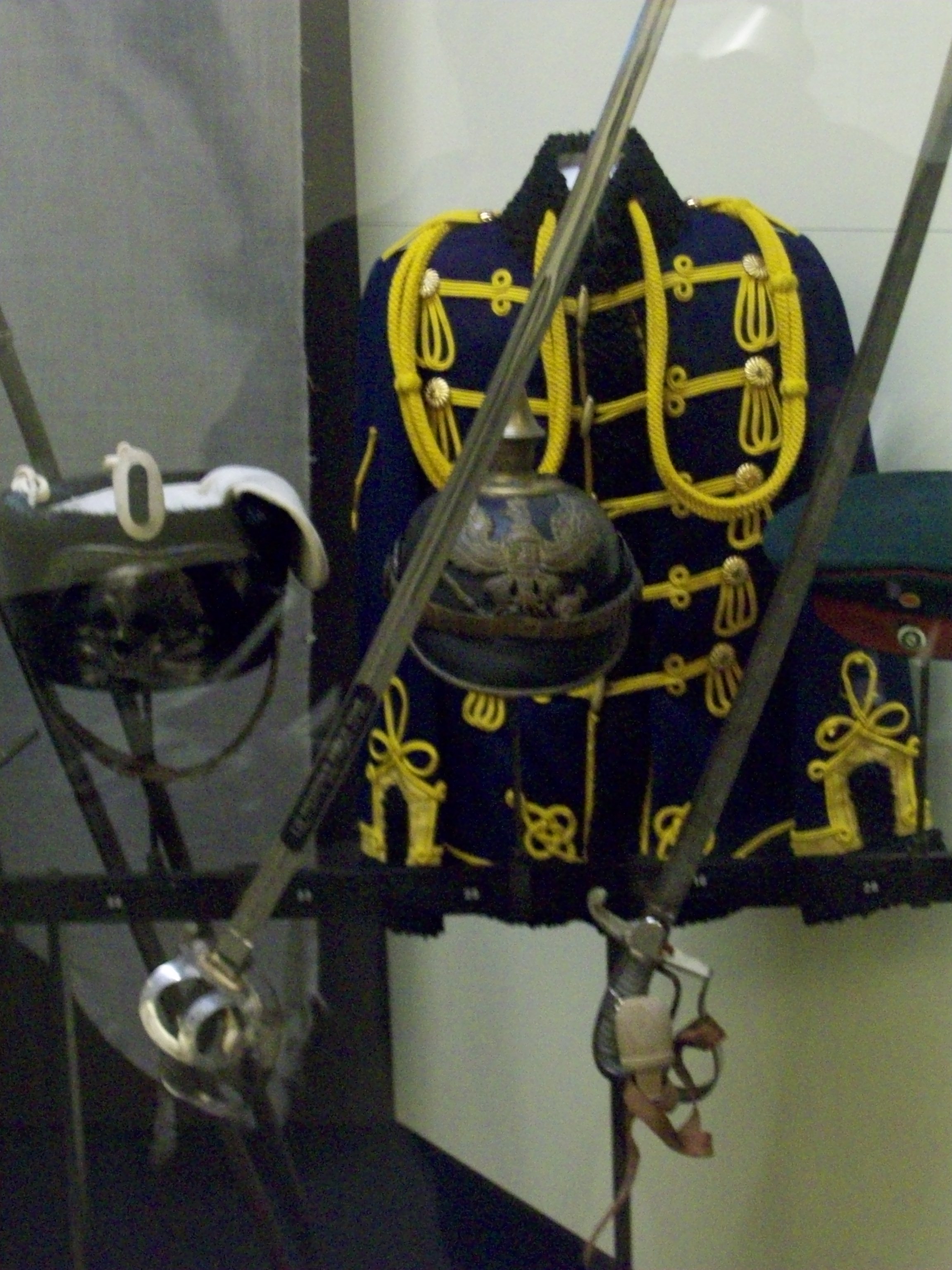
Prussian field helmets and swords. The skull-and-crossbones one is pretty badass. A model of it was not, unfortunately, available for purchase in the museum gift shop.

The museum itself is pretty interactive for what is still largely an objects-behind-glass arrangement. There are life-size models of multiple trench scenes, from a well-engineered German one of concrete and lumber, to a French one of mostly sticks collapsing in the mud; a steady soundtrack plays in the background of what it would sound like in the trenches; and a walk-through crater show the devastation caused after a 17-inch howitzer shell explodes on a French farmhouse. There is also a special exhibit on display now regarding the experience of German soldiers in the war, which was interesting. In general, the museum is noteworthy for presenting a more balanced perspective on the war years—rather than tilting too strongly toward an Allies-centric point of view—and this is something I really appreciated. For anyone interested in the era, I highly recommend visiting the museum. And for anyone interested in antique elevators, the ride up in the Liberty Memorial is not to be missed!

A military uniform for belligerent children.

-One of the more pleasantly surprising parts of the museum was finding the Willa Cather novel One of Ours (1922) in the gift shop. For a long time I’ve been looking for sources that depicted the time and place I’m writing about in my novel, and for the most part coming up empty. For some reason it never occurred to me that Cather would have given some treatment to the Great War in her writing. And not only did she write a novel about a family of Nebraskans during the war years, but the surname of the book’s protagonist is Wheeler! Beyond that, I feel pretty stupid for not knowing more about this novel, as Cather won a Pulitzer for it too. I’ve read a few Cather books and some of her short stories–but have always suspected that this wasn’t nearly enough, and that my ignorance would come back to haunt me some day. I better get to work rectifying that.

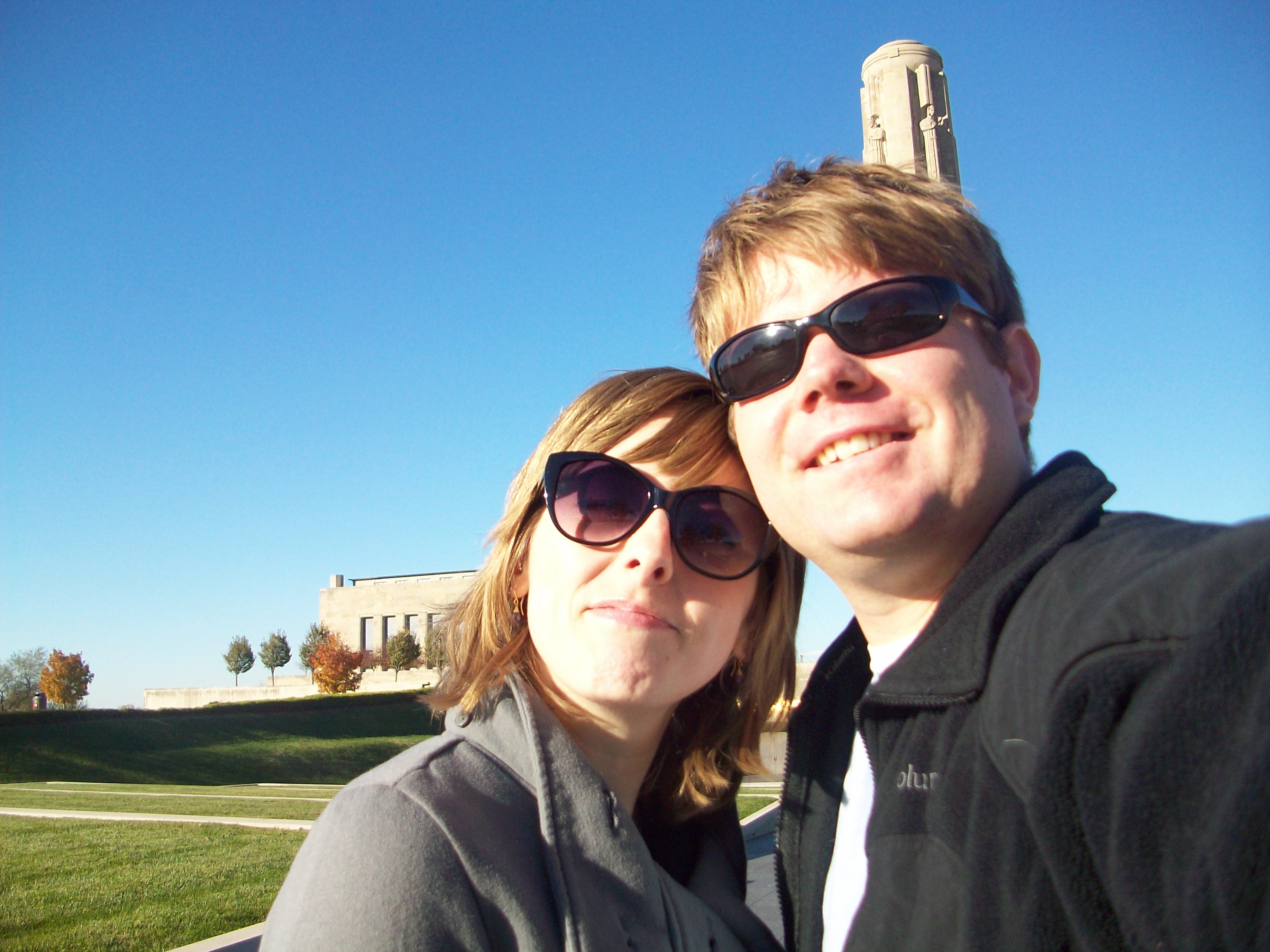
Nicole and I outside the National World War I Museum in Kansas City, Mo. It was very bright.

Further: what other novels am I’m not thinking of that are set in Nebraska in the years 1916-1920?

-I’ve been meaning to post a reflective piece on here regarding my story “The Housekeeper” being selected for publication in the forthcoming Flatmancrooked 4 anthology. However, the story is still a finalist in their current fiction contest and I’m waiting on the results before posting anything more about it.

Dispatch from The Hyphenates of Jackson County

“Jacob knew all the stops would be pulled here on the River Ward in the pursuit of a margin big enough to overcome the rest of the city. They had to win by a landslide here because the other districts were going to swing the other way. There could be no parity in this district that Dennison controlled. Voters on the payroll of the Pendergast machine in Kansas City would arrive throughout the morning to cast their ballots, along with others recruited for this purpose from towns in Iowa like Red Oak, Glenwood, Griswold, and Walnut. Every barroom in the Ward was rented and stocked with liquor. Bootleggers who owed their survival to Dennison saw to these private parties. The booze was reserved for those who held both a slip that proved they’d voted and a card printed with the names of the Square Seven. It was all about mobilization and efficiency, making sure that each and every favor handed down over the past three years was called in during polling hours. If a family received coal over the winter, if their grocery bill or bar tab was covered, if they were granted leniency from a judge—then a car would appear outside their home on Election Day to shuttle them to a poll.

Maddie before pre-school one morning this fall. She wears all pink, as often as possible.

“It was up to Jacob to oversee the operation on Clandish from a polling station in the basement of Mecklenburg’s Saloon. When he returned from Iowa, the barroom was already half full of voters and more were coming in all the time. Mecklenburg’s would be packed by 6am; nickel beer was discounted down to a penny. It was an amazing operation to watch, its controlled chaos exhilarating. Trucks lined up at the curb, back from Iowa in the middle of the night with two dozen voters packed on their hay-strewn flatbeds. The street cars were running already too, full of Pendergast’s men from the train stations, recent arrivals from Kansas City. Johann and Reinhold lined them up inside and meted out the booze. His suitcase still in hand, Jacob stood back and watched it all until it was time to instruct the voters. In groups of ten, Reinhold escorted them to the basement of Mecklenburg’s. Jacob and Johann followed them down the steps, into the dug out space under the barroom. There were two rooms separated by a narrow doorway. The basement had been an afterthought, one dug out roughly and bricked in. Jacob recognized the work, a former tunneler himself. A light hung from a rafter, its wire snaked in from a hole drilled in the barroom floor above them.”

Personal Rejection Notes, Requests for More, and Other Nice Versions of No Thanks

Cream City Review for “Attend the Way”; Painted Bride for “The First Night of My Down-and-Out Sex Life”; n+1 for “Shame Cycle”; and Barnstorm and Camera Obscura for “You Know That I Loved You.” Florida Review and Harvard Review also sent nice notes along after I withdrew manuscripts that had been accepted elsewhere, which is very much appreciated. Plus, “The Housekeeper” was selected as a finalist in the Flatmancrooked Fiction Contest, and will appear in the anthology Flatmancrooked 4, and my review of Nadifa Mohamed’s debut novel Black Mamba Boy was selected to appear in a future edition of Prairie Schooner.

Just Finished

Death is Not an Option by Suzanne Rivecca. A very strong collection. I plan on writing a review of this very soon.

Now Reading

One of Ours by Willa Cather.

Up Next

Rivers Last Longer by Richard Burgin.

Pruska Kultura

The first Polish film ever made, Prussian Culture (1908) expresses the perception of Germans in the pre-war years. I love old works like these. Much of the militaristic Prussian stereotype was earned, as war-lording tends to produce such views. But it’s interesting to filter the message of the film too, as it’s obviously propaganda. Adhering to Keats’ notion of negative capability seems like the wisest course when confronting primary documents like these.

Weeks of Aug 22 – Sept 10, 2010

I’ve finished a first draft of Part II of The Hyphenates of Jackson County this week. It’s pretty exciting to be 2/3 finished with a novel. It’s almost unbelievable, but I guess that’s what eighteen months of work will get you.

This section, now sitting at 161-pages, was pretty close to be done back in late spring. (That should come down to around 125-pages soon.) However, as discussed in my previous update, there was quite a bit of research that I needed to plow through before I could finish the draft. Even now I’m not so sure that I know quite as much as I should, but that seems to be the nature of historical research. Once you learn something that is truly helpful, it opens another half-dozen related subjects that can be explored—and sometimes seem like they should or must be explored. Even just browsing through a works cited page can be set off a new chain. This being said, it’s becoming important to find a stopping point in the research, I think. At least for the moment.

Andrea Barrett spoke about her methods quite a bit when I saw her at the Key West Literary Seminars in 2009, talking about how she feels compelled to read everything she can on a subject before she even begins writing a historical novel or story. It’s a compulsion for her, as she explained it, something she can’t help. Then you have historical novelists like E.L. Doctorow and Edward P. Jones, both of whom did famously little research for Ragtime and The Known World, respectively.

This, in many ways, has to do with comfort level, I believe. Have I done enough? Do I know enough? Will I be exposed? And, by this, I don’t mean to imply that Barrett is insecure and that Doctorow isn’t. These are just different strategies they use. Barrett achieves authority through exhaustive research, while Doctorow uses more a general literary technique to express a sense of authority. That is, as his characters feel real to us, as we are drawn to their narratives, we can’t help but become convinced that their “historical” stories are real, even if they aren’t completely accurate. (Of course, Barrett does this too. It’s the magic of all good fiction.)

This kind of dichotomy–the part about not being completely accurate but still writing with authority–didn’t seem like it would be okay with Barrett when I saw her speak, as she has background in the sciences. And while I often feel that way too—being that I have faith in the process of research to reveal things as they’re needed, if the work is put in—history is so complex that too much accuracy can weigh down a book. It’s hard to strike that balance, but I suppose that is the definition of the job, for any writer, to take something complex and make it comprehensible without having to state all the facts.

Thinking of it this way, maybe I do have enough information for now. And it’s more a matter of distillation. We’ll see. The self-reading and revision begins in earnest on Monday.

-Speaking of research. Reading through some old news articles, I may have found some explanation for why Dennison’s family gravesite is so modest—as discussed earlier this year in this post. As stated by an Omaha World-Herald retrospective from Sunday, May 9, 1965:

If [Dennison] had accumulated great wealth, there was no trace of it after his death. The inventory of his estate […] listed 10 thousand dollars in promissory notes ranging from one hundred to 11 hundred dollars. Most of them represented loans to friends, and in many cases they were long past due. Also listed in the estate were two men’s watches and several diamonds.

His safety deposit box held “three empty wallets, a memorandum of trust set up for his daughter, a letter from an outstate man asking help in getting a job, some dust and several paper clips.” So maybe Dennison was broke by then, and that explains why he wasn’t interred in an ornate mausoleum like many of his Omaha contemporaries were.

I’m still a little skeptical of this theory, however. For one, his funeral was one of the largest in city history. But mostly, wouldn’t it make sense that a man who made his fortune in organized crime and graft would be able to hide his wealth from the government? Would you expect to find any trace of his wealth? It’s not entirely out of the realm of possibility–as Dennison certainly did give away much of his money to needy causes, almost always anonymously–but I’m a little dubious, let’s say.

-The review I did of Ben Greenman’s collection, What He’s Poised to Do, received a couple nice mentions in the last week. On the blog of pioneering literary journal One Story, and on From Your Desks.

Dispatch from The Hyphenates of Jackson County

“There was more traffic downtown but it was limited to the streets, cars full of young men driving in circles. They revved their motors and the barking noise of their mufflers echoed off the porticos of the buildings where their fathers worked. These were high school boys and girls out having fun, all of them Anglos, maybe some college men out to find a girl. Jacob always hated seeing rich kids out playing on a weeknight. He hated being reminded of the leisure they were afforded, these teenagers who drove new speedsters and roadsters of bright yellow and red. Warrens and Scotties and Johns and Toms racing off in ivory suits and straw skimmer hats to a private jazz club hidden in a clump of cottonwoods along the river, an all night juke joint where they could find illicit goods like fried chicken and cold beer. They liked to buy things for their girls with money they made clerking part-time at Daddy’s office. And their girls, you couldn’t help but notice them, the plumage of a rake’s hat. Prim and pretty ones with powdered faces and lips rubbed red with jelly bean guts. Jennifers, Mauds, Bernadettes, Carols. Girls who kept Mother’s flask of brandy in the fluff of a gauzy goldenrod dress and would cause a scandal that night when they came home late, hammered, and crashed into the maid’s room by mistake.”

Just Finished

Black Mamba Boy by Nadifa Mohamed. I’m going to review this. A good book.

Now Reading

All Quiet on the Western Front by Erich Maria Remarque.

Up Next

Death is Not an Option by Suzanne Rivecca.

Weeks of Aug 4 – Aug 21, 2010

-I made some progress on some of the peripheral research surrounding the novel in the last couple weeks. Notably, Sister Joy, an archivist with the Servite Sisters, supplied a very informative response to my guess that Tom Dennison’s mansion might have been turned into one of the buildings that now make up the campus of Marian High School. (In the comments of this post.) However, as Sister Joy illuminated, this was not the case. I’m still not sure where the Dennison estate stood, but the land where Our Lady of Sorrow Convent would be built was purchased in 1920, and mass first celebrated in the building in 1925. Dennison was still active in Omaha at the point, and would be for nearly another decade. So my shot in the dark was wrong. I’ve narrowed it down to either the southwest or southeast quadrant of the intersection, though. And that’s something.

I’ve also been trying to find out more about Dennison’s grave site, but Forest Lawn Cemetery has not been as forthcoming as Sister Joy, unfortunately.

-After nearly a month of research, I jumped back into finishing up the drafting of Part II of Hyphenates this week. Even though I’m a little further behind now than I’d hoped to be, it was my goal to finish drafting by the end of the summer and will still meet that soft, self-imposed deadline. Hyphenates Part II has been somewhat more difficult to write than Part I was, with the principal reason being that I’m now working more intimately with the real life characters than I did in the first 125 pages. It’s one thing to just search around and make up some backstory for Jacob Bressler—my lead character, who isn’t a historical figure, and is only a composite of real people—but it’s completely different to do so for Tom Dennison, a well-known figure in regards to political machines and local history, or Josie Washburn, a turn-of-the-century prostitute and madam in Omaha who published one of the initial first-hand account of life in an American brothel. I’m not really comfortable just making it up when it comes to real people, so I needed to go back and get a handle on the history before I moved on.

That being said, it almost always amazes me how consistently research pays off—and this has been one of the most heartening things in writing a historical novel. Whenever there’s a gap in the story I’m telling, or some inconsistency in character, there’s usually something to be found in an old newspaper or biography or diary that satisfies the gap and shows how the story—both mine and the composite historical record—both makes sense and is fascinating. I won’t get into too many specifics, but, in the case of Washburn, I was able to write a scene wherein she gives an anti-Dennison speech in a Little Italy meeting hall at a critical juncture of the story. It’s pretty awesome.

-As a consequence of said research needs, I’ve been spending some quality time in the microfilm room at the downtown Omaha library reading newspapers of 1917 and 1918. This also happens to be the golden age of comics–which leads to many distractions, of course, but also some really great cartoons. Two of the best, and most affecting, are posted. Both are from the Evening World-Herald.

Dispatch from The Hyphenates of Jackson County

“Jacob walked down Pacific with his crew, where traffic had been cut off by the crowds, and he tried to ignore the coalitions around him. Every word spoken by a stranger sounded like an insult to Jacob, some vindictive joke that cut close to his heart. A dozen Russian warehouse workers rested against the hall to eat a quick dinner and they seemed to be talking about Jacob, laughing at him in their native cackle. They wore overalls and denim jackets, floppy felt caps made heavy with sweat and dust. They bit at sandwiches wrapped in newspaper, hunks of cheese and onion pressed between slices of cottage white with black smears of soot rubbed in from their fingers. A tin cup sat between each of their thighs, brimming over with the sudsy head of a beer. Some boy dug into his parents’ secret supply to flit along with a frosted clay jug hugged to his belly, making wisecracks to the men. These were thick-chest serfs whose mouths closed in satisfaction over their food, wiry ones whose clothes puffed over sinewy bodies. The lean ones looked the meanest, lips curling venomously under blood-shot eyes. Jacob thought this as he glanced at them. They were sizing him up, he could tell this. They imagined how much it would take to claim a win in a fight with Jacob and his men. And when one of them whispered something to another, when they leered at Jacob and laughed, he too dreamed how it would go down in a brawl.”

Just Finished

Political Bossism in Mid-America by Orville Menard.


Now Reading

Black Mamba Boy by Nadifa Mohamed.

Up Next

Death is Not an Option by Suzanne Rivecca.

Weeks of July 3 – Aug 4, 2010

This last weekend we spent some time in Niobrara, Neb. at the Blankenfeld family reunion. As you may know, I’ve been working with my Grandma on some ancestry projects over the past year, and it was nice to share some of the fruits of that labor. I’ve also been using some of the Blankenfeld family lore as a model for Jacob Bressler in my novel-in-progress The Hyphenates of Jackson County. In this regard, the trip was especially significant for me.

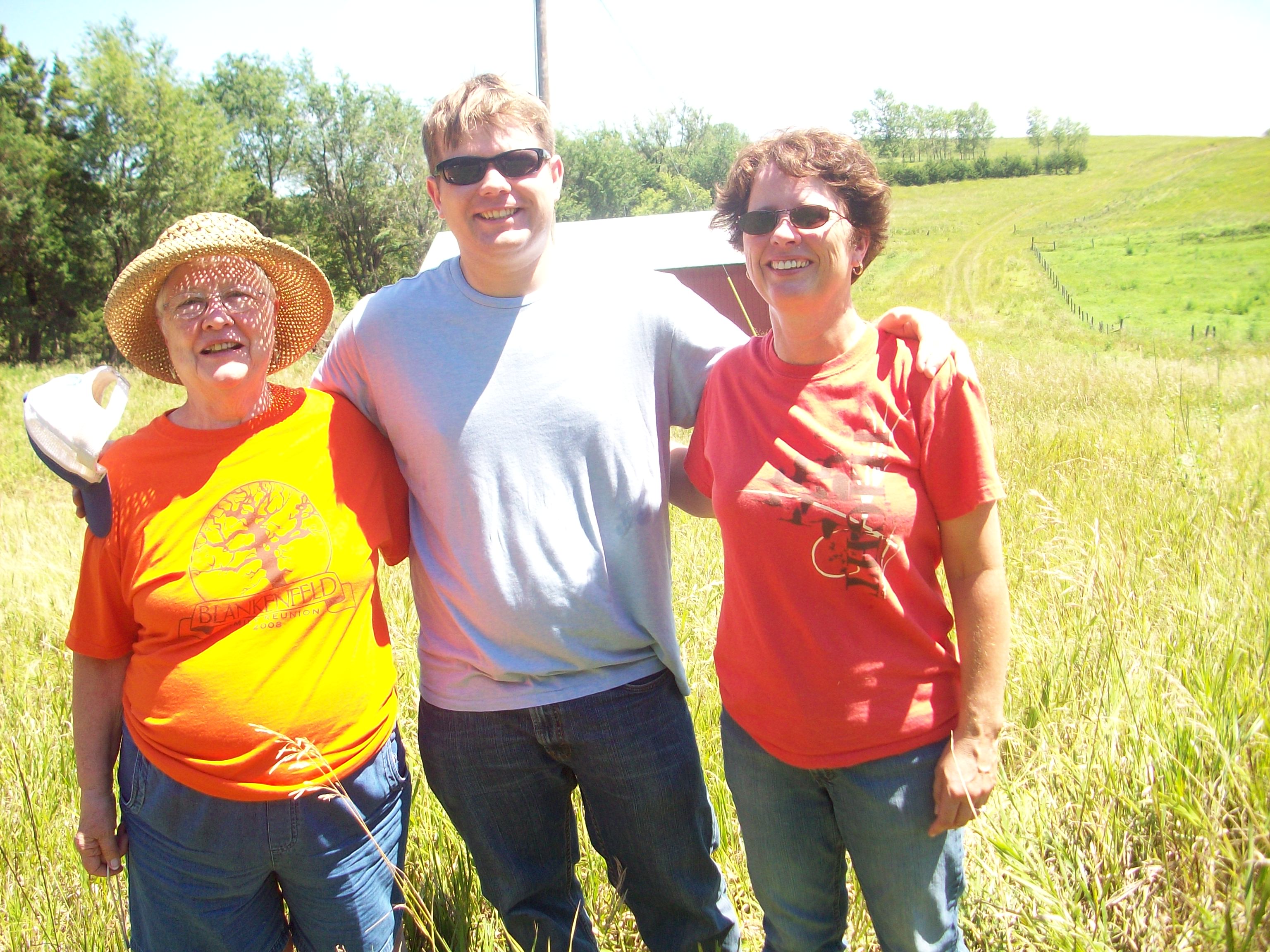
On the Blankenfeld homestead with my Grandma Cleo and Mother Marta.

We were able to visit the original Blankenfeld homestead site, where Jacob and Maria settled in 1885. Although no structures remain—there was a hill where the original dugout had been—it was pretty cool to just stand there and appreciate the terrain. The area hadn’t seemed especially rocky and hilly before, in my previous trips to the area, until I imagined trying to cultivate it by hand. Later, we stopped into a museum of sorts that was made from the preserved farm of my Great-Great-Grandfather Henry Blankenfeld. He’s the model for Jacob in the novel–visually, and some of his history as the son of immigrants–so it was really exciting to walk through the house and barn he built himself, to eat an apple from a tree he planted, to descend the staircase his wife descended on the day they were married.

It’s always difficult to appraise how valuable experiences like these will be to my work. For one, who knows where the writing is going to take me. Will I need to know what the grass smells like? The flora? The fauna? Or how the sky there has its own unique blue, the air a particularly humid cloyingness? Also, in Hyphenates, Jacob comes from a different part of the state, one with a terrain closer to Omaha’s than Niobrara’s. So it isn’t like I can just sit down and make a sketch of the landscape to use in the novel.

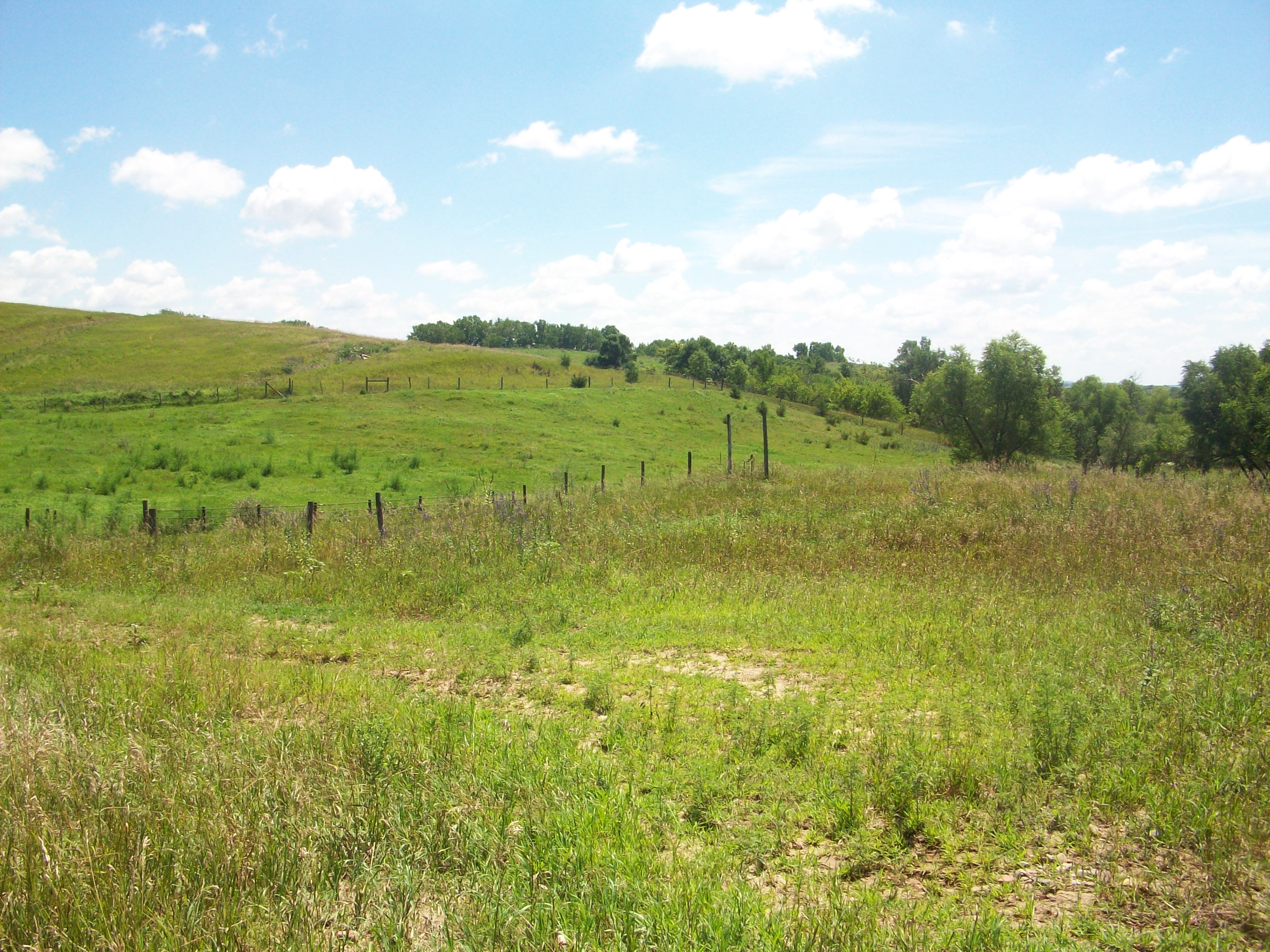
The Blankenfeld homestead, originally settled in 1885.

Mostly it’s just helpful to be there, to be put in a spot that’s loaded with memories specific to my family, and where events took place that were crucial to my very existence. I’ve always had the kind of memory that retains periphery details well, so it’s a great benefit to just listen to stories, especially while smelling the grass and listening to the leaves in a tree. It isn’t that I necessarily came away with anything specific that I can add to the story—and I’m not saying I didn’t, I just don’t know yet—but it feels like I’ve gained a much better appreciation of what it was like to be alive in a time other than my own, even if it isn’t the exact era I’m writing about. And that’s something that can’t really be replicated in an archive or by looking at old photographs. It’s getting caught up in other people’s memories, and not just that, but doing so while standing on the very ground where things happened.

Dispatch from “Shame Cycle”

“Anna was sixteen when she approached you at a downtown record store and you began seeing her not long after that. This was the summer before your freshman year of college, when she invited you to a party and claimed possession of your body, parading you around the smoky rooms of parties. You considered it a move up in social scene from the part-time Nu Metal rebels you knew in high school to this career class of punks. The hard-drinkers, veteran sludge rockers, and sometimes transients who pocked the city so visibly in those days. These were people Anna exposed you to, her friends. They hitchhiked to New York and ran drugs from the Mexican border for South Omaha gangs, they bought a tattoo gun to save trips to the parlor, they had shaved-in mullets and handlebar mustaches, they screamed swear words into ice cream parlors as protests against capitalism. These people were the real deal as far as you were concerned then—or as close to it as one could get in Omaha.”

Maddie and Cocoa up on a Missouri River vista.

Personal Rejection Notes, Requests for More, and Other Nice Versions of No Thanks

BOMB for “On a Train from the Place Called Valentine”; Zoetrope: All-Story for “The Current State of the Universe”; Cincinnati Review, Hayden’s Ferry Review, and Indiana Review for “The Housekeeper”; Caketrain for “The First Night of My Down-and-Out Sex Life.” My story “Shame Cycle” was a finalist for Matrix Magazine’s LitPop Awards, but it did not end up winning. There was no consolation prize.

Just Finished

What He’s Poised to Do by Ben Greenman. An outstanding collection. Highly recommended. I liked it so much that I’ve written a glowing review of it, one that will hopefully be published soon.

Windmill at dusk.

Now Reading

Black Mamba Boy by Nadifa Mohamed.

Up Next

Death is Not an Option by Suzanne Rivecca.

Weeks of Jun 7 – July 2, 2010

Big Sky

Since returning from AWP in early April, I’ve been preparing to query agents, and I’m happy to report that this week I’ve finally reached the end of this process—and the beginning of the next phase of actually finding new representation. It’s taken much longer than I anticipated, mostly because of a few rewrites that became necessary in these middle stages of editing. (With big thanks to my wife Nicole for helping me to see how the shape/plot arc of Hyphenates Part I was not all it could be.) My first-choice agency requested full manuscripts almost immediately and is now deliberating. Wish me luck! Coincidentally, I received an out-of-the-blue email from a pretty big-time agent at the end of last week requesting some work. That was pretty cool. Maybe I’ll be sending him something before long, depending on how my first-choice responds.

It’s been somewhat of a weird process the last six months. My first agent left her agency right before Christmas last year, which left me without representation. It was kind of jarring at first, to be let loose like that. I’d probably put too much stock in having an agent, let my sense of self-confidence become too large based upon the fact that, like Don DeLillo, Al Pacinco and A-Rod, I had an agent out there stumping on my behalf. We worked together for over a year on my story collection and, what turned out to be failed, first novel. There were a lot of good things that came from the relationship–such as the idea to switch focus to the historical thread I’m telling with Hyphenates–and I feel much richer for the experience. But it was nice to move on, frankly, to have some free space to work out exactly what I was doing with my books, to dig deeper into myself, and to do so as a writer, rather than as a producer of potential market share. It reminded me of the reasons why I really love doing this, having the chance to indulge daily in the small acts of creation and destruction that eventually tease out a story. These six months have given me the opportunity to refine my projects considerably. And I’m thankful for them. But now, it’s time to get back in the game, to pursue book publication with all I’ve got, and to provide for my family as best as I’m able.

Next week it’s back to work on Part II, which is nearly completed in rough draft form. Hopefully by the end of the summer I’ll have it in some kind of acceptable shape and can move on to actually finishing the book by the end of this year. Not to jinx myself or anything.

Thanks a ton to all my readers who helped work my manuscripts into shape before I sent them off, sometimes on very short-notice. Amber, Bill, Mary Helen, Nabina, Nicole, Travis—you’re the best! And likewise for Jonis, Brent, Gregory, Justin, and Timothy, for giving advice and being advocates on my behalf. All of you are also the best.

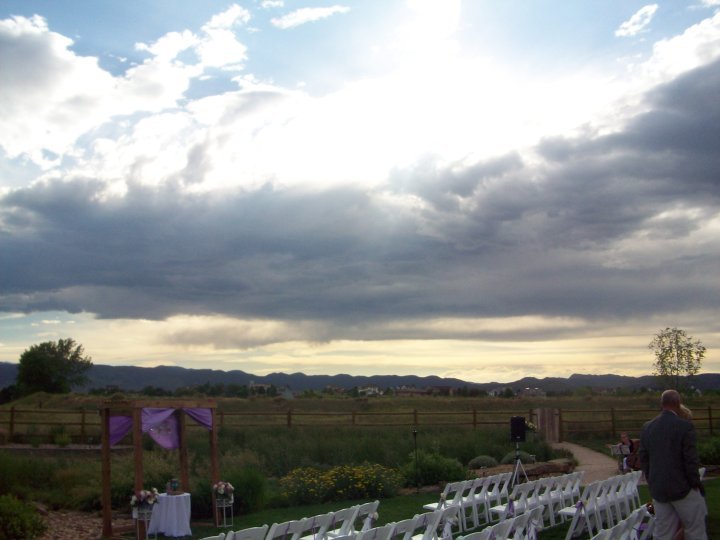
-Nicole, Maddie and I were off in Fort Collins last weekend at a wedding. The photos in this post are from the trip.

Maddie really loves weddings.

Dispatch from The Hyphenates of Jackson County

“She was in the same clothes as before, the heavy red dress, torn and dirty by then. Her hair was thin, unpinned and breezy about her face. ‘Is that her?’ Strauss asked. ‘That’s the one you were on about last week?’ Jacob said, ‘Yeah,’ still with his hand on the Pfarrer’s shoulder, their faces close together as they stared at the girl. She was only twenty yards away from them, steadying herself against the trunk of a locust tree, one of the trees Jacob had slept under his first night in Omaha. ‘Her betrothed skipped town,’ Strauss said. It was obvious that the girl lived on the street now, that her family had turned its back on her, or she’d gone crazy and willingly exposed herself to the mutilating fractions of a city.”

Personal Rejection Notes, Requests for More, and Other Nice Versions of No Thanks

Electric Literature for “The Current State of the Universe”; Alaska Quarterly Review for “On a Train from the Place Called Valentine”; Nashville Review for “The First Night of My Down-and-Out Sex Life.”

Just Finished

The Turk and My Mother by Mary Helen Stefaniak. The first novel of a beloved Creighton professor, this one is highly enjoyable. A kind of folksy post-modern historical novel that seems largely drawn from family history and deals with the tumultuous love lives of our parents and grandparents before we knew them. MHS has a second historical novel coming out this fall, by the way.

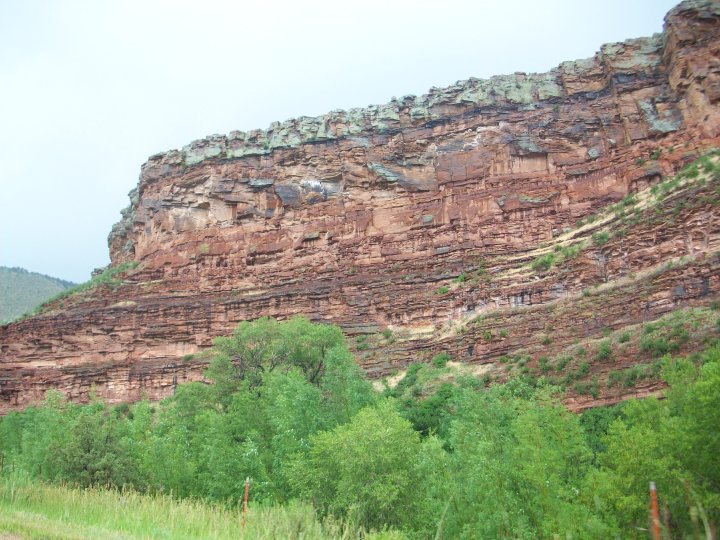
We drove up into the mountains in a thunder storm and didn't run over any of the many bicyclers!

Now Reading

What He’s Poised to Do by Ben Greenman.

Up Next

The Lonely Polygamist by Brady Udall.

Books That Came in the Mail

What He’s Poised to Do by Ben Greenman. The Lonely Polygamist by Brady Udall. Novel History by Mark C. Carnes. Bad Marie by Marcy Dermansky. Three Delays by Charlie Smith. The Great Lover by Jill Dawson. Lean on Pete by Willy Vlautin.