February in Review

-I was lucky to see the National Christmas Tree when I was in Washington DC last month—as it fell over in a windstorm a couple weeks after I visited. My walking friend and I commented to each other at the time that the tree looked to be in pretty bad shape. Apparently it was! The tree I saw was installed during the Jimmy Carter presidency. A replacement will be planted this spring.

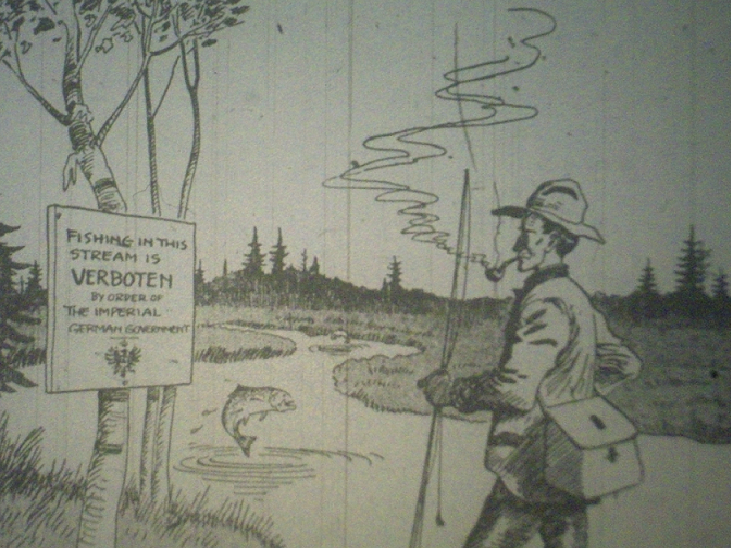
Another cartoon from the Evening Omaha World-Herald, from 1918, this one on the threat global domination posed to local fishermen.

-The reviews I did last year for Justin Taylor’s Everything Here is the Best Thing Ever and Teddy Wayne’s Kapitoil were mentioned in a couple different Best Books of 2010 lists. Here are the links:

http://bygonebureau.com/2010/12/08/best-books-of-2010/

http://robaroundbooks.com/2010/09/afterthoughts-kapitoil-by-teddy-wayne/

-A healthy portion of “Welcome Home” was put up on Google Books, as it appeared in Best New American Voices 2009. It’s not all there, but most of it is.

-“Welcome Home” was also mentioned on the news page of the Arts & Sciences College at Creighton University, where I did my MA. I should note, however, that the story may be selected for the Warrior’s Journey coursework. Nothing is official as of yet. If I hear anything I’ll be sure to post about it, as having my work included in that program would certainly be my biggest accomplishment to date. I’m very proud that they asked to use the story.

-My review of Marcy Dermansky’s Bad Marie was published on The Millions.

Personal Rejection Notes, Requests for More, and Other Nice Versions of No Thanks

McSweeney’s, Epoch, and Shenandoah for “On a Train from the Place Called Valentine”; Missouri Review for “The First Night of My Down-and-Out Sex Life”; and Crab Creek Review for “These Things That Save Us.”

Now Reading

Greetings from Below by David Philip Mullins.

Just Finished

The Sun Also Rises by Ernest Hemingway. “I overtipped him. That made him happy. It felt comfortable to be in a country where it is so simple to make people happy. You can never tell whether a Spanish waiter will thank you. Everything is on such a clear financial basis in France. It is the simplest country to live in. No one makes things complicated by becoming your friend for any obscure reason. If you want people to like you you have only to spend a little money. I spent a little money and the waiter liked me. He appreciated my valuable qualities. He would be glad to see me back.”

Nowhere Man by Aleksandar Hemon. A fantastic novel. Smart, melancholy and funny. I’ve only read two of his books so far, but Hemon is one of my favorite writers. He’s really great, and I need to make the time to read all of his work.

Up Next

Other People We Married by Emma Straub.

[Note: I’m trying something new with the format for these posts, going to whole months in review rather than what was turning out to be 3-4 weeks in review. It isn’t much of a change, except that I’ll be pulling the longer topical and reflective sections out and making those into their own posts. The month in review posts will be more bullet point stuff. Not much of a change in content, but more and smaller posts. Hopefully that’s a little easier to consume.]

Dermansky Review

My review of Marcy Dermansky’s novel Bad Marie is up on The Millions today!

This is my fifth published review, the fourth with The Millions. Two more are scheduled for print journals this summer, one of Nadifa Mohamed’s Black Mamba Boy in Prairie Schooner and of Richard Burgin’s Rivers Last Longer in Pleiades.

Bad Marie is really a good book and an excellent read. It’s a rare combination of being both literary and a good summer read. Highly recommended, in particular, for any fans of French film. The review goes into this, but its depiction of Paris is very enjoyable.

Item of Interest

I received word today that a review I’ve written of Richard Burgin’s new novel Rivers Last Longer has been accepted for publication by Pleiades and will appear in an issue this June!

This will be my sixth published book review, and my first piece of any kind to be published in Warrensburg, Missouri, where we spent an enlightening few days back in the spring of 2004.

Pub Updates (and an Update to the Updates)

UPDATE: My review of Nadifa Mohamed’s novel Black Mamba Boy has been scheduled for the Summer 2011 issue of Prairie Schooner! This will be my second published review with PS.

It sounds like Flatmancrooked will be running my story “The Housekeeper” in their web journal next Wednesday, January 19.The story will also be featured in their upcoming print fiction anthology, Flatmancrooked 4, which is currently at the printers and should be hitting mailboxes before winter ends.

The first half of 2011 is shaping up nicely. My story “How to Die Young in a Nebraska Winter” will be in the spring issue of The Kenyon Review, in the next couple months I’d wager–no matter what Unadilla Bill has to say–and “The Current State of the Universe” will be published by The Cincinnati Review in May.

Weeks of Oct 10 – Nov 7, 2010

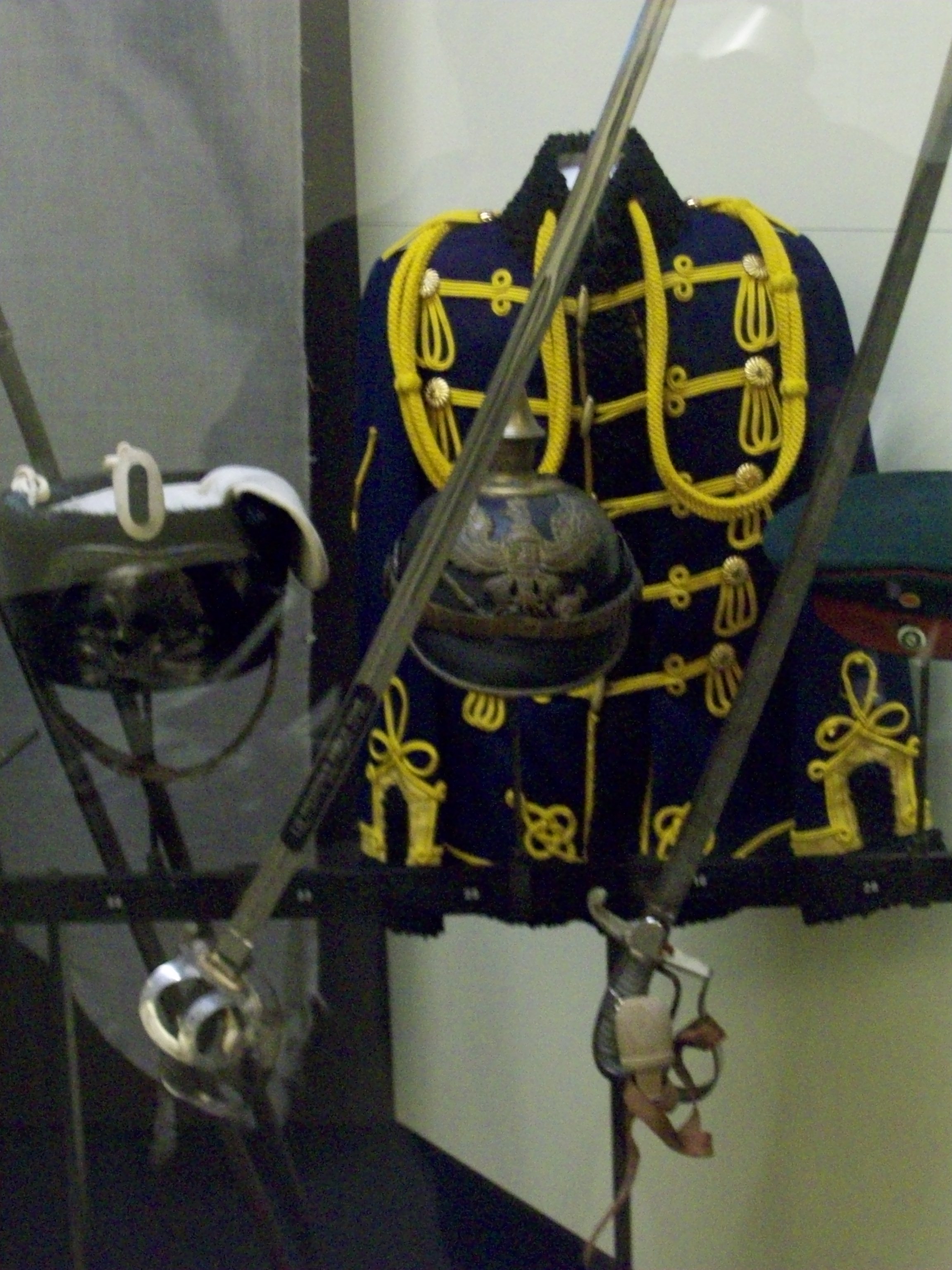
-For my birthday this week, Nicole took me to the National World War I Museum in Kansas City. We had a pretty engaging afternoon there and really enjoyed the experience. None of the exhibits had a ton of specific relevancy to the novel I’m working on—besides general period details—but it’s always nice to be immersed in the subjects and obsessions of the era. And for someone who loves history, it’s an awesome way to spend an afternoon.

Prussian field helmets and swords. The skull-and-crossbones one is pretty badass. A model of it was not, unfortunately, available for purchase in the museum gift shop.

The museum itself is pretty interactive for what is still largely an objects-behind-glass arrangement. There are life-size models of multiple trench scenes, from a well-engineered German one of concrete and lumber, to a French one of mostly sticks collapsing in the mud; a steady soundtrack plays in the background of what it would sound like in the trenches; and a walk-through crater show the devastation caused after a 17-inch howitzer shell explodes on a French farmhouse. There is also a special exhibit on display now regarding the experience of German soldiers in the war, which was interesting. In general, the museum is noteworthy for presenting a more balanced perspective on the war years—rather than tilting too strongly toward an Allies-centric point of view—and this is something I really appreciated. For anyone interested in the era, I highly recommend visiting the museum. And for anyone interested in antique elevators, the ride up in the Liberty Memorial is not to be missed!

A military uniform for belligerent children.

-One of the more pleasantly surprising parts of the museum was finding the Willa Cather novel One of Ours (1922) in the gift shop. For a long time I’ve been looking for sources that depicted the time and place I’m writing about in my novel, and for the most part coming up empty. For some reason it never occurred to me that Cather would have given some treatment to the Great War in her writing. And not only did she write a novel about a family of Nebraskans during the war years, but the surname of the book’s protagonist is Wheeler! Beyond that, I feel pretty stupid for not knowing more about this novel, as Cather won a Pulitzer for it too. I’ve read a few Cather books and some of her short stories–but have always suspected that this wasn’t nearly enough, and that my ignorance would come back to haunt me some day. I better get to work rectifying that.

Nicole and I outside the National World War I Museum in Kansas City, Mo. It was very bright.

Further: what other novels am I’m not thinking of that are set in Nebraska in the years 1916-1920?

-I’ve been meaning to post a reflective piece on here regarding my story “The Housekeeper” being selected for publication in the forthcoming Flatmancrooked 4 anthology. However, the story is still a finalist in their current fiction contest and I’m waiting on the results before posting anything more about it.

Dispatch from The Hyphenates of Jackson County

“Jacob knew all the stops would be pulled here on the River Ward in the pursuit of a margin big enough to overcome the rest of the city. They had to win by a landslide here because the other districts were going to swing the other way. There could be no parity in this district that Dennison controlled. Voters on the payroll of the Pendergast machine in Kansas City would arrive throughout the morning to cast their ballots, along with others recruited for this purpose from towns in Iowa like Red Oak, Glenwood, Griswold, and Walnut. Every barroom in the Ward was rented and stocked with liquor. Bootleggers who owed their survival to Dennison saw to these private parties. The booze was reserved for those who held both a slip that proved they’d voted and a card printed with the names of the Square Seven. It was all about mobilization and efficiency, making sure that each and every favor handed down over the past three years was called in during polling hours. If a family received coal over the winter, if their grocery bill or bar tab was covered, if they were granted leniency from a judge—then a car would appear outside their home on Election Day to shuttle them to a poll.

Maddie before pre-school one morning this fall. She wears all pink, as often as possible.

“It was up to Jacob to oversee the operation on Clandish from a polling station in the basement of Mecklenburg’s Saloon. When he returned from Iowa, the barroom was already half full of voters and more were coming in all the time. Mecklenburg’s would be packed by 6am; nickel beer was discounted down to a penny. It was an amazing operation to watch, its controlled chaos exhilarating. Trucks lined up at the curb, back from Iowa in the middle of the night with two dozen voters packed on their hay-strewn flatbeds. The street cars were running already too, full of Pendergast’s men from the train stations, recent arrivals from Kansas City. Johann and Reinhold lined them up inside and meted out the booze. His suitcase still in hand, Jacob stood back and watched it all until it was time to instruct the voters. In groups of ten, Reinhold escorted them to the basement of Mecklenburg’s. Jacob and Johann followed them down the steps, into the dug out space under the barroom. There were two rooms separated by a narrow doorway. The basement had been an afterthought, one dug out roughly and bricked in. Jacob recognized the work, a former tunneler himself. A light hung from a rafter, its wire snaked in from a hole drilled in the barroom floor above them.”

Personal Rejection Notes, Requests for More, and Other Nice Versions of No Thanks

Cream City Review for “Attend the Way”; Painted Bride for “The First Night of My Down-and-Out Sex Life”; n+1 for “Shame Cycle”; and Barnstorm and Camera Obscura for “You Know That I Loved You.” Florida Review and Harvard Review also sent nice notes along after I withdrew manuscripts that had been accepted elsewhere, which is very much appreciated. Plus, “The Housekeeper” was selected as a finalist in the Flatmancrooked Fiction Contest, and will appear in the anthology Flatmancrooked 4, and my review of Nadifa Mohamed’s debut novel Black Mamba Boy was selected to appear in a future edition of Prairie Schooner.

Just Finished

Death is Not an Option by Suzanne Rivecca. A very strong collection. I plan on writing a review of this very soon.
Now Reading

One of Ours by Willa Cather.

Up Next

Rivers Last Longer by Richard Burgin.

Review News

Prairie Schooner has accepted my review of Nadifa Mohamed’s debut novel Black Mamba Boy! I’d imagine it will run in the Summer or Fall issue next year.

This will be my fifth published review, and the second in Prairie Schooner, where I’m also in my second year as a senior fiction reader.

Weeks of Aug 22 – Sept 10, 2010

I’ve finished a first draft of Part II of The Hyphenates of Jackson County this week. It’s pretty exciting to be 2/3 finished with a novel. It’s almost unbelievable, but I guess that’s what eighteen months of work will get you.

This section, now sitting at 161-pages, was pretty close to be done back in late spring. (That should come down to around 125-pages soon.) However, as discussed in my previous update, there was quite a bit of research that I needed to plow through before I could finish the draft. Even now I’m not so sure that I know quite as much as I should, but that seems to be the nature of historical research. Once you learn something that is truly helpful, it opens another half-dozen related subjects that can be explored—and sometimes seem like they should or must be explored. Even just browsing through a works cited page can be set off a new chain. This being said, it’s becoming important to find a stopping point in the research, I think. At least for the moment.

Andrea Barrett spoke about her methods quite a bit when I saw her at the Key West Literary Seminars in 2009, talking about how she feels compelled to read everything she can on a subject before she even begins writing a historical novel or story. It’s a compulsion for her, as she explained it, something she can’t help. Then you have historical novelists like E.L. Doctorow and Edward P. Jones, both of whom did famously little research for Ragtime and The Known World, respectively.

This, in many ways, has to do with comfort level, I believe. Have I done enough? Do I know enough? Will I be exposed? And, by this, I don’t mean to imply that Barrett is insecure and that Doctorow isn’t. These are just different strategies they use. Barrett achieves authority through exhaustive research, while Doctorow uses more a general literary technique to express a sense of authority. That is, as his characters feel real to us, as we are drawn to their narratives, we can’t help but become convinced that their “historical” stories are real, even if they aren’t completely accurate. (Of course, Barrett does this too. It’s the magic of all good fiction.)

This kind of dichotomy–the part about not being completely accurate but still writing with authority–didn’t seem like it would be okay with Barrett when I saw her speak, as she has background in the sciences. And while I often feel that way too—being that I have faith in the process of research to reveal things as they’re needed, if the work is put in—history is so complex that too much accuracy can weigh down a book. It’s hard to strike that balance, but I suppose that is the definition of the job, for any writer, to take something complex and make it comprehensible without having to state all the facts.

Thinking of it this way, maybe I do have enough information for now. And it’s more a matter of distillation. We’ll see. The self-reading and revision begins in earnest on Monday.

-Speaking of research. Reading through some old news articles, I may have found some explanation for why Dennison’s family gravesite is so modest—as discussed earlier this year in this post. As stated by an Omaha World-Herald retrospective from Sunday, May 9, 1965:

If [Dennison] had accumulated great wealth, there was no trace of it after his death. The inventory of his estate […] listed 10 thousand dollars in promissory notes ranging from one hundred to 11 hundred dollars. Most of them represented loans to friends, and in many cases they were long past due. Also listed in the estate were two men’s watches and several diamonds.

His safety deposit box held “three empty wallets, a memorandum of trust set up for his daughter, a letter from an outstate man asking help in getting a job, some dust and several paper clips.” So maybe Dennison was broke by then, and that explains why he wasn’t interred in an ornate mausoleum like many of his Omaha contemporaries were.

I’m still a little skeptical of this theory, however. For one, his funeral was one of the largest in city history. But mostly, wouldn’t it make sense that a man who made his fortune in organized crime and graft would be able to hide his wealth from the government? Would you expect to find any trace of his wealth? It’s not entirely out of the realm of possibility–as Dennison certainly did give away much of his money to needy causes, almost always anonymously–but I’m a little dubious, let’s say.

-The review I did of Ben Greenman’s collection, What He’s Poised to Do, received a couple nice mentions in the last week. On the blog of pioneering literary journal One Story, and on From Your Desks.

Dispatch from The Hyphenates of Jackson County

“There was more traffic downtown but it was limited to the streets, cars full of young men driving in circles. They revved their motors and the barking noise of their mufflers echoed off the porticos of the buildings where their fathers worked. These were high school boys and girls out having fun, all of them Anglos, maybe some college men out to find a girl. Jacob always hated seeing rich kids out playing on a weeknight. He hated being reminded of the leisure they were afforded, these teenagers who drove new speedsters and roadsters of bright yellow and red. Warrens and Scotties and Johns and Toms racing off in ivory suits and straw skimmer hats to a private jazz club hidden in a clump of cottonwoods along the river, an all night juke joint where they could find illicit goods like fried chicken and cold beer. They liked to buy things for their girls with money they made clerking part-time at Daddy’s office. And their girls, you couldn’t help but notice them, the plumage of a rake’s hat. Prim and pretty ones with powdered faces and lips rubbed red with jelly bean guts. Jennifers, Mauds, Bernadettes, Carols. Girls who kept Mother’s flask of brandy in the fluff of a gauzy goldenrod dress and would cause a scandal that night when they came home late, hammered, and crashed into the maid’s room by mistake.”

Just Finished

Black Mamba Boy by Nadifa Mohamed. I’m going to review this. A good book.

Now Reading

All Quiet on the Western Front by Erich Maria Remarque.

Up Next

Death is Not an Option by Suzanne Rivecca.