Back in April of this year, I wondered in this space if anyone knew the current whereabouts of the Friedrich von Schiller monument that used to be in Riverside Park. Thanks to some astute research by my Uncle Ed, it was determined that the Omaha German-American Society took possession of the statue after it was removed from the park. (An angry mob also deposited it in a ditch for the duration of World War I, before it was retrieved and replaced, and then tore down again. )
This weekend, we took the occasion of Oktoberfest at the German-American Society to confirm the location of the Schiller monument. Found!
Fifteen of the sixteen issues of Prairie Schooner I helped put out during my four and a half years there, beginning as a lowly Editorial Assistant, moving up to Second Reader, then two years as Senior Fiction Reader, a few months as Blog and Social Networking Editor, and, finally, a half year as Web Editor and bullpen coach.
The following are from Omaha: a Guide to the City and Environs, written and Compiled by The Federal Writers’ Project, Works Progress Administration, State of Nebraska, in 1935. It was part of the American Guide Series.
–
Rudyard Kipling (1889)
“[In Omaha, Kipling] was shocked at the tricks of the embalming trade, the caskets with plate-glass windows, and the burial garments exhibited to him by the obliging undertaker. ‘Bury me,’ he explained, ‘cased in canvas like a fishing-rod, in the deep sea; burn me on a back-water of the Highli with damp wood and no oil; pin me under a Pullman car and let the lighted stove do its worst; sizzle me with a fallen electric wire or whelm me in the sludge of a broken river dam; but may I never go down to the Pit grinning out of a plate-glass window, in a backless dress-coat, and the front half of a black stuff dressing-gown; not though I were ‘held’ against the ravage of the grave for ever and ever. Amen!'”
Mark Twain
“In 1902 the Omaha Public Library banned Mark Twain’s Huckleberry Finn from the juvenile department in the library on the grounds that the book was bad for the impressionable minds of small boys. […] In response to a telegram sent by the Omaha World-Herald regarding the ban, Mark Twain wrote, “I am tearfully afraid this noise is doing much harm. It has started a number of hitherto spotless people to reading Huck Finn, out of a natural human curiosity to learn what this is all about—people who had not heard of him before; people whose morals will go to wreck and ruin now. The publishers are glad but it makes me want to borrow a handkerchief and cry. I should be sorry to think it was the publishers themselves that got up this entire little flutter to enable them to unload a book that was taking too much room in their cellars, but you never can tell what a publisher will do. I have been one myself.”
Bret Harte (1874, to his wife)
“As I rode into Omaha this morning the streets were dumb with snow, and winter, savage and pale, looked into the windows of the cars. […] Imagine a hotel as large and finely appointed as the Occidental in San Francisco, and think of there being such a one in Omaha. Yet here I am—in a very pretty furnished parlor of the ‘Grand Central’ on the very outpost of the West, the cars of the Union Pacific starting on their long overland trip but a few blocks away. […] Verily the West is wonderful.”
Sandburg worked briefly as a coal heaver in Omaha.
Carl Sandburg
Omaha (1920)
Red barns and red heiffers spot the green
grass circles around Omaha–the farmers
haul tanks of cream and wagon-loads of
cheese.
Shale hogbacks across the river at Council
Bluffs–and shanties hang by an eyelash to
the hill slants back around Omaha.
A span of steel ties up the kin of Iowa and
Nebraska across the yellow, big-hoofed Missouri
River.
Omaha, the roughneck, feeds armies,
Eats and swears from a dirty face.
Omaha works to get the world a breakfast.
–
Sunset from Omaha Hotel Window (1918)
Into the blue river hills
The red sun runners go
And the long sand changes
And to-day is a goner
And to-day is not worth haggling over.
Here in Omaha
The gloaming is bitter
As in Chicago
Or Kenosha.
The long sand changes.
To-day is a goner.
Time knocks in another brass nail.
Another yellow plunger shoots the dark.
Constellations
Wheeling over Omaha
As in Chicago
Or Kenosha.
The long sand is gone
and all the talk is stars.
They circle in a dome over Nebraska.
It took a while, but I was finally able to track down the exact address (and approximate location) of Tom Dennison’s estate house! More accurately, Gary Rosenberg, Douglas County Historical Society archivist, was able to track it down. Thanks, Gary and the DCHS!
Tom Dennison was first listed as living in the house in 1931, just three years before he died. He didn’t live there long, and his involvement in Omaha politics and crime was all but through by then. This was his retirement home. He raised wire-haired terriers on the back acres. He lived there with his daughter, Frances, and her husband, Vernon Ragan. This was during Prohibition. The house was surrounded by cyclone fencing, there were security guards, Dennison kept a sub-machine gun under a blanket on the seat next to him in his car. (It’s fascinating how Prohibition transformed the political machines of the early 20th Century (which mostly focused on gambling, prostitution, and government-centered rackets) into deadly criminal syndicates. In earlier decades, Dennison lived in the city (at 1507 Yates, among other places). He stood on the sidewalk and fed pigeons in the morning. They did a lot of bad things in those days too, but the machine never engaged in gangland killings until Prohibition. The Omaha Race Riot of 1919 is potentially a different matter altogether.)
Dennison remarried late in life, but his young wife, Nevajo Truman, never lived in the same house as Tom. She lived at 2201 Country Club Avenue with her mother. Tom would come by and visit most every day, but that’s as far as that went. Such a strange and sad sounding relationship.
Tom Dennison with his second wife, Navajo Truman.
Last year I hypothesized that Dennison’s house was put to new use as part of Marian High School–specifically the convent–but was disabused of that notion by Sister Joy (another devoted archivist, this time with the Servite Sisters). I wasn’t too far off, however. As told by my sister-in-law and Marian alumna, Sara Magnuson West, the house was still on the Marian campus until recently, although she didn’t remember if it served a purpose there. She remembers that it was back by the motherhouse, where the nuns live. Maybe it was torn down when the soccer field and athletic complex was built? Gary Rosenberg tells me that the building was demolished in 2006, approximately.
I’d greatly appreciate it if you could share any information, stories, memories, or rumors you might have of the building. Do you know what it was used for, if anything, by Marian? Do you know anything about the history of the house? Do you have friends or family who went to Marian, or taught there? Maybe they know something? In the picture above, the house appears to have been kept in good shape, there were security lights installed, the windows were maintained. I’d imagine this effort wasn’t for nothing.
If you know something about this house, please pass it along.
Here’s a bit from Sherwood Anderson about his masterpiece, Winesburg, Ohio (from the Viking Critical edition):
Winesburg of course was no particular town. It was a mythical town. It was people. I had got the characters of the book everywhere about me, in towns I had lived, in the army, in factories and offices. When I gave the book its title I had no idea there really was an Ohio town by that name. I even consulted a list of towns but it must have been a list giving only towns that were situated on railroads.
I was so excited to come across this when rereading his collection last month. Most of my work is set in real cities and towns–in places like Omaha, Lincoln, Aurora, Valentine, McCook, Hastings, Bancroft, Atlanta–but I sometimes use a fictional town in my work–a place I called Jackson, Nebraska. (Or Jackson Township, or Jackson County.) I mostly use Jackson when I want to write about a nasty small town, so that my work doesn’t slander a real place. Notably, my novel is titled The Hyphenates of Jackson County, referring to this rural county where my fictional small town is located.
When I started using Jackson as a setting as an undergrad, with my story “The Scythian Defense,” (gsu review, Fall/Winter 2006) I checked an atlas to make sure that a Jackson, Nebraska didn’t already exist–just like Anderson did in checking to see if there already was a Winesburg, Ohio. The map and index I checked didn’t list a Jackson, Nebraska, so I thought I was in the clear. (Thanks a lot free State Farm atlas!) Much like Anderson, I was wrong. Maybe the atlas I had only listed towns that had a State Farm affiliate agent? Just kidding. Jackson is just too small and isolated to be on all maps, with a population just over 200. There are lots of places like that–and the people from these places often hold up their unmapped status as a point of pride. (There’s a town in western Nebraska that has a population of 2. It’s a must see, their house/city hall/library/school.)
I found out that Jackson, Nebraska was a real place when I started researching the life of notorious Omaha political and crime boss Tom Dennison during the early stages of writing Hyphenates. Dennison grew up in an Irish settlement in northeast Nebraska by the name of St. John’s. The settlement never really took hold and died off once its priest left–the Catholic parish still exists, St. Pat’s–but a town remained even after the settlement broke. A town named, of course, Jackson.
This was kind of weird to discover. I’d already planned, before finding this in the research, to set some scenes in a fictional town based in part on the place where Tom Dennison grew up, and I was committed to calling the place Jackson County, due to connections in my body of work that I wanted to play off of. Little did I know that the town was already called Jackson.
This kind of freaked me out, but I wasn’t too concerned about it. For one thing, the real Jackson wasn’t on the map, so it was an honest coincidence. Also, I like the connection there between Tom Dennison and my fictional lead character, Jacob Bressler, and my previous work set in fictional Jackson. I’d meant to draw that line anyway, so if it’s a little more real, so much the better, right? There should always be a distinction between fictional places and real places in fiction, of course, even if a lot of the work of the writer is to help the reader forget that what they’re reading isn’t real. Even my Omaha isn’t the real Omaha, of course.
The Blankenfeld homestead, settled in 1885.
I ended up going through Jackson twice in 2010. Jackson is only 80 miles away from Niobrara, Nebraska, where some of my family comes from and still lives. I first ended up in Jackson when headed up to Niobrara for a funeral. (The second time was for a family reunion.) It wasn’t something I planned. My brother Matt and I were just going along the highway when we happened into Jackson. “Oh, shit,” I said, seeing a historical marker about the place. We stopped for some doughnuts and Mello Yellow. It was kind of surreal to be there. My fictional Jackson County is partially based on the area around Niobrara–and my forebearers who settled there, the Blankenfelds. I was thinking a lot about the landscape as we made the drive, and about those small towns, thinking through my novel at the same time. And then we ended up in Jackson. We just happened to stop in.
Turns out I’m in good company with Sherwood Anderson. The connection between one of my favorite writers excites me, and makes a special series of connections even better. Small world.
Here's where the novel draft stands now. There's a whole book in there somewhere.
Just in case you missed it, here’s what happened on here in September:
-I took a few weeks off from working on the novel–using the time to clean up a few new short stories for submission–but am now reading and editing my first complete draft. It’s a lot of fun to read so far, seeing how things come together, and where they don’t.
-My review of Rahul Mehta’s Quarantinewas accepted for publication by The Iowa Review Online, and will appear shortly in the month of October.
-My review of David Philip Mullins’ Greetings from Below—previously accepted for publication by Prairie Schooner—has been scheduled to run in the Spring 2012.
Dispatch from The Hyphenates of Jackson County
“The noise was so frightening that Jacob couldn’t stand still. He had to move his feet, around in the crowd, or he felt like someone was going to take a shot at him. A block over there was a nervous cop who sprayed shotgun fire into the air whenever someone approached the car he guarded. The cascading noise of tumbling glass was punctuated by the fraught screams of woman in jeopardy. Or maybe that wasn’t it at all, what Jacob thought he heard. Maybe that was the sound of a woman’s prurient cheer as government windows were smashed to shards. There was the roar of voices, people fighting and being hurt. The flash of small arms erupting. The police sirens, their barking orders. The steam valve had been blown clean off and Jacob couldn’t stay where he was. He had to run into it, into the noise and fighting. He had to see everything, to document it in his mind. Speeding cars rushed into the crowds. Young men jumped on the sideboards of cars to swing around to where the action was. There were cars with Sicilians, Lithuanians, Greeks, Serbians. Once word of the melee spread, anyone who wanted to take a swing at a cop made a bee-line to Scandal Flats. A gang hijacked a streetcar and plowed into the mess, clanging the bell to announce their audacity. Teenage boys and musky husbands rushed out of houses with whatever hammer or club or bat they could lay hands on, and then hopped in a taxi to get there fast. A mechanical rumble filled the atmosphere. Roadsters and jalopies, homemade in Little Italy garages, swung recklessly around the blocks. They swerved to miss people and each other. Jacob couldn’t always see the cars but he could hear their pop-pop motors hammering at full throttle a block away, spreading echoes between buildings, echoes that bounced back from the high-rises of downtown. Trucks, commissioned or otherwise, hopped hot over the pavement to load up with furniture or produce or women’s clothes. Taxis slumped cockeyed and labored up the hills, packed full inside, passengers on the footboards.
Sixteenth & Harney Streets, circa 1919.
“People shouted out to groups of strangers any news they heard. There was lots of talk in the mob about the smutty details of the rape—conjecture about Will Brown’s body in relation to the girl’s. They made him out to be huge, a towering man, arms like a gorilla’s, legs like a mule’s. They talked about Agnes Loebeck as if she was a little girl, pious and pure, like she only ever wore little white Sunday dresses, like she picked berries in a pristine field, like she’d never even heard of anything like a dick before.”
Personal Rejection Notes, Requests for More, and Other Nice Versions of No Thanks
My Antonia by Willa Cather. I really enjoyed this book, and can see why it’s often noted as Cather’s finest. I was surprised at how Modernist this novel is, it’s really quite innovative, as I’d always thought it was more of a Victorian, continental-style book for young women than anything. I stand corrected. A masterful work.
What’s interesting about My Antonia is how it manages to function as a perfectly inviting story for young readers, and how an adult willing to revisit it with a more developed critical eye can appreciate it for the subtly sophisticated narrative it truly is. In this regard, it’s not unlike a wildly different book, Alice in Wonderland. Great fun for kids, psychologically captivating for grownups.
The bulk of my writing work this summer has revolved around the Omaha Race Riot of 1919, a tumultuous and hugely traumatic event that I’ve been attempting to dramatize in Part 5 of my novel-in-progress, The Hyphenates of Jackson County. The riot, a well-known scar on Omaha’s history, one that is referred to from time to time in this space, was set off and punctuated by the lynching of Will Brown, an itinerant black worker who’d been accused of rape.
Omaha World-Herald, Sept. 29, 1919.
A lot of my previous work has dark themes, and I felt pretty well accustomed to portraying violence in my work. But I haven’t been as prepared for the kind of in-depth experience that researching and writing about a lynching has been. The darkness has kind of caught me by surprise sometimes–maybe because these bad things really happened, where the violence in my previous work was purely fictional. It isn’t something that can just be packed away at the end of the day, going through hundreds of horrific images with a mind toward depicting them, or getting inside the psyche of a character who would shoot at a hanging body and burn a corpse, or trying to imagine what that person who would be lynched might be thinking as their days and hours dwindled, before they were about to die in an infamous way.
Many of these things I researched happened in places I walk by everyday, as I work as a reporter at the Douglas County Courthouse, where the riot and lynching occurred. It was easy to be reminded, which, I suppose, was kind of the point of the project in the first place.
Most of my work was spent reading and re-reading local newspaper accounts of the riot–in microfilm copies of the World-Herald, Daily Bee,Daily News, and Monitor, the black weekly, from 1919. Some of the accounts are chilling. Eye witness and insider accounts. The riot built over the course of eight hours, so there was considerable news coverage. The Bee‘s headquarters was right across the street from the Douglas County Courthouse (where the Woodmen Tower stands now) at the epicenter of the riot. There are many photos, some graphic accounts. The news now is pretty tame in comparison to what it used to be like, in some ways.
Here’s how the Nebraska State Historical Society describes the lynching of Will Brown on their web site NebraskaStudies.org:
Brown ended up in the hands of the crazed mob. He was beaten into unconsciousness. His clothes were torn off by the time he reached the building’s doors. Then he was dragged to a nearby lamp pole on the south side of the courthouse at 18th and Harney around 11:00 p.m. The mob roared when they saw Brown, and a rope was placed around his neck. Brown was hoisted in the air, his body spinning. He was riddled with bullets. His body was then brought down, tied behind a car, and towed to the intersection of 17th and Dodge. There the body was burned with fuel taken from nearby red danger lamps and fire truck lanterns. Later, pieces of the rope used to lynch Brown were sold for 10 cents each. Finally, Brown’s charred body was dragged through the city’s downtown streets.
The Omaha Race Riot happened toward the end of what James Weldon Johnson coined as the Red Summer, a period of months following the end of World War I when race riots gripped numerous major American cities. At least forty-three African-Americans were lynched in America, from January to September, in 1919. This was at the height of the Great Migration, at the same time as white soldiers were returning from service in Europe to find their old jobs filled, at the same time as labor disputes and strikes were common and heavily reported on by the Yellow Press, at the same time as the U.S. government was using global tension to crack down hard on any dissident group it didn’t like, and there were many they didn’t like. It isn’t surprising that so much violence broke out. What surprises is the utter glee with which that violence was undertaken.
I found that the more I read about the lynching of Will Brown, the harder it was to go through the rest of the day–which is as it should be when confronting such examples of dehumanization. It became necessary to split up the work, to take days off, to take time working on unrelated short fiction, so as to not walk around with a diseased soul all the time. To not be gripped with outrage and sadness.
In Tel Aviv I started writing by hand on a legal pad–out of necessity there, as I didn’t want to lug around a laptop overseas–and continued the practice here at home. It’s been very helpful to do this, in a surprising way. Not only have I kept writing on the legal pad, but I’ve done so outside of the house too. It’s been so much harder to write inside our house than it is to write outside of it. At first I thought it was a product of being bored in my office–where I do almost all of my work, thinking that the trip to Israel helped to bust loose some cobwebs–but I believe it’s been of a distancing method from the material on an emotional level more than anything. On some level, I think, I’m not really all that comfortable bringing this stuff into my house. It makes me nervous, or guilty, to write about a lynching across the hall from the room where my daughter sleeps. But if I’m outside our home–on the patio, at the Joslyn Sculpture Garden, at the courthouse itself, or out of the U.S. altogether–then the material comes out. I’m able to write about it. It’s been kind of strange, and I hope the work come off okay.
I’m almost done with the book. I’d been saving this stuff for last, not sure exactly how one writes about it.
Will Brown’s body was burned at 17th & Dodge Streets in Omaha. Photos like these were turned into souvenir postcards.
—
I’d like to share one of my online sources that I found particularly haunting–and that is the web site Without Sanctuary: Lynching Photography in America. (There’s a book also.) The site features hundreds of photos of lynchings from around the country. What’s even more disturbing, is that most of these photos were on postcards sold afterwards, in what has to be the darkest bit of Americana. They were found at flea markets and in private collections. Apparently quite a few of them are out there still.
—
Also, here is a database listing of lynchings by state, in case you’re interested. Over the period of 1882-1968 the database covers, 4,743 people–of all races–were lynched in forty-one different states.
Some excellent news today, as I learned that my short story “On a Train from the Place Called Valentine” will run in the Spring 2012 issue of Boulevard!
This will be my sixteenth published short story, and the third of mine to appear in Boulevard. My work has found a home in the journal, and I’m grateful for the support of its staff, especially editor Richard Burgin. It’s a real privilege to connect with a prestigious journal multiple times like this. Previously, “Welcome Home” ran in the Spring 2008 issue of Boulevard–as winner of their Short Fiction Contest for Emerging Writers–and “The Approximate End of the World” ran in the Spring 2010 issue.
Similar to when I mentioned that “The First Night of My Down-and-Out Sex Life” was selected by Confrontation earlier this year, “On a Train from the Place Called Valentine” is part of a series of short stories that I’ve been working on the past couple years–which combine in my short story collection (How to Die Young in Nebraska) as the novella “Bad Faith.” The other stories include “The Man Who Never Was,” which was in Weekday a year ago, and “Kleinhardt’s Women,” which was on Fogged Clarity in December. “On a Train from the Place Called Valentine” is a psychological thriller that follows heroine Amy Gutschow after she jumps a freight train outside Aurora, Nebraska and through her confrontation with a pathetic but effective ladies man, Aaron Kleinhardt, after she hops off the train in Valentine, Neb. This story is one I’m very proud of, and I’m ecstatic to know that it will be taken care of by a stalwart like Boulevard. Cheers!
 Back in April of this year, I wondered in this space if anyone knew the current whereabouts of the Friedrich von Schiller monument that used to be in Riverside Park. Thanks to some astute research by my Uncle Ed, it was determined that the Omaha German-American Society took possession of the statue after it was removed from the park. (An angry mob also deposited it in a ditch for the duration of World War I, before it was retrieved and replaced, and then tore down again. )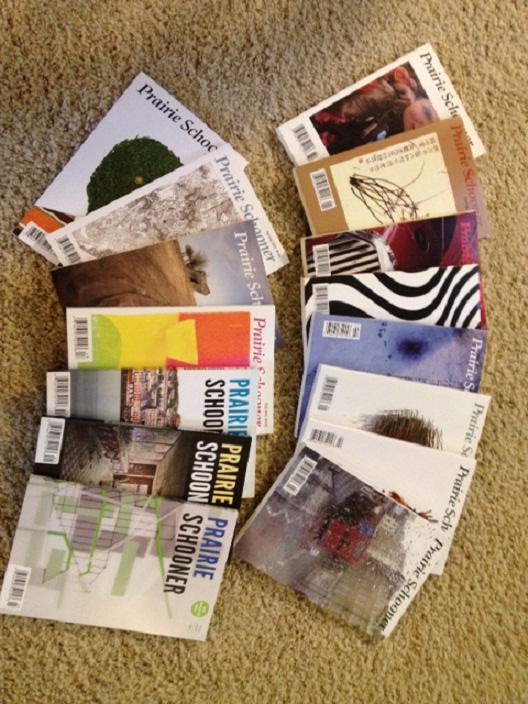


 Nebraska


 Theodore Wheeler