 It’s been quite a while since I last offered up a review of my activities. All the way back in April! A few things have gone down since then, such as…
-I finished a draft of my novel, The Uninitiated, that I’m very happy with and sent it off to agents for consideration. (Read here about the finishing.) So far I’ve heard back from two of my top five choices that were queried, with one passing and another asking for full manuscripts on both my novel and short story collection! Who knows if anything will come of this–as the one who requested the fulls did so despite not technically considering new clients at the moment–is that a good or bad thing?–but I’ll take good news when I can get it. We’ll be heading off to New York for a few days in October, and it would be nice if I had a couple meetings/interviews to add to the itinerary by then. We’ll see.
-Not a lot of travel over the summer months. A trip to Niobrara for a few days, a weekend in Kansas City for my mom’s graduation from seminary school and Clara’s first Royals game, a week of commuting to Lincoln for the Nebraska Summer Writers Conference. The fall should offer a bit more excitement. NYC, El Salvador. (!!!)
-I was tipped off recently that my story “Welcome Home” from Best New American Voices 2009 and Boulevard was taught at Southern Connecticut State University this fall. I know of three other colleges where the story has been taught–Penn, Drexel, and City College of San Francisco as part of a program for returning veterans–in addition to a high school in Illinois. This is so cool, and delights me to no end.
-My novel was also named a finalist for Tarcher/Penguin’s Tarcher Top Artist writing competition. I haven’t seen or heard anything about a winner being named, so I guess it still is a finalist.
-I left Prairie Schooner after four years plus of service. See post-mortems here and here.
-My book review of Shira Nayman’s A Mind of Winter can be found here, and of Roberto Bolaño’s The Third Reich here, or Richard Burgin’s Shadow Traffic and Ron Rash’s The Cove here. My review of Yannick Murphy’s The Call is in the current issue of Pleiades.
–Sporting: As the final couple weeks of regular season major league baseball wind down, the KC Royals look to have a solid hold on third place in the AL Central division. They’re still pretty mediocre (owing to long stretches of horrible play in April and July) but at least haven’t been nearly as disappointing as the Indians and Twins have been for their fans. Or for Tigers’ fans, for that matter. That’s something, I guess. Life in the AL Central isn’t so much about winning games, it’s about being less miserable than your rivals.
 Notre Dame is off to a rousing 3-0 start, their best on the gridiron since Ty Willingham’s 8-0 start in 2002. With a home game against Michigan tomorrow night, and with Stanford, @Oklahoma, and @USC still on the schedule, this team could still easily go into the tank. That being said, I’ll still predict an Irish victory over the Wolverines this weekend. I’d feel a little better if ND had a few mini-Ditkas on the team, but I’ll stick with my gut here. Notre Dame 87, Michigan 2.
Dispatch from The Uninitiated
“Fred was the one who found him face down in the creek, over on the other side of their claim. He drank horse cleaner. That’s how he did it. It must have hurt horribly. His eyes lost their pigment. Hair fell from his head. Fred came and got Jacob. He showed their father unmoving in the creek. They wrapped his body in a blanket and brought it to the barn. They didn’t dare bring it in the house. Neither said this, but they both understood. The body stayed in the barn until the Pfarrer came out with the J.P. to get it.”
Just Finished
The Wilding by Benjamin Percy. A readable and well-done book. Nice suspense. I really didn’t like the epilogue, although I pretty much never like epilogues. A good book, though, certainly.
Let the Great World Spin by Colum McCann. This book had been hyped so much before I read it that it couldn’t quite live up to everything I’d heard about it. It was good, but I think This Side of Brightness was better.
 A Mind of Winter by Shira Nayman. A post-war mystery set mostly in Shanghai, Long Island, and London in the 1950s, A Mind of Winter offers plenty in the way of sex and drugs, mistaken identity, and ill-fated love affairs. These are characters who believe, explicitly or not, that the rules of society do not apply to them.
Train Dreams by Denis Johnson. A compelling novella about the life of a rambler and the struggle to tame Idaho in the early parts of the last century.
Now Reading
Tree of Smoke by Denis Johnson. Loving this so far. It’s been a long while since I had time to tackle a broad, long novel like this.
Up Next
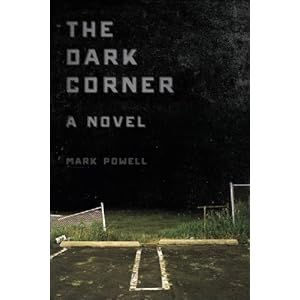
The Dark Corner by Mark Powell. Not yet released, but I’m looking forward to it.
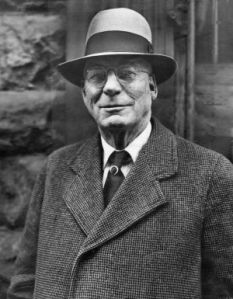 Some more Tom Dennison content to share, as Matthew Hansen’s column in yesterday’s Omaha World-Herald gives an overview of Dennison’s forty year career as political boss in Omaha. The column focuses on the 1932 Prohibition trial of Tom and his associates, and features a few quotes from Dennison expert Orville Menard, whose book River City Empire was recently reissued.
 I propped my book open and stared listlessly at the page of the ‘Georgics’ where to-morrow’s lesson began. It opened with the melancholy reflection that, in the lives of mortals, the best days are the first to flee. ‘Optima dies…prima fugit.‘ I turned back to the beginning of the third book, which we had read in class that morning. ‘Primus ego in patriam mecum…deducam Musas‘; ‘for I shall be the first, if I live, to bring the Muse into my country.’ Cleric had explained to us that ‘patria’ here meant, not a nation or even a province, but that little rural neighbourhood on the Mincio where the poet was born. This was not a boast, but a hope, at once bold and devoutly humble, that he might bring the Muse (but lately come to Italy from her cloudy Grecian mountains), not to the capital, the palatia Romana, but to his own little ‘country’; to his father’s fields, ‘sloping down to the river and to the old beech trees with broken tops.’


 Theodore Wheeler